In Stock Cell Lines
Mus musculus (Mouse)
Skin
Adherent
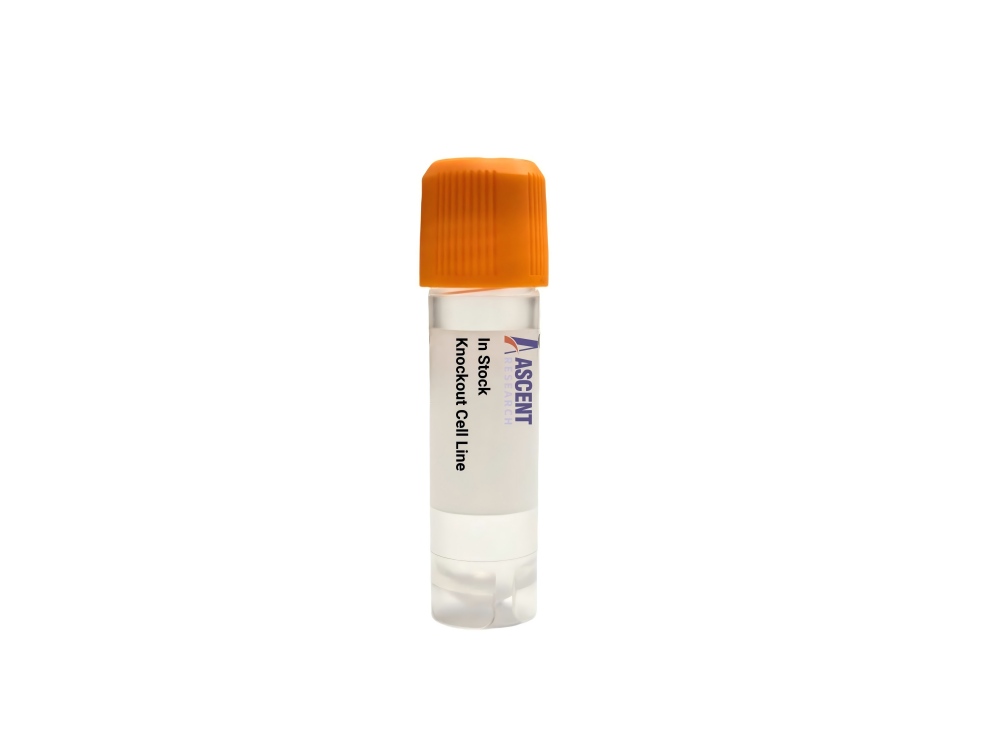
The Egfr Knockout B16 Cell Line is a CRISPR/Cas9-edited knockout cell line featuring targeted disruption of the Egfr gene in the B16 murine melanoma background. This line eliminates EGFR, a receptor tyrosine kinase that, upon ligand binding, activates key pathways such as the GRB2-mediated MAPK/ERK and PI3K-AKT cascades, driving proliferation and survival. This knockout model enables rigorous investigation of EGFR-dependent mechanisms in melanoma progression, metastasis, and therapeutic resistance. It is ideal for in vitro assays, drug screening, and syngeneic mouse models for immunotherapy studies.
 FNBP1L Knockout NCI-H1975 Polyclonal Cells
Cat. No. ARG16835
NNT Knockout jurkat Polyclonal Cells
Cat. No. ARG13505
P4HB Knockout 143B Polyclonal Cells
Cat. No. ARG11779
GULP1 Knockout 786-O Polyclonal Cells
Cat. No. ARG25223
GOSR1 Knockout Hela Polyclonal Cells
Cat. No. ARG37584
NUDT5 Knockout 786-O Polyclonal Cells
Cat. No. ARG4928
FNBP1L Knockout NCI-H1975 Polyclonal Cells
Cat. No. ARG16835
NNT Knockout jurkat Polyclonal Cells
Cat. No. ARG13505
P4HB Knockout 143B Polyclonal Cells
Cat. No. ARG11779
GULP1 Knockout 786-O Polyclonal Cells
Cat. No. ARG25223
GOSR1 Knockout Hela Polyclonal Cells
Cat. No. ARG37584
NUDT5 Knockout 786-O Polyclonal Cells
Cat. No. ARG4928
The Egfr Knockout B16 Cell Line is a CRISPR/Cas9-edited knockout cell line derived from the B16 murine melanoma cell line, with targeted disruption of the Egfr gene. This ablation eliminates epidermal growth factor receptor (EGFR) expression, providing a defined loss-of-function model for investigating EGFR-dependent signaling in a melanocytic tumor context. The cell line is suitable for both in vitro experiments and in vivo syngeneic tumor studies.
The parental B16 cell line originates from a C57BL/6 mouse melanoma and represents a highly aggressive, pigmented melanocytic tumor model. B16 cells exhibit robust proliferation and metastasis in syngeneic, immunocompetent C57BL/6 hosts, enabling comprehensive analysis of tumor progression, immune evasion, and therapeutic responses within an intact immune microenvironment.
EGFR is a receptor tyrosine kinase activated by EGF family ligands such as EGF and TGF-??. Ligand binding induces dimerization and autophosphorylation, recruiting adaptor proteins GRB2 and SHC to trigger the SOS-RAS-RAF-MEK-ERK cascade, promoting proliferation. Parallel signaling through PI3K-AKT enhances survival, while STAT3 activation downstream of JAK modulates transcription. EGFR also forms heterodimers with ErbB2/HER2, ErbB3, and ErbB4, and is negatively regulated by CBL-mediated ubiquitination and SRC kinase modulation.
In B16 melanoma, EGFR signaling contributes to proliferation, survival, migration, and may influence immune modulation. Egfr knockout ablates ligand-induced downstream effector activation, allowing precise dissection of EGFR-dependent phenotypes. This model is particularly valuable for studying EGFR??s role in melanoma aggressiveness and metastasis, and for evaluating EGFR-targeted therapies and resistance mechanisms in a syngeneic, immunocompetent setting.
This knockout cell line supports diverse applications, including mechanistic studies of EGFR in melanoma progression, high-throughput screening of EGFR-targeted inhibitors or biologics, and investigation of therapy resistance. In syngeneic mouse models, it enables assessment of how tumor-intrinsic EGFR loss shapes anti-tumor immunity. Representative assays encompass western blotting for phospho-ERK and phospho-AKT, MTT proliferation assays, transwell migration/invasion assays, Annexin V apoptosis detection, RNA-seq transcriptomic profiling, and flow cytometry to validate EGFR surface loss. For further information, please contact Ascent Research.