Primary Cells
Rattus norvegicus (Rat)
Artery (abdominal aorta)
Adherent
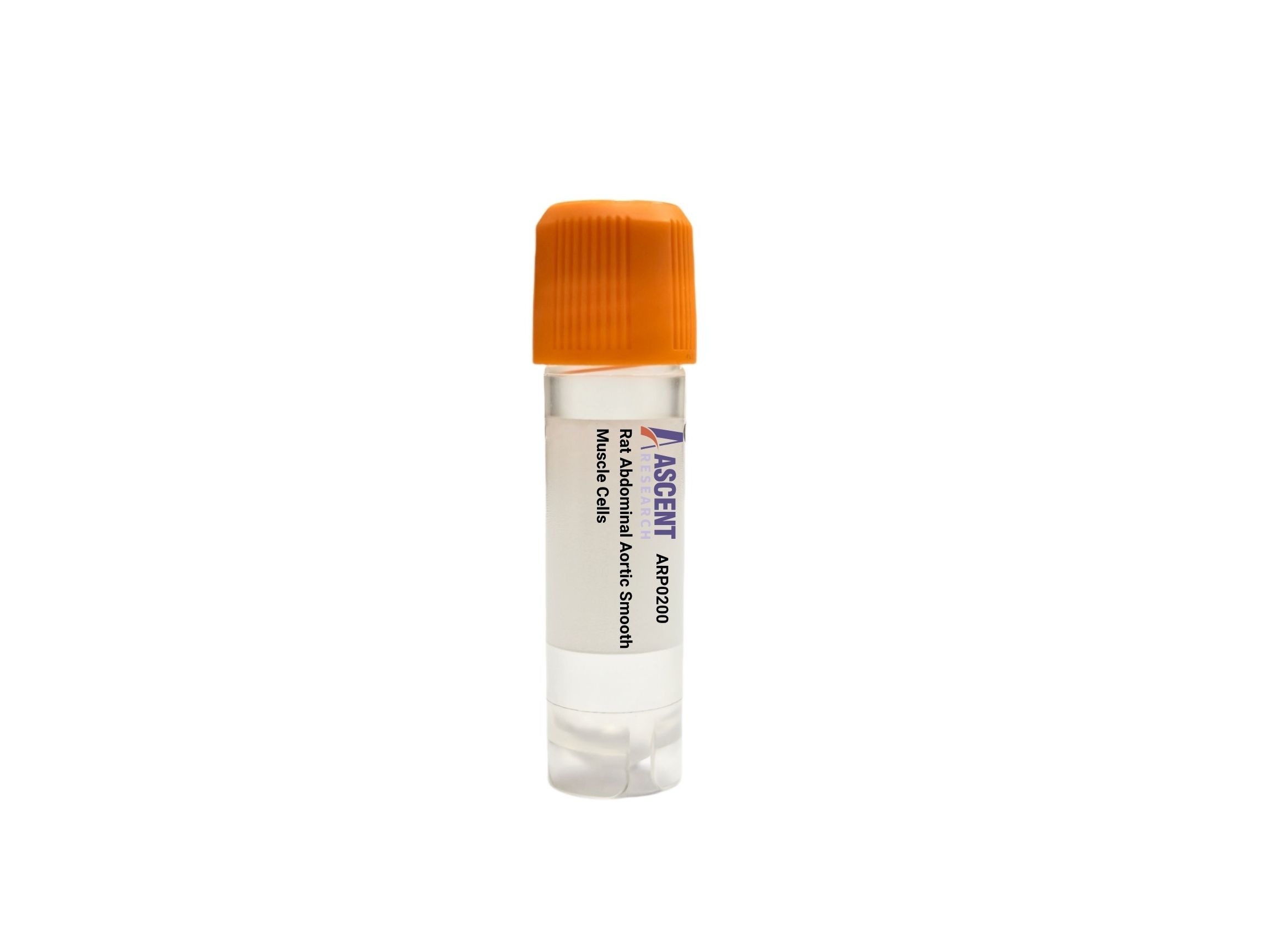
Research on the Rat Abdominal Aortic Smooth Muscle Cells is essential to the study of abdominal aortic aneurysm formation, vascular calcification, atherosclerosis progression, hypertension-mediated remodeling, and post-interventional restenosis. The aorta is the largest artery and the main vessel that carries oxygenated blood from the left ventricle into the systemic circulation. All arteries in the systemic circulation arise from the aorta either directly (like the coronary or brachiocephalic arteries) or through its branches (e.g., femoral artery via the iliac arteries), distributing oxygenated blood to peripheral tissues and organs. The abdominal aorta gives rise to four unpaired arteries and five paired arteries, which supply oxygen and nutrients to the abdominal tissues and organs, including the liver, gallbladder, spleen, pancreas, stomach, intestines, and kidneys. Cells isolated from the abdominal aorta can be used in research on systemic circulation and vascular diseases, such as abdominal aortic aneurysm. The Rat Abdominal Aortic Smooth Muscle Cells are to be used with Rat Abdominal Aortic Smooth Muscle Cell Medium (Cat. No. ACM0200). This product is intended for laboratory in vitro use only. It is not intended for diagnostic, therapeutic, or clinical applications.
 MyD88 Knockout A2780 Polyclonal Cells
Cat. No. ARG18291
PGM2 Knockout NCI-H1975 Polyclonal Cells
Cat. No. ARG16548
NECAP2 Knockout NCI-H1299 Polyclonal Cells
Cat. No. ARG17787
JMJD4 Knockout AGS Polyclonal Cells
Cat. No. ARG27087
GOLGB1 Knockout HGC-27 Polyclonal Cells
Cat. No. ARG29833
ISOC1 Knockout NCI-H1299 Polyclonal Cells
Cat. No. ARG30850
MyD88 Knockout A2780 Polyclonal Cells
Cat. No. ARG18291
PGM2 Knockout NCI-H1975 Polyclonal Cells
Cat. No. ARG16548
NECAP2 Knockout NCI-H1299 Polyclonal Cells
Cat. No. ARG17787
JMJD4 Knockout AGS Polyclonal Cells
Cat. No. ARG27087
GOLGB1 Knockout HGC-27 Polyclonal Cells
Cat. No. ARG29833
ISOC1 Knockout NCI-H1299 Polyclonal Cells
Cat. No. ARG30850
Complete description is available upon request.