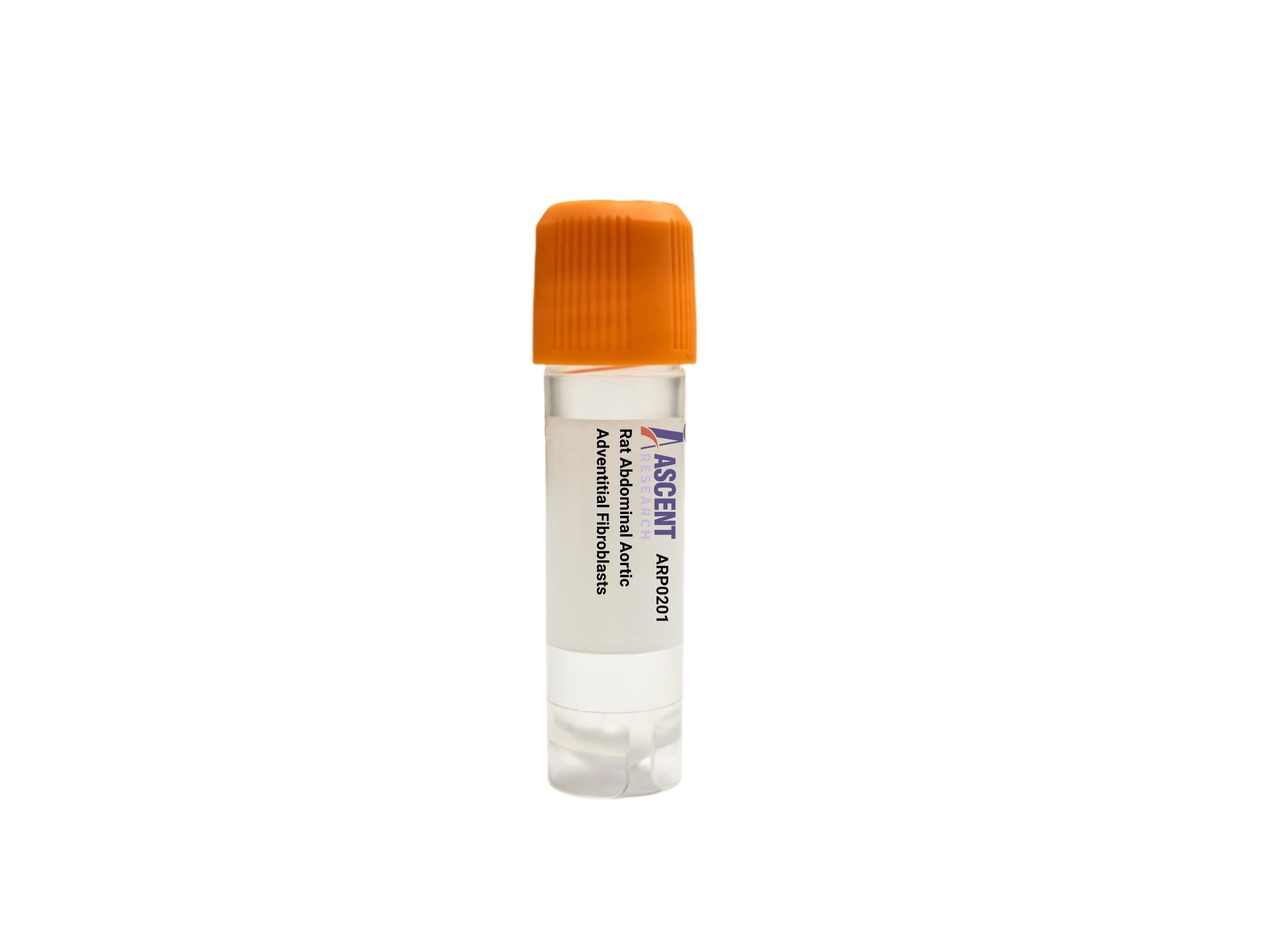
Primary Cells
Rattus norvegicus (Rat)
Artery (abdominal aorta)
Adherent
Research on the Rat Abdominal Aortic Adventitial Fibroblasts is essential to the study of abdominal aortic aneurysm formation, vascular fibrosis, chronic vascular inflammation, and radiation-induced vasculopathy. The aorta is the largest artery and the main vessel that carries oxygenated blood from the left ventricle into the systemic circulation. All arteries in the systemic circulation arise from the aorta either directly (like the coronary or brachiocephalic arteries) or through its branches (e.g., femoral artery via the iliac arteries), distributing oxygenated blood to peripheral tissues and organs. The abdominal aorta gives rise to four unpaired arteries and five paired arteries, which supply oxygen and nutrients to the abdominal tissues and organs, including the liver, gallbladder, spleen, pancreas, stomach, intestines, and kidneys. Cells isolated from the abdominal aorta can be used in research on systemic circulation and vascular diseases, such as abdominal aortic aneurysm. The Rat Abdominal Aortic Adventitial Fibroblasts are to be used with Rat Abdominal Aortic Adventitial Fibroblast Medium (Cat. No. ACM0201). This product is intended for laboratory in vitro use only. It is not intended for diagnostic, therapeutic, or clinical applications.
 EME1 Knockout SK-HEP-1 Polyclonal Cells
Cat. No. ARG15513
EME1 Knockout SK-HEP-1 Polyclonal Cells
Cat. No. ARG15513
 C57BL/6 Mouse Hepatocytes
Cat. No. ARP1059
IFT20 Knockout Raji Polyclonal Cells
Cat. No. ARG23775
ACTA2 Knockout CaSki Polyclonal Cells
Cat. No. ARG35417
IL27 Knockout SKOV3 Polyclonal Cells
Cat. No. ARG36744
CAPN2 Knockout NCI-H1975 Polyclonal Cells
Cat. No. ARG42200
C57BL/6 Mouse Hepatocytes
Cat. No. ARP1059
IFT20 Knockout Raji Polyclonal Cells
Cat. No. ARG23775
ACTA2 Knockout CaSki Polyclonal Cells
Cat. No. ARG35417
IL27 Knockout SKOV3 Polyclonal Cells
Cat. No. ARG36744
CAPN2 Knockout NCI-H1975 Polyclonal Cells
Cat. No. ARG42200
Complete description is available upon request.