Genome-edited Cells
Breast (mammary gland)
No description available.
 MAP3K2 Knockout NCI-H1299 Polyclonal Cells
Cat. No. ARG17640
ALDH18A1 Knockout A549 Polyclonal Cells
Cat. No. ARG34822
CCDC24 Knockout Hela Polyclonal Cells
Cat. No. ARG42999
C1orf226 Knockout NCI-H1975 Polyclonal Cells
Cat. No. ARG41309
MAP3K2 Knockout NCI-H1299 Polyclonal Cells
Cat. No. ARG17640
ALDH18A1 Knockout A549 Polyclonal Cells
Cat. No. ARG34822
CCDC24 Knockout Hela Polyclonal Cells
Cat. No. ARG42999
C1orf226 Knockout NCI-H1975 Polyclonal Cells
Cat. No. ARG41309
 Mouse Endometrial Epithelial Cell Medium
Cat. No. ARM0536
Mouse Endometrial Epithelial Cell Medium
Cat. No. ARM0536
 Rabbit Bone Marrow Endothelial Cells
Cat. No. ARP0828
Rabbit Bone Marrow Endothelial Cells
Cat. No. ARP0828
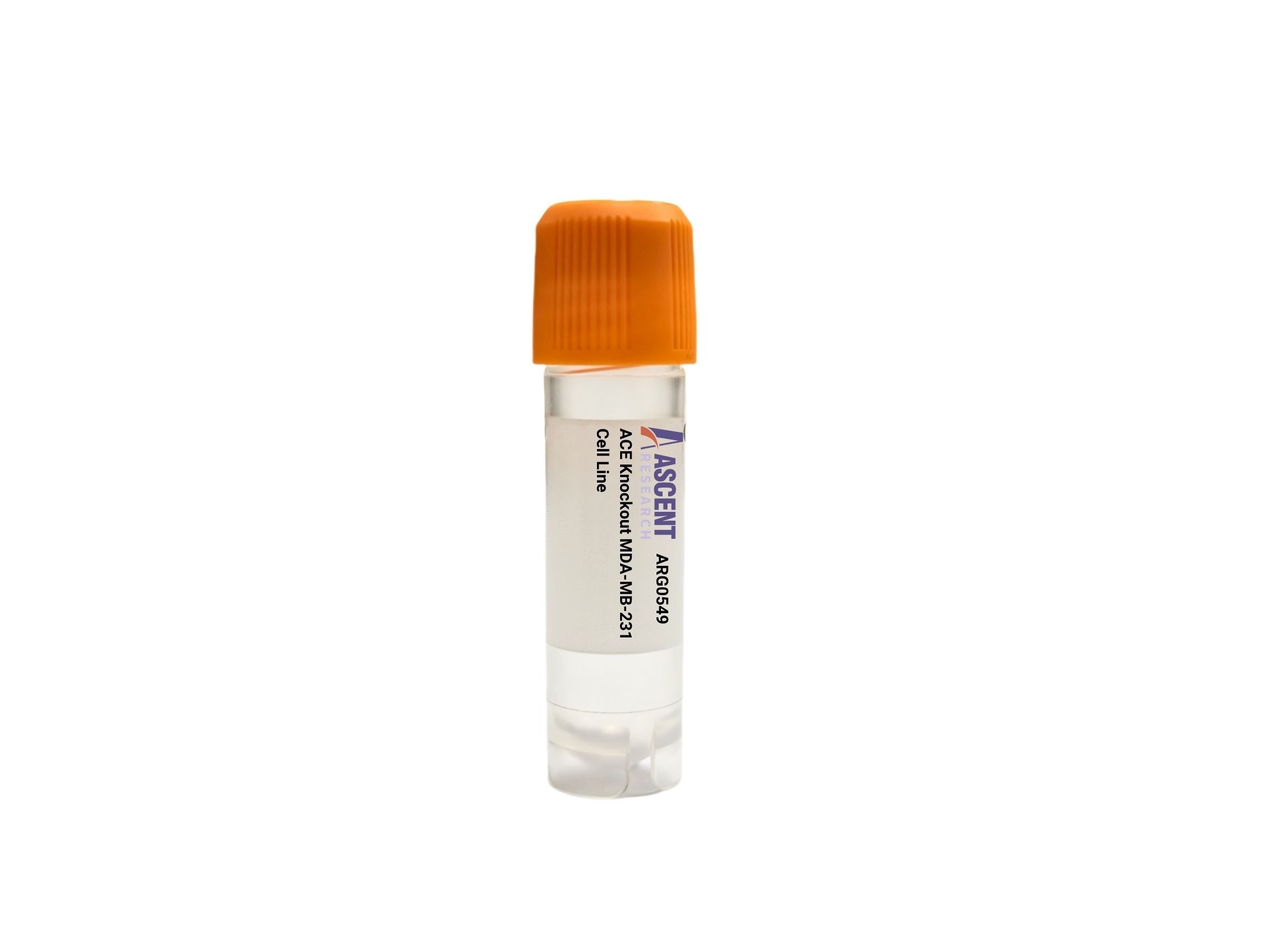
The ACE Knockout MDA-MB-231 Cell Line is a CRISPR/Cas9-edited knockout cell line derived from the human breast adenocarcinoma cell line MDA-MB-231. This product provides a robust loss-of-function model for studying the angiotensin I-converting enzyme (ACE) within the context of triple-negative breast cancer. The knockout cell line was generated through targeted disruption of the ACE gene using a CRISPR/Cas9-based genome editing approach, resulting in stable ablation of ACE expression. It is supplied as a validated cell line ready for functional assays, enabling detailed investigation of ACE-dependent signaling mechanisms and phenotypic effects in a highly invasive, mesenchymal breast cancer background. Researchers can employ this tool to dissect the contributions of the renin-angiotensin system (RAS) to tumor progression, metastasis, and therapeutic resistance.
MDA-MB-231 is a widely utilized human breast adenocarcinoma cell line originally isolated from the pleural effusion of a patient with metastatic mammary adenocarcinoma. This estrogen receptor-negative, progesterone receptor-negative, and HER2-negative cell line recapitulates the aggressive triple-negative breast cancer subtype, characterized by enhanced invasiveness, stem-like properties, and a mesenchymal phenotype. Its metastatic origin and molecular profile make it an indispensable model for investigating the molecular drivers of tumor dissemination, epithelial-to-mesenchymal transition, and the tumor microenvironment. The ACE knockout derivative retains these critical features while enabling functional dissection of ACE-mediated signaling.
ACE encodes a dipeptidyl carboxypeptidase that catalyzes the conversion of angiotensin I to the vasoconstrictor angiotensin II, a central effector of the RAS. Angiotensin II signals through AT1R and AT2R to regulate vascular tone, cell proliferation, migration, and inflammation. In the breast cancer context, ACE-derived angiotensin II activates downstream cascades including MAPK/ERK and PI3K/AKT pathways, as evidenced by phosphorylation of ERK and AKT, and promotes NF-??B-mediated transcriptional programs. ACE also interacts with the kinin-kallikrein system by degrading bradykinin, a B2 receptor agonist with vasodilatory and anti-proliferative properties. Upstream regulators such as glucocorticoids, thyroid hormones, VEGF, TNF-??, IL-1??, and hypoxia-inducible factor 1?? (HIF-1??) modulate ACE expression, while the enzyme??s activity is further influenced by renin-mediated angiotensinogen processing and chymase-dependent angiotensin II formation.
This knockout cell line is particularly significant for exploring RAS-driven mechanisms in TNBC, where ACE expression and angiotensin II signaling have been associated with enhanced tumor cell migration, invasion, and angiogenesis. The MDA-MB-231 background, with its intrinsic invasive capacity, allows for rigorous assessment of ACE??s role in modulating these aggressive behaviors. By eliminating ACE activity, researchers can interrogate the reliance of tumor cells on angiotensin II-mediated MAPK/ERK and PI3K/AKT pathway activation, and investigate compensatory crosstalk with the ACE2/Ang-(1-7)/Mas receptor axis. The model also enables studies on how the absence of ACE affects bradykinin-B2 receptor signaling and downstream expression of adhesion molecules like ICAM-1 and VCAM-1, which are critical for metastatic colonization.
Typical applications include Western blotting for phosphorylated ERK and AKT to assess MAPK and PI3K pathway status, RT-qPCR for ACE and downstream target gene expression, and angiotensin-converting enzyme activity assays using the Hip-His-Leu substrate. ELISA-based quantification of angiotensin II production, Transwell migration and invasion assays, and tube formation assays for angiogenesis provide functional readouts. The cell line is also suitable for immunofluorescence localization of ACE, flow cytometry for surface expression analysis, MTT proliferation assays, and xenograft tumor growth studies. For further information or to discuss specific experimental needs, please contact Ascent Research.