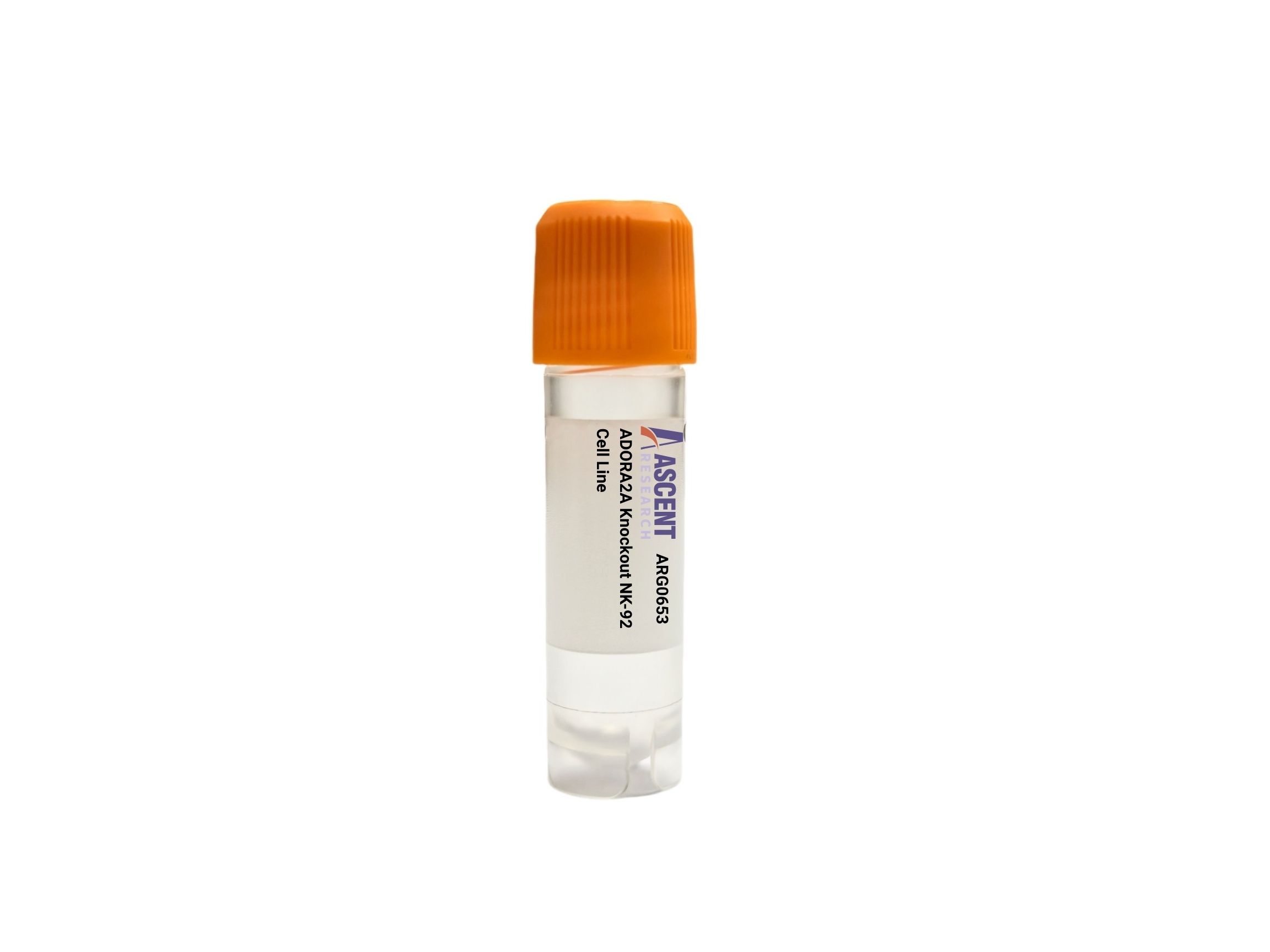
Genome-edited Cells
Blood (peripheral blood)
The ADORA2A Knockout NK-92 Cell Line is a CRISPR/Cas9-edited human NK cell line with targeted disruption of the adenosine A2A receptor, a key mediator of immunosuppression. By eliminating ADORA2A, this model prevents adenosine-induced inhibition, enhancing NK cell cytotoxicity. It is derived from the IL-2-dependent NK-92 line, a widely used model for innate antitumor immunity. The knockout abrogates signaling through the Gs/adenylyl cyclase/cAMP/PKA/CREB axis, relieving suppression of immune effector functions. This cell line is suitable for cancer immunotherapy research, adenosine pathway studies, and development of engineered NK cell therapies.
 MFGE8 Knockout A2780 Polyclonal Cells
Cat. No. ARG18882
MFSD6 Knockout A2780 Polyclonal Cells
Cat. No. ARG18774
DDI2 Knockout Raji Polyclonal Cells
Cat. No. ARG0950
MFGE8 Knockout A2780 Polyclonal Cells
Cat. No. ARG18882
MFSD6 Knockout A2780 Polyclonal Cells
Cat. No. ARG18774
DDI2 Knockout Raji Polyclonal Cells
Cat. No. ARG0950
 KIAA0930 Knockout Hela Cell Line
Cat. No. ARG43936
ITPR1 Knockout huh-7 Polyclonal Cells
Cat. No. ARG28433
FER Knockout NCI-H1299 Polyclonal Cells
Cat. No. ARG17837
KIAA0930 Knockout Hela Cell Line
Cat. No. ARG43936
ITPR1 Knockout huh-7 Polyclonal Cells
Cat. No. ARG28433
FER Knockout NCI-H1299 Polyclonal Cells
Cat. No. ARG17837
The ADORA2A Knockout NK-92 Cell Line is a CRISPR/Cas9-edited human natural killer cell line with targeted disruption of the adenosine A2A receptor gene. It provides a loss-of-function model for studying adenosine-mediated immunosuppression and NK cell anti-tumor immunity. Supplied as a live culture, it is suited for functional, signaling, and immunotherapy studies.
NK-92 is an IL-2-dependent natural killer cell line derived from a non-Hodgkin??s lymphoma patient. It exhibits a highly cytotoxic phenotype and serves as a model for innate immune effector cells. Despite lacking most inhibitory KIRs, NK-92 cells remain susceptible to adenosine-mediated suppression, making them an appropriate system for analyzing ADORA2A function and engineering resistance to tumor-derived immunosuppressive signals.
ADORA2A encodes the adenosine A2A receptor, a Gs-coupled receptor activated by extracellular adenosine, which accumulates under hypoxia and stress. Ligand binding stimulates adenylyl cyclase via Gs proteins, elevating cAMP and activating PKA. PKA phosphorylates CREB and other targets, inducing immunosuppressive gene expression. GRK interactions regulate receptor desensitization. This ADORA2A/Gs/adenylyl cyclase/cAMP/PKA/CREB axis dampens immune cell activation and cytotoxicity, enabling tumor immune evasion. Knockout of ADORA2A abolishes this signaling, preventing adenosine-induced inhibition.
In NK-92 cells, ADORA2A knockout eliminates the receptor??s ability to transduce immunosuppressive signals, rendering the cells resistant to adenosine-rich microenvironments. This enables sustained cytolytic function and effector cytokine secretion, overcoming a major barrier in NK cell-based adoptive therapy. The model facilitates investigation of NK cell-intrinsic adenosine resistance mechanisms and supports the engineering of more potent off-the-shelf NK cell products for solid tumors.
The cell line is applicable to cancer immunotherapy, adenosine signaling, and NK cell biology research. It can be employed in cytotoxicity and ADCC assays to quantify killing activity, flow cytometry to detect activation markers (e.g., CD107a, IFN-??), and cAMP or phospho-PKA/CREB measurements to monitor signaling. Applications include studying tumor microenvironment interactions, screening adenosine pathway inhibitors, and developing gene-edited NK therapies. For further inquiries, please contact Ascent Research.