
In Stock Cell Lines
Homo sapiens (Human)
Skin
Adherent
The AKR1B10 Knockout HaCat Cell Line is a CRISPR/Cas9-edited knockout cell line derived from the spontaneously immortalized human keratinocyte line HaCat. This model enables loss-of-function studies of AKR1B10, a key enzyme in retinoid metabolism that catalyzes retinaldehyde reduction to retinol, thereby dampening retinoic acid receptor signaling and detoxifying reactive carbonyls like 4-hydroxynonenal. By disrupting AKR1B10, researchers can examine altered retinoic acid signaling, oxidative stress responses, and keratinocyte proliferation/differentiation balance. The cell line is ideally suited for applications in skin biology, psoriasis research, cancer mechanisms, and drug metabolism studies, employing assays such as retinoid quantification, proliferation measurements, and gene expression profiling.
 OSMR Knockout T47D Polyclonal Cells
Cat. No. ARG11988
FST Knockout 143B Polyclonal Cells
Cat. No. ARG11859
GOLPH3L Knockout NCI-H1975 Polyclonal Cells
Cat. No. ARG31542
C9orf64 Knockout K562 Polyclonal Cells
Cat. No. ARG41604
PFKFB2 Knockout HEK293T Polyclonal Cells
Cat. No. ARG4297
OSMR Knockout T47D Polyclonal Cells
Cat. No. ARG11988
FST Knockout 143B Polyclonal Cells
Cat. No. ARG11859
GOLPH3L Knockout NCI-H1975 Polyclonal Cells
Cat. No. ARG31542
C9orf64 Knockout K562 Polyclonal Cells
Cat. No. ARG41604
PFKFB2 Knockout HEK293T Polyclonal Cells
Cat. No. ARG4297
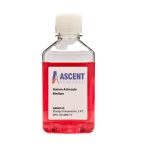 Human Astrocyte Medium
Cat. No. ARM0105
Human Astrocyte Medium
Cat. No. ARM0105
The AKR1B10 Knockout HaCat Cell Line is a CRISPR/Cas9-edited knockout cell line derived from the HaCat human keratinocyte line, engineered for targeted disruption of the AKR1B10 gene. This loss-of-function model provides a genetically defined system for investigating AKR1B10-dependent processes without the confounding effects of transient knockdown or pharmacological inhibition. Designed for in vitro studies, the cell line offers a renewable, well-characterized resource for exploring the molecular consequences of AKR1B10 deficiency in an epidermal context. It is suitable for applications ranging from signal transduction analysis to high-content screening, enabling researchers to dissect the role of AKR1B10 in keratinocyte biology and disease-relevant pathways.
HaCat is a spontaneously immortalized, non-tumorigenic human keratinocyte line established from adult skin. It retains many features of normal epidermal keratinocytes, including the capacity for stratified differentiation, keratin expression, and participation in barrier formation and wound healing. The line serves as a robust in vitro surrogate for primary keratinocytes, circumventing issues of donor variability and limited replicative lifespan. HaCat cells recapitulate key aspects of cutaneous biology, making the AKR1B10 knockout derivative particularly valuable for studying gene function in processes such as epidermal homeostasis, oxidative stress defense, and inflammatory responses inherent to the skin epithelium.
AKR1B10 encodes an aldo-keto reductase that catalyzes the NADPH-dependent reduction of retinaldehyde to retinol, thereby limiting the pool of retinaldehyde available for oxidation to retinoic acid. This enzymatic step curtails retinoic acid receptor (RAR/RXR)-mediated transcription, which normally promotes keratinocyte differentiation and suppresses proliferation. AKR1B10 is transcriptionally regulated by NRF2, NF-??B, AP-1, PPAR??, and retinoids, and it interacts with substrates including retinaldehyde and 4-hydroxynonenal. In addition to modulating retinoid signaling, the enzyme detoxifies reactive carbonyls such as 4-hydroxynonenal, protecting cells from oxidative stress. Downstream consequences of AKR1B10 activity include altered expression of retinoic acid target genes, reduction of 4-HNE adducts, and influences on cell proliferation markers like PCNA.
In HaCat keratinocytes, AKR1B10 sits at the intersection of retinoid metabolism, oxidative stress response, and proliferative control. Disruption of AKR1B10 is expected to elevate retinoic acid synthesis, potentially enhancing RAR/RXR signaling, promoting differentiation, and attenuating proliferation. Simultaneously, loss of carbonyl-detoxifying capacity may render cells more susceptible to oxidative damage, engaging stress-responsive pathways such as the NRF2-KEAP1 axis and its downstream antioxidant effectors (e.g., HO-1, NQO1). This dual impact makes the knockout line a powerful tool for modeling disorders where AKR1B10 dysregulation has been implicated, including psoriasis??characterized by aberrant keratinocyte growth and differentiation??and cancers of the lung, breast, and liver, where AKR1B10 can contribute to tumor cell survival.
The AKR1B10 Knockout HaCat Cell Line supports diverse research applications, from basic keratinocyte biology to translational studies. It is particularly suited for investigating retinoid signaling dynamics through quantitative measurement of retinol and retinoic acid levels, as well as expression profiling of RAR/RXR targets. Researchers can assess oxidative stress responses using assays for 4-HNE adducts and reactive oxygen species, or evaluate cell behavior via MTS or BrdU proliferation assays and annexin V apoptosis detection. Pharmacological screening for AKR1B10 inhibitors, pathway dissection using RNA sequencing, and differentiation marker analysis by RT-qPCR or immunofluorescence are also facilitated. For additional details or technical support, please contact Ascent Research.

