Genome-edited Cells
Liver
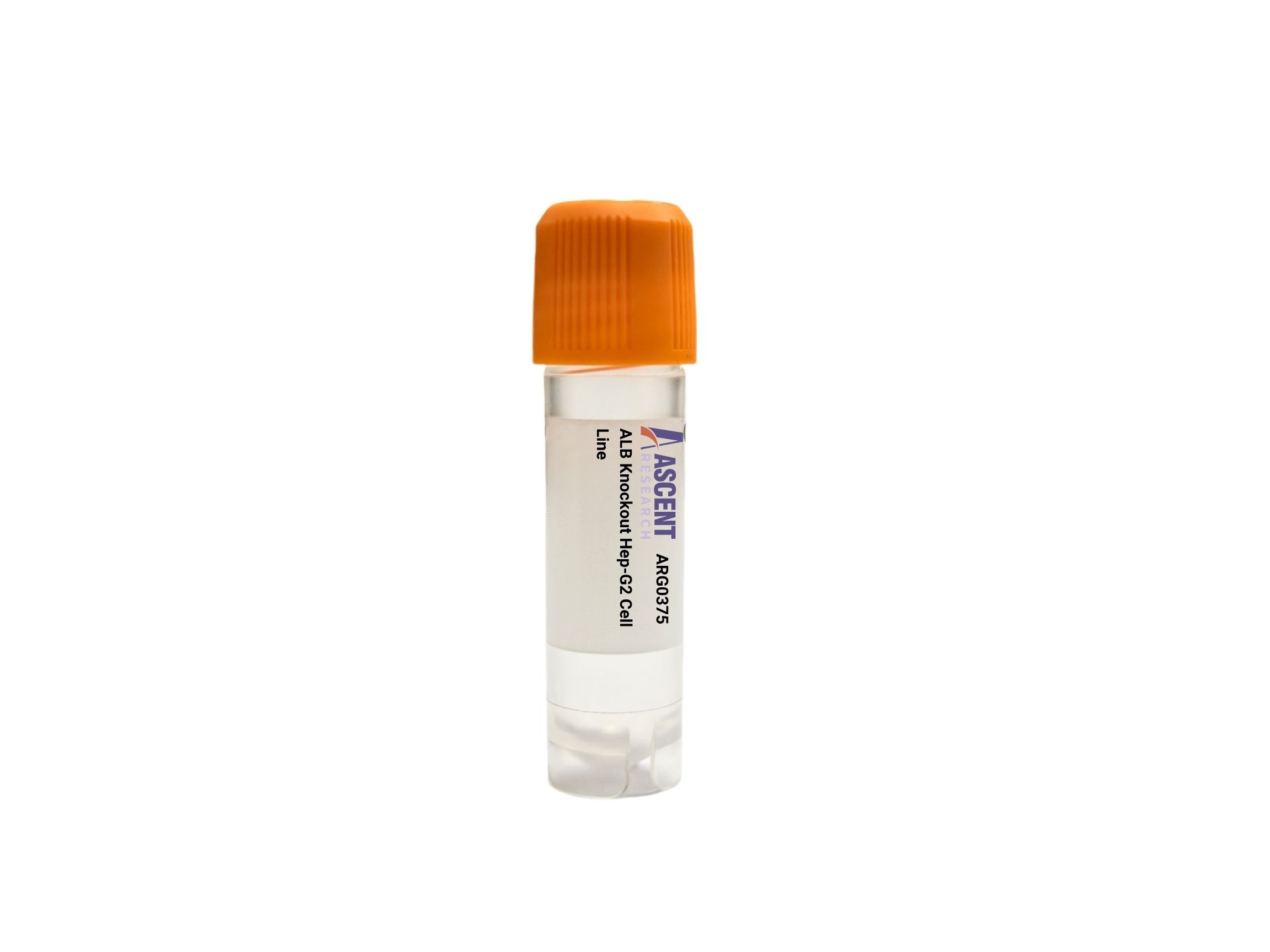
The ALB Knockout Hep-G2 Cell Line is a CRISPR/Cas9-edited knockout cell line derived from the human hepatocellular carcinoma cell line Hep-G2. It features targeted disruption of the ALB gene, which encodes albumin, the major plasma protein responsible for ligand transport and oncotic pressure regulation. Albumin expression is controlled by transcription factors such as HNF1A and C/EBPB and the IL-6/JAK/STAT3 pathway. This model enables investigation of hepatic secretory mechanisms, drug-protein interactions, and liver disease pathologies including hypoalbuminemia and hepatocellular carcinoma. Applications range from functional assays like drug binding and fatty acid uptake to transcriptomic profiling, supporting drug discovery and liver biology research.
 ATP13A2 Knockout A2780 Polyclonal Cells
Cat. No. ARG28838
GULP1 Knockout A2780 Polyclonal Cells
Cat. No. ARG29073
BLOC1S4 Knockout NCI-H1975 Polyclonal Cells
Cat. No. ARG31353
ALOX12 Knockout TE1 Polyclonal Cells
Cat. No. ARG36832
BOD1 Knockout HAP1 Polyclonal Cells
Cat. No. ARG27409
ATP13A2 Knockout A2780 Polyclonal Cells
Cat. No. ARG28838
GULP1 Knockout A2780 Polyclonal Cells
Cat. No. ARG29073
BLOC1S4 Knockout NCI-H1975 Polyclonal Cells
Cat. No. ARG31353
ALOX12 Knockout TE1 Polyclonal Cells
Cat. No. ARG36832
BOD1 Knockout HAP1 Polyclonal Cells
Cat. No. ARG27409
 A-673 eGFP-Luc Stable Cell Line
Cat. No. ARG0112
A-673 eGFP-Luc Stable Cell Line
Cat. No. ARG0112
The ALB Knockout Hep-G2 Cell Line is a CRISPR/Cas9-edited knockout cell line engineered to disrupt the ALB gene in the human hepatocellular carcinoma cell line Hep-G2. This loss-of-function model enables precise investigation of albumin biology by ablating its expression in a hepatic epithelial background.
Hep-G2 is a human hepatocellular carcinoma cell line originally derived from a 15-year-old male with liver cancer. Widely employed as a model of hepatocyte function, this adherent line retains key hepatic characteristics, including a secretory phenotype that produces plasma proteins such as albumin, as well as expression of liver-enriched transcription factors and responsiveness to hormonal cues like insulin and glucagon. Its well-characterized biology makes it an ideal host for studying liver-specific gene function.
The ALB gene encodes albumin, the most abundant plasma protein, which serves as a critical carrier for fatty acids, hormones, bilirubin, and drugs, while maintaining colloid osmotic pressure. In hepatocytes, albumin expression is transcriptionally regulated by hepatocyte nuclear factors HNF1A and C/EBPB, and is induced by IL-6 through the JAK/STAT3 signaling pathway during acute phase responses. Albumin interacts with numerous ligands, including fatty acids, bilirubin, thyroxine, heme, metal ions, and the drug warfarin, and associates with binding partners such as SPARC and gp60. Following synthesis, it is processed in the endoplasmic reticulum and secreted into the extracellular space. Disruption of ALB therefore eliminates a central node in hepatic secretory function and ligand transport, and is expected to alter downstream effects on oncotic pressure regulation and stress resilience.
Within the Hep-G2 hepatocellular carcinoma background, ALB knockout removes the cell??s primary secretory protein, offering a clean system to dissect hepatic secretory pathways and ligand-binding events. Because Hep-G2 cells exhibit cancerous properties, this model also enables exploration of albumin??s potential roles in hepatocellular carcinoma progression, including effects on proliferation, stress tolerance, and tumor microenvironment interactions. Moreover, it serves as a relevant in vitro paradigm for hypoalbuminemic states linked to liver cirrhosis and nephrotic syndrome, where albumin loss is a hallmark.
Researchers can apply the ALB Knockout Hep-G2 Cell Line in diverse experimental settings, leveraging assays such as albumin ELISA and western blotting for knockout confirmation, RT-qPCR for transcript analysis, and functional tests like fatty acid uptake and drug binding assays. Secretion assays can profile alterations in other hepatic proteins, while cell viability studies under metabolic or oxidative stress assess albumin??s cytoprotective influence. Transcriptomic analysis via RNA-seq enables comprehensive mapping of pathway perturbations. These tools support applications in drug-protein interaction screening, hepatocyte secretion modeling, toxicity testing, and mechanistic studies of liver disease. For technical inquiries, please contact Ascent Research.