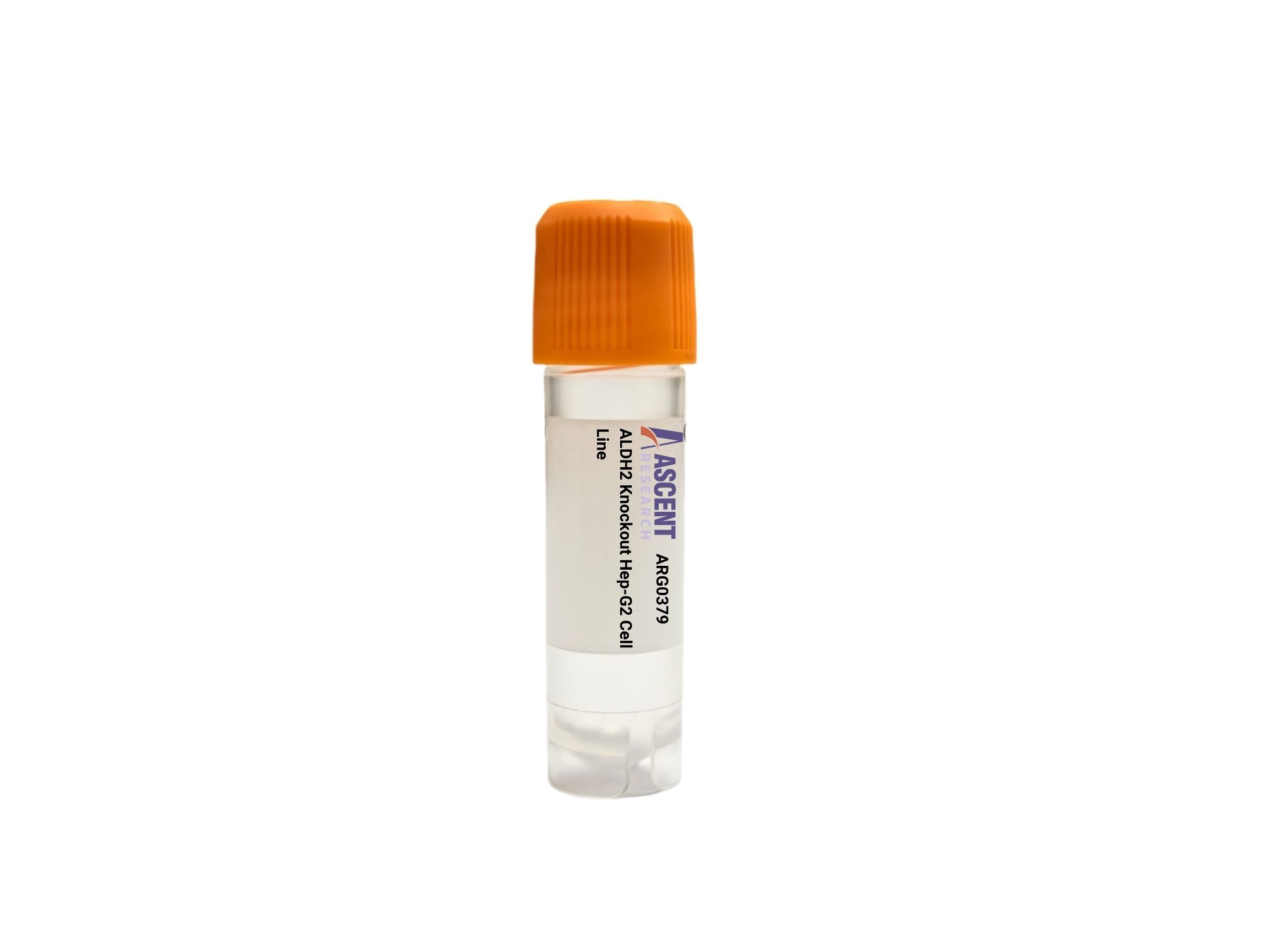
Genome-edited Cells
Liver
The ALDH2 Knockout Hep-G2 Cell Line is a CRISPR/Cas9-edited human hepatocellular carcinoma cell line lacking functional ALDH2 protein. ALDH2 detoxifies toxic aldehydes including acetaldehyde and 4-HNE, and its deficiency in this hepatic model leads to aldehyde accumulation, oxidative stress, and impaired nitroglycerin bioactivation. The model is relevant for studying alcohol-related liver disease, cancer susceptibility, and drug metabolism, with key interactions including NRF2/KEAP1 regulation, SIRT3-dependent activation, and downstream NO/sGC/cGMP signaling. Standard applications include acetaldehyde quantification by LC-MS, ROS detection, mitochondrial membrane potential assays, and ALDH2 activity screening. This defined knockout cell line provides a reproducible platform for mechanistic studies of aldehyde toxicity, alcohol metabolism, and nitroglycerin pharmacology.
 MCEE Knockout K562 Polyclonal Cells
Cat. No. ARG19427
NAB1 Knockout SK-HEP-1 Polyclonal Cells
Cat. No. ARG15684
CELF1 Knockout Hela Polyclonal Cells
Cat. No. ARG8305
ADAMTS8 Knockout HAP1 Polyclonal Cells
Cat. No. ARG21650
GRIPAP1 Knockout HGC-27 Polyclonal Cells
Cat. No. ARG29870
MCEE Knockout K562 Polyclonal Cells
Cat. No. ARG19427
NAB1 Knockout SK-HEP-1 Polyclonal Cells
Cat. No. ARG15684
CELF1 Knockout Hela Polyclonal Cells
Cat. No. ARG8305
ADAMTS8 Knockout HAP1 Polyclonal Cells
Cat. No. ARG21650
GRIPAP1 Knockout HGC-27 Polyclonal Cells
Cat. No. ARG29870
 NCM460
Cat. No. ARI0088
NCM460
Cat. No. ARI0088
The ALDH2 Knockout Hep-G2 Cell Line is a CRISPR/Cas9-edited knockout cell line that enables targeted disruption of the ALDH2 gene in a human hepatocellular carcinoma background. This well-defined loss-of-function model is provided as an adherent cell line, facilitating reproducible experimental designs in hepatic and systemic aldehyde metabolism research. The ALDH2 gene encodes a mitochondrial aldehyde dehydrogenase critical for the detoxification of endogenous and exogenous aldehydes, and its targeted disruption creates a physiologically relevant system for examining aldehyde-induced cellular stress and related pathologies.
The host cell line, Hep-G2, is a widely employed cellular model isolated from a 15-year-old male with hepatocellular carcinoma. These adherent epithelial cells retain many differentiated hepatic functions, making them a benchmark system for investigating hepatocyte biology, drug toxicity, and metabolic pathways. Hep-G2 cells endogenously express enzymes involved in phase I and phase II metabolism, providing a relevant context for examining the consequences of ALDH2 deficiency on aldehyde detoxification, nitroglycerin bioactivation, and alcohol metabolism within an intact liver-derived cellular environment.
ALDH2 is a mitochondrial enzyme that oxidizes toxic aldehydes, such as acetaldehyde and 4-hydroxynonenal (4-HNE), into less reactive acids. Its transcription is driven by NRF2/NFE2L2 downstream of KEAP1, and its activity is enhanced by SIRT3-mediated deacetylation and PPAR?? activation under oxidative stress. The enzyme directly interacts with substrates like acetaldehyde, 4-HNE, and nitroglycerin, as well as cytochrome c. Product acetate feeds into metabolism, while nitroglycerin-derived nitric oxide (NO) stimulates sGC/cGMP signaling. Aldehyde detoxification by ALDH2 suppresses JNK pathway activation, reduces NF-??B-driven inflammation, limits protein carbonylation, and preserves mitochondrial membrane potential, also converting the neurotoxic dopamine aldehyde DOPAL to DOPAC.
Knockout of ALDH2 in Hep-G2 cells disrupts this detoxification node, leading to accumulation of acetaldehyde and 4-HNE, elevated ROS, and hypersensitivity to alcohol-induced cytotoxicity. Impairment of nitroglycerin bioactivation attenuates NO-sGC-cGMP vasoprotective signaling, while sustained JNK and NF-??B activation exacerbates mitochondrial dysfunction. This hepatocyte model recapitulates key aspects of ALDH2 deficiency observed in human populations, including alcohol intolerance, oxidative tissue injury, and metabolic dysregulation.
This cell line is suited for alcohol-related liver disease modeling using acetaldehyde LC-MS quantification and ROS detection (DCFDA), mitochondrial potential assays (JC-1), apoptosis (Annexin V/PI), and cell viability (MTT). It enables studies on ethanol metabolism, nitroglycerin bioactivation via NO measurement (Griess), and drug toxicity screening. Additionally, it supports cancer susceptibility research in esophageal and head and neck cancers, and neurodegeneration studies involving dopamine aldehydes. Characterization can be performed with ALDH2 activity assays, western blotting, RT-qPCR, and immunofluorescence. For detailed technical support and custom applications, contact Ascent Research.