Genome-edited Cells
Liver
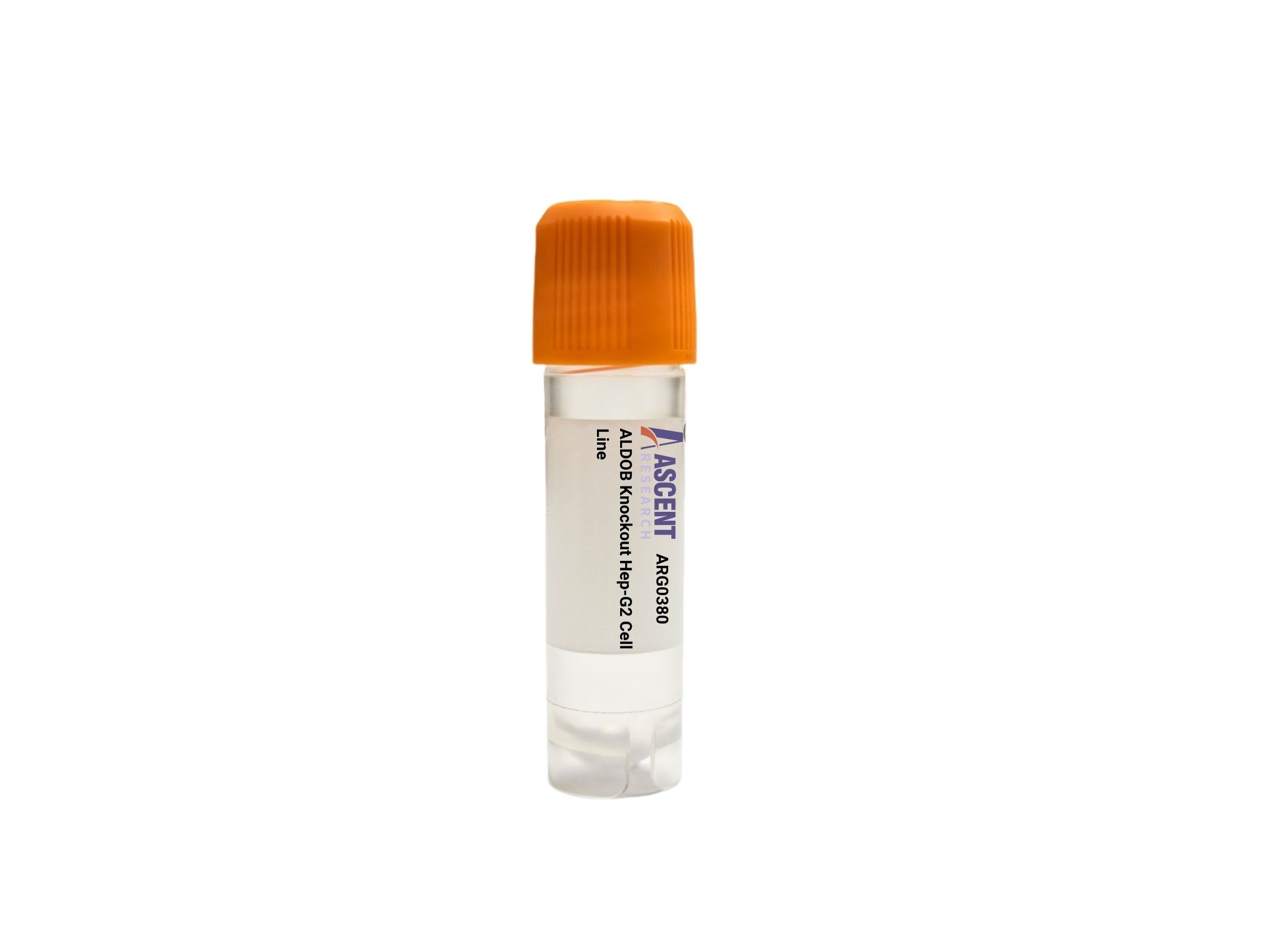
The ALDOB Knockout Hep-G2 Cell Line is a CRISPR/Cas9-edited cell line designed to disrupt the ALDOB gene in the human hepatocellular carcinoma Hep-G2 background. Aldolase B, the encoded enzyme, is essential for fructose metabolism and is regulated by factors such as ChREBP and insulin, with direct interaction with fructokinase (KHK). This model enables investigation of hereditary fructose intolerance, fructose-driven metabolic flux, and glycolytic addiction in liver cancer. Applications include fructose-1-phosphate accumulation assays, metabolic flux analysis, and drug testing for metabolic disorders.
 PDCD6IP Knockout 143B Polyclonal Cells
Cat. No. ARG11793
LGALS3 Knockout A549 Polyclonal Cells
Cat. No. ARG10627
BICD1 Knockout 786-O Polyclonal Cells
Cat. No. ARG25080
GORASP2 Knockout HGC-27 Polyclonal Cells
Cat. No. ARG29840
GNRH1 Knockout MCF7 Polyclonal Cells
Cat. No. ARG36429
APOBEC3A Knockout NCI-H1299 Polyclonal Cells
Cat. No. ARG36474
PDCD6IP Knockout 143B Polyclonal Cells
Cat. No. ARG11793
LGALS3 Knockout A549 Polyclonal Cells
Cat. No. ARG10627
BICD1 Knockout 786-O Polyclonal Cells
Cat. No. ARG25080
GORASP2 Knockout HGC-27 Polyclonal Cells
Cat. No. ARG29840
GNRH1 Knockout MCF7 Polyclonal Cells
Cat. No. ARG36429
APOBEC3A Knockout NCI-H1299 Polyclonal Cells
Cat. No. ARG36474
The ALDOB Knockout Hep-G2 Cell Line is a CRISPR/Cas9-edited knockout cell line derived from the human hepatocellular carcinoma cell line Hep-G2, engineered to disrupt the ALDOB gene. This loss-of-function model specifically targets aldolase B, the enzyme responsible for the reversible cleavage of fructose-1,6-bisphosphate in glycolysis and gluconeogenesis, as well as the cleavage of fructose-1-phosphate in fructose metabolism. The knockout cell line provides a stable and reproducible system for investigating fructose-related metabolic pathways in a hepatic context.
Hep-G2 is a widely utilized human hepatocellular carcinoma cell line originally isolated from a 15-year-old male. As a model of liver parenchymal cells, Hep-G2 retains many differentiated hepatic functions and is extensively employed for in vitro studies of liver metabolism, hepatotoxicity, and hepatocellular carcinoma biology. The cell line exhibits robust glycolytic activity and expresses key metabolic enzymes, making it particularly suitable for dissecting the contribution of ALDOB to carbohydrate metabolism and its dysregulation in liver cancer.
Aldolase B, encoded by ALDOB, plays a central role in fructose metabolism by converting fructose-1-phosphate into dihydroxyacetone phosphate and glyceraldehyde. This activity is tightly regulated by upstream factors such as ChREBP, SREBP-1c, glucagon, insulin, glucocorticoid receptor, and HIF-1??. The enzyme interacts with fructokinase (KHK), triose phosphate isomerase, and glyceraldehyde-3-phosphate dehydrogenase, and its products feed into glycolysis, gluconeogenesis, and the pentose phosphate pathway. Disruption of ALDOB abolishes catalytic cleavage, leading to accumulation of fructose-1-phosphate and altered flux through downstream carbon metabolism and HIF-1 signaling.
In the Hep-G2 background, ALDOB knockout creates a cellular model that mimics key aspects of hereditary fructose intolerance, a metabolic disorder caused by aldolase B deficiency. The accumulation of fructose-1-phosphate and the concomitant depletion of ATP and phosphate pools recapitulate the metabolic stress observed in patient hepatocytes. Moreover, because Hep-G2 cells are derived from a hepatocellular carcinoma, this knockout line enables exploration of how fructose metabolism intersects with oncogenic signaling, metabolic reprogramming, and glycolytic addiction in liver cancer, offering insights into non-alcoholic fatty liver disease and metabolic syndrome.
This knockout cell line is suited for a wide range of research applications, including metabolic flux analysis using LC-MS, fructose tolerance assays, Seahorse-based glycolysis stress tests, and quantification of fructose-1-phosphate accumulation. It can be used to screen compounds that modulate fructose metabolism, validate the role of ALDOB in hepatocellular carcinoma proliferation, and investigate the interplay between insulin signaling and ChREBP-mediated transcriptional regulation. Researchers may also employ western blotting and RT-qPCR to confirm knockout and assess compensatory pathway activation. For detailed technical support, please contact Ascent Research.