In Stock Cell Lines
Rattus norvegicus (Rat)
Pancreas
Adherent
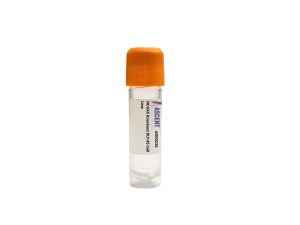
The Amer3 Knockout INS-1 Cell Line is a CRISPR/Cas9-edited knockout cell line derived from the rat insulinoma INS-1 pancreatic beta cell line, featuring targeted disruption of Amer3. Amer3 acts as a negative regulator of Wnt/beta-catenin signaling by recruiting APC to the plasma membrane, facilitating beta-catenin degradation via the destruction complex. This knockout model provides a powerful tool for investigating Wnt pathway-mediated regulation of beta cell proliferation, insulin secretion, and survival, with applications in type 2 diabetes and cancer research. Key molecular targets include beta-catenin, TCF/LEF transcription factors, and Wnt-responsive genes such as c-Myc and Cyclin D1.
 CSNK1G1 Knockout SK-HEP-1 Polyclonal Cells
Cat. No. ARG15351
MICA Knockout NCI-H1299 Polyclonal Cells
Cat. No. ARG17433
ISOC1 Knockout 786-O Polyclonal Cells
Cat. No. ARG25366
EIF4A2 Knockout HGC-27 Polyclonal Cells
Cat. No. ARG41030
LYRM7 Knockout Raji Polyclonal Cells
Cat. No. ARG0984
CSNK1G1 Knockout SK-HEP-1 Polyclonal Cells
Cat. No. ARG15351
MICA Knockout NCI-H1299 Polyclonal Cells
Cat. No. ARG17433
ISOC1 Knockout 786-O Polyclonal Cells
Cat. No. ARG25366
EIF4A2 Knockout HGC-27 Polyclonal Cells
Cat. No. ARG41030
LYRM7 Knockout Raji Polyclonal Cells
Cat. No. ARG0984
 A-72
Cat. No. ARC0038
A-72
Cat. No. ARC0038
The Amer3 Knockout INS-1 Cell Line is a CRISPR/Cas9-edited knockout cell line derived from the rat insulinoma INS-1 parental line. This product features targeted disruption of the Amer3 gene, resulting in a stable loss-of-function model that enables detailed investigation of Amer3 function in a biologically relevant beta cell context. The knockout cell line is provided as a convenient, ready-to-use format, eliminating the need for researchers to perform time-consuming gene editing procedures. It serves as a powerful tool for dissecting the role of Amer3 in Wnt/beta-catenin signaling and its impact on pancreatic beta cell physiology.
The INS-1 host cell line is a well-established insulin-secreting beta cell model originally derived from an X-ray-induced rat insulinoma. INS-1 cells retain key characteristics of primary beta cells, including glucose-responsive insulin secretion, making them a widely used in vitro system for studying beta cell function, proliferation, and survival. This cell line has been instrumental in advancing our understanding of glucose homeostasis and the molecular mechanisms underlying beta cell dysfunction in type 2 diabetes. The INS-1 background provides a physiologically relevant platform for evaluating the consequences of Amer3 knockout on insulin secretory dynamics and beta cell health.
Amer3 functions as a negative regulator of the Wnt/beta-catenin signaling pathway by acting as an adaptor protein that recruits the tumor suppressor APC to the plasma membrane, thereby enhancing the activity of the beta-catenin destruction complex. This destruction complex, composed of the scaffold proteins Axin and APC, and the kinases GSK3beta and CK1, promotes the phosphorylation and subsequent ubiquitin-dependent proteasomal degradation of beta-catenin. In the absence of Wnt ligand stimulation, Amer3 reinforces this degradation, maintaining low cytoplasmic beta-catenin levels. Upon binding of Wnt ligands such as Wnt3a or Wnt1 to Frizzled receptors, Dishevelled is activated, leading to dissociation of the destruction complex, stabilization of beta-catenin, and its nuclear translocation where it associates with TCF/LEF transcription factors to drive expression of target genes including c-Myc, Cyclin D1, and Axin2. Knockout of Amer3 disrupts this regulatory mechanism, leading to a derepression of Wnt/beta-catenin signaling.
In the context of pancreatic beta cells, canonical Wnt signaling has been implicated in the regulation of proliferation, survival, and possibly insulin secretion. Aberrant Wnt pathway activity is associated with beta cell dysfunction and the pathogenesis of type 2 diabetes. The Amer3 knockout in INS-1 cells provides a unique model to study how enhanced Wnt/beta-catenin signaling impacts beta cell proliferation and function. Researchers can use this cell line to examine changes in glucose-stimulated insulin secretion (GSIS), cell cycle progression, and apoptosis, thereby elucidating the role of Amer3 in maintaining beta cell homeostasis and its potential contribution to diabetic phenotypes.
This knockout cell line is ideally suited for a wide range of research applications, including the study of beta cell proliferation, Wnt signaling-dependent regulation of insulin secretion, beta cell survival, and the molecular mechanisms of diabetes. Representative assays that can be performed with this model include western blotting to assess beta-catenin and phospho-beta-catenin levels, TopFlash luciferase reporter assays to quantify TCF/LEF transcriptional activity, RT-qPCR for Wnt target gene expression (e.g., Axin2, c-Myc, Cyclin D1), immunofluorescence to visualize beta-catenin subcellular localization, cell proliferation assays (EdU or BrdU incorporation), and insulin secretion assays including static GSIS. This cell line also enables pharmacological perturbations and genetic rescue experiments. For further information, including availability and technical support, please contact Ascent Research.