Genome-edited Cells
Large intestine (colon)
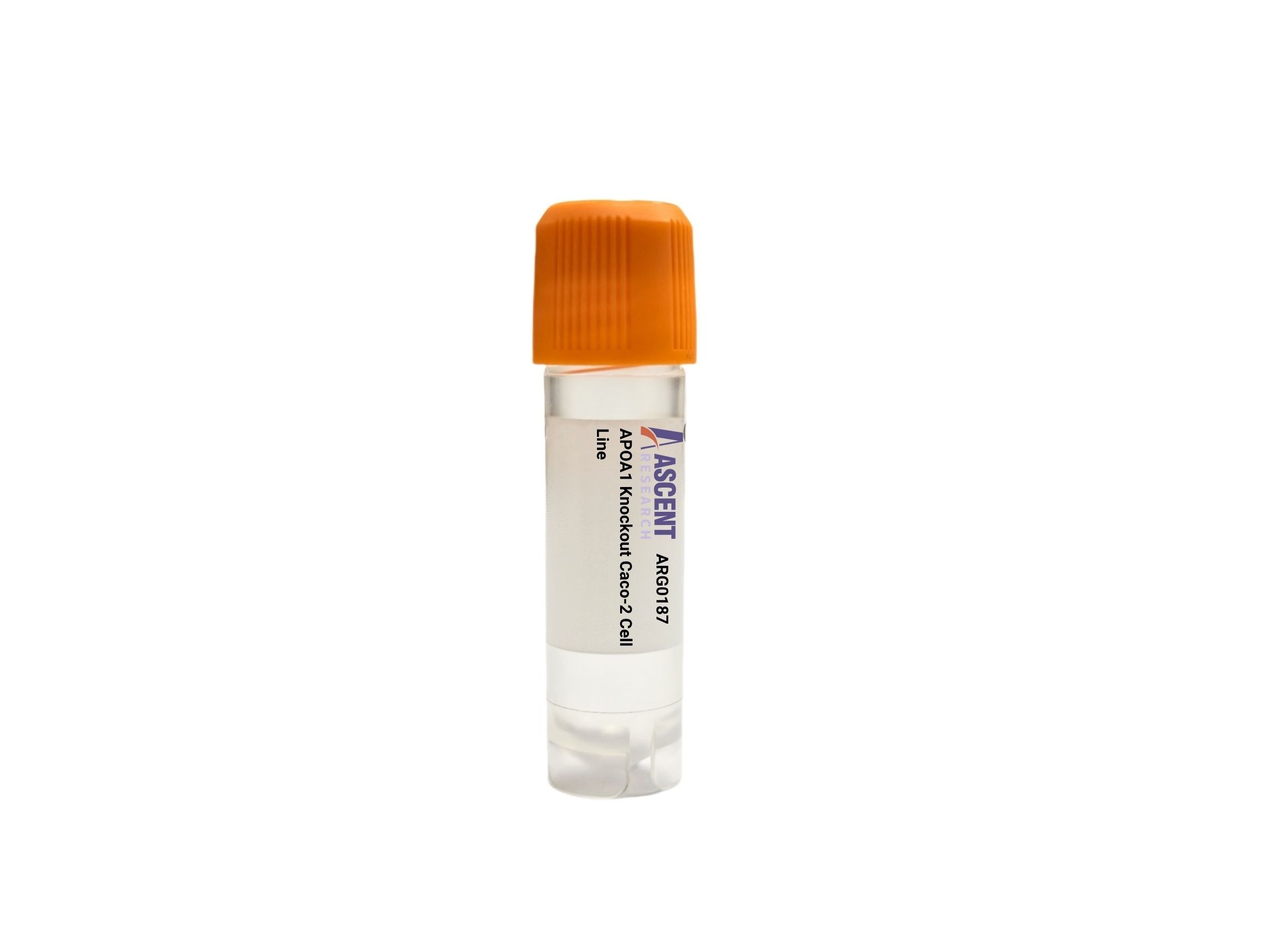
APOA1 Knockout Caco-2 is a human CRISPR/Cas9-edited intestinal epithelial model generated in the enterocyte-like Caco-2 background. Because Caco-2 cells differentiate into polarized absorptive monolayers, this knockout is useful for studying APOA1-dependent HDL metabolism, ABCA1-mediated cholesterol efflux, reverse cholesterol transport, and intestinal lipoprotein secretion. APOA1 functions within networks involving ABCA1, SCARB1, LCAT, APOB, and MTTP and is regulated by PPAR and LXR/RXR pathways. Applications include cholesterol efflux assays, APOA1 secretion ELISA, lipoprotein profiling, RT-qPCR, western blotting, lipid uptake studies, and barrier or TEER-based analyses of epithelial transport and lipid handling.
 ITPR1 Knockout NCI-H1299 Polyclonal Cells
Cat. No. ARG30867
DNAJA2 Knockout huh-7 Polyclonal Cells
Cat. No. ARG39076
FGD1 Knockout 786-O Polyclonal Cells
Cat. No. ARG5547
FMNL1 Knockout HEK293T Polyclonal Cells
Cat. No. ARG3439
ITPR1 Knockout NCI-H1299 Polyclonal Cells
Cat. No. ARG30867
DNAJA2 Knockout huh-7 Polyclonal Cells
Cat. No. ARG39076
FGD1 Knockout 786-O Polyclonal Cells
Cat. No. ARG5547
FMNL1 Knockout HEK293T Polyclonal Cells
Cat. No. ARG3439
 Mouse Ovarian Granulosa Cell Medium
Cat. No. ARM0532
Mouse Ovarian Granulosa Cell Medium
Cat. No. ARM0532
 Rabbit Glomerular Endothelial Cells
Cat. No. ARP0739
Rabbit Glomerular Endothelial Cells
Cat. No. ARP0739
The APOA1 Knockout Caco-2 Cell Line is a human CRISPR/Cas9-engineered knockout model in which the APOA1 gene has been disrupted to abolish functional apolipoprotein A-I expression. This product provides a stable in vitro system for studying APOA1-dependent mechanisms in an intestinal epithelial context. The host background is Caco-2, a human colorectal adenocarcinoma-derived cell line widely used to investigate epithelial differentiation, barrier function, nutrient transport, and lipoprotein handling. In this setting, APOA1 loss enables targeted analysis of HDL-related lipid biology and epithelial cholesterol trafficking under controlled experimental conditions.
Caco-2 cells are extensively used because they spontaneously differentiate after confluence into polarized enterocyte-like monolayers that exhibit apical brush-border morphology, tight junction formation, and vectorial transport properties. These features make them a standard model for intestinal absorption and transepithelial movement of nutrients, xenobiotics, and lipids. Their ability to form a functional epithelial barrier also supports studies of intestinal metabolism in conjunction with barrier integrity assays and transepithelial electrical resistance measurements. As an absorptive enterocyte-like system, Caco-2 cells are particularly relevant for evaluating lipid uptake, cholesterol processing, and intestinal lipoprotein secretion.
APOA1 encodes the principal structural apolipoprotein of HDL and acts as a critical acceptor for ABCA1-mediated cholesterol and phospholipid efflux. Its expression is regulated by lipid-sensitive transcriptional programs involving PPARA, PPARG, NR1H3/LXRalpha, RXRA, and HNF4A, and can be modulated by retinoids, fatty acids, and cholesterol loading. APOA1 interacts functionally with ABCA1, LCAT, SCARB1/SR-BI, APOA2, APOE, APOB, MTTP, and CETP within HDL metabolism, reverse cholesterol transport, and intestinal lipoprotein pathways. Through these interactions, APOA1 acts upstream of HDL particle formation, influences cellular cholesterol content, contributes to SCARB1-dependent lipid flux, and affects triglyceride-rich lipoprotein assembly. These mechanisms are directly relevant to dyslipidemia, hypoalphalipoproteinemia, atherosclerotic cardiovascular disease, metabolic syndrome, and Tangier syndrome-related HDL biology.
In the Caco-2 background, APOA1 deletion is a useful model for examining how loss of a major HDL apolipoprotein alters enterocyte-like lipid handling and apical-basolateral transport processes. Because Caco-2 monolayers recapitulate key features of intestinal epithelial polarization, this knockout can be used to investigate gene-dependent effects on cholesterol efflux, intracellular lipid balance, epithelial differentiation-associated transport programs, and cross-regulation of factors such as ABCA1, ABCG1, SCARB1, APOB, and MTTP. The model is also suited for studying transcriptional responses downstream of PPAR and LXR/RXR pathway perturbation in a relevant intestinal cell system.
This cell line supports mechanistic studies using western blotting, RT-qPCR, RNA-seq, and ELISA to assess APOA1 loss and associated pathway remodeling. Functional applications include cholesterol efflux assays to evaluate ABCA1-dependent export capacity, HDL and lipoprotein profiling to characterize altered particle-related biology, and triglyceride or cholesterol quantification to measure changes in cellular lipid pools. Investigators may also combine lipid uptake assays, metabolic assays, immunofluorescence, and barrier integrity or TEER measurements to determine how APOA1 disruption influences epithelial transport physiology and lipoprotein secretion. The model is appropriate for studies of intestinal cholesterol transport, reverse cholesterol transport, cardiovascular disease mechanisms, transporter regulation, and nutrient absorption. Researchers may contact Ascent Research for additional technical information, product details, or related gene-edited cell models.