Genome-edited Cells
Uterus (cervix)
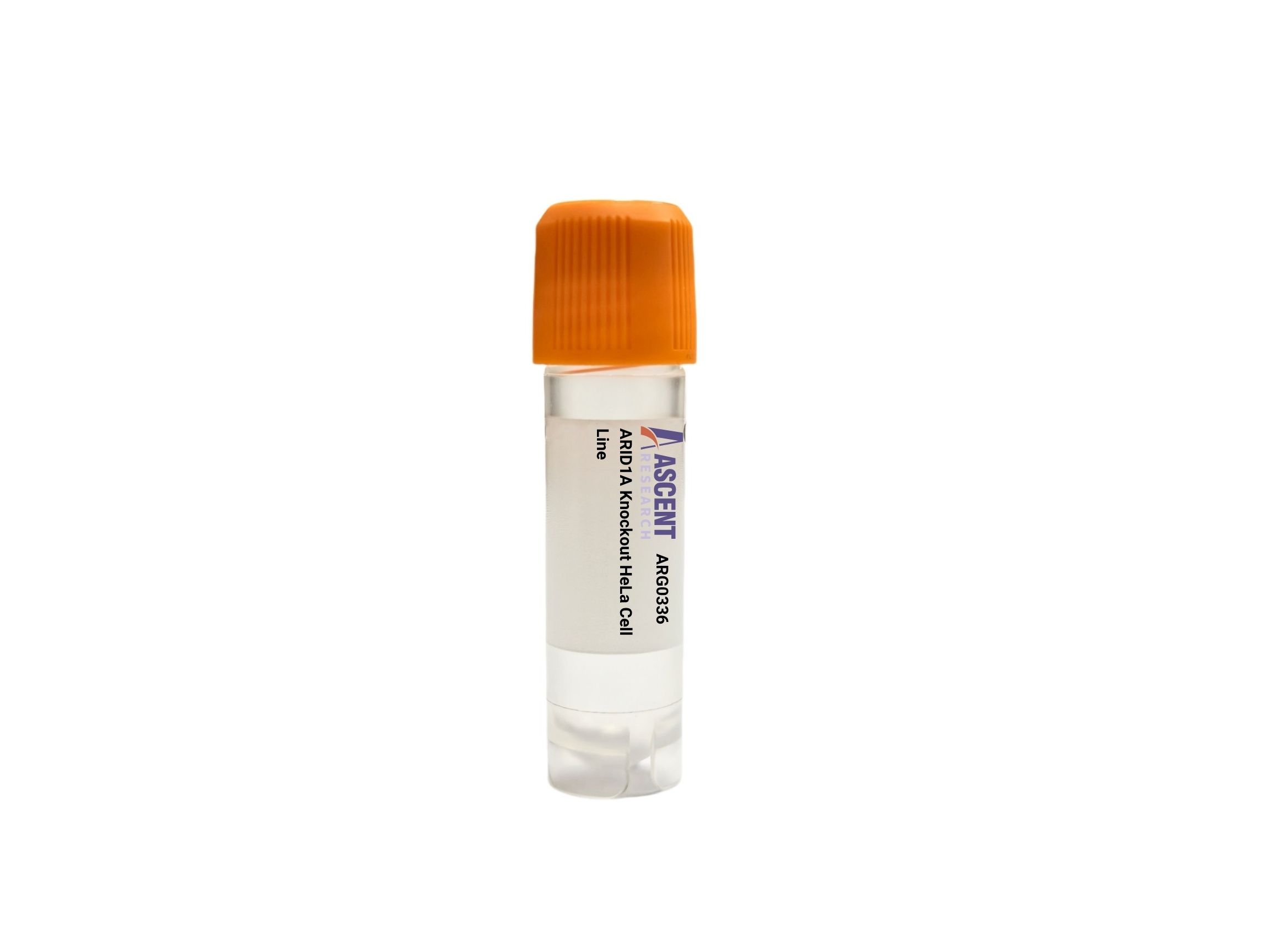
The ARID1A Knockout HeLa Cell Line is a CRISPR/Cas9-edited loss-of-function model derived from human cervical adenocarcinoma HeLa cells. ARID1A encodes a key subunit of the SWI/SNF complex and functions as a tumor suppressor, regulating gene expression and DNA repair. Its loss disrupts chromatin remodeling and activates oncogenic signaling through pathways involving PIK3CA, CTNNB1, and EZH2. This cell line is ideal for studying chromatin biology, tumor suppression, and drug sensitivity in a gynecological cancer context. Researchers can employ it in assays such as RNA-seq, ChIP-qPCR, and proliferation analyses to investigate ARID1A-dependent mechanisms and therapeutic vulnerabilities.
 HOOK3 Knockout AGS Polyclonal Cells
Cat. No. ARG26969
ACACA Knockout Hela Polyclonal Cells
Cat. No. ARG37475
DTX3L Knockout HEK293T Polyclonal Cells
Cat. No. ARG39957
LPCAT1 Knockout NCI-H1299 Polyclonal Cells
Cat. No. ARG17819
FGGY Knockout HEK293T Polyclonal Cells
Cat. No. ARG3594
HOOK3 Knockout AGS Polyclonal Cells
Cat. No. ARG26969
ACACA Knockout Hela Polyclonal Cells
Cat. No. ARG37475
DTX3L Knockout HEK293T Polyclonal Cells
Cat. No. ARG39957
LPCAT1 Knockout NCI-H1299 Polyclonal Cells
Cat. No. ARG17819
FGGY Knockout HEK293T Polyclonal Cells
Cat. No. ARG3594
 Mouse Aortic Adventitial Fibroblasts
Cat. No. ARP0437
Mouse Aortic Adventitial Fibroblasts
Cat. No. ARP0437
The ARID1A Knockout HeLa Cell Line is a CRISPR/Cas9-edited human cell product with targeted disruption of the ARID1A gene, creating a stable loss-of-function model. This cell line provides a renewable resource for studying ARID1A deficiency in a well-characterized epithelial carcinoma background, enabling dissection of its roles in chromatin remodeling and tumor suppression.
HeLa cells are an immortalized human epithelial line derived from cervical adenocarcinoma, widely used in cancer research for their robust growth and extensively studied signaling networks. Their origin makes them particularly relevant for gynecological cancer studies, offering a context in which to explore the functions of tumor suppressors like ARID1A within an altered cellular environment that includes HPV-driven transformation.
ARID1A encodes a core subunit of the SWI/SNF chromatin remodeling complex, which interacts with SMARCA4, SMARCC1, and SMARCC2 to regulate nucleosome positioning and gene transcription. Under the control of upstream regulators such as TP53 and HIF1A, ARID1A transcriptionally modulates downstream targets including CDKN1A, BAX, and EZH2. Loss of ARID1A disrupts SWI/SNF-mediated chromatin accessibility, leading to aberrant activation of oncogenic pathways such as PI3K/AKT (via PIK3CA) and WNT/CTNNB1, while impairing TGF-beta/SMAD signaling and DNA repair, thereby promoting genomic instability and oncogenic phenotypes.
In the HeLa background, ARID1A knockout recapitulates features of ARID1A-deficient tumors like ovarian clear cell carcinoma and endometriosis-associated cancers. The model exhibits enhanced proliferation, apoptosis resistance, and altered drug sensitivity, making it valuable for investigating the tumor-suppressive role of ARID1A in a cervical cancer context. It also allows study of how ARID1A loss interacts with existing HeLa mutations to drive tumorigenesis.
This knockout cell line is suited for chromatin studies via ChIP-qPCR, transcriptional profiling by RNA-seq, and protein analysis using Western blotting. Functional assays for proliferation, apoptosis, and drug sensitivity screening (e.g., targeting PI3K or EZH2) can be employed to pinpoint pathway dependencies. Researchers in cancer biology, chromatin remodeling, and SWI/SNF complex biology will find this model essential for mechanistic and preclinical research. For additional details, please contact Ascent Research.