Genome-edited Cells
Lung
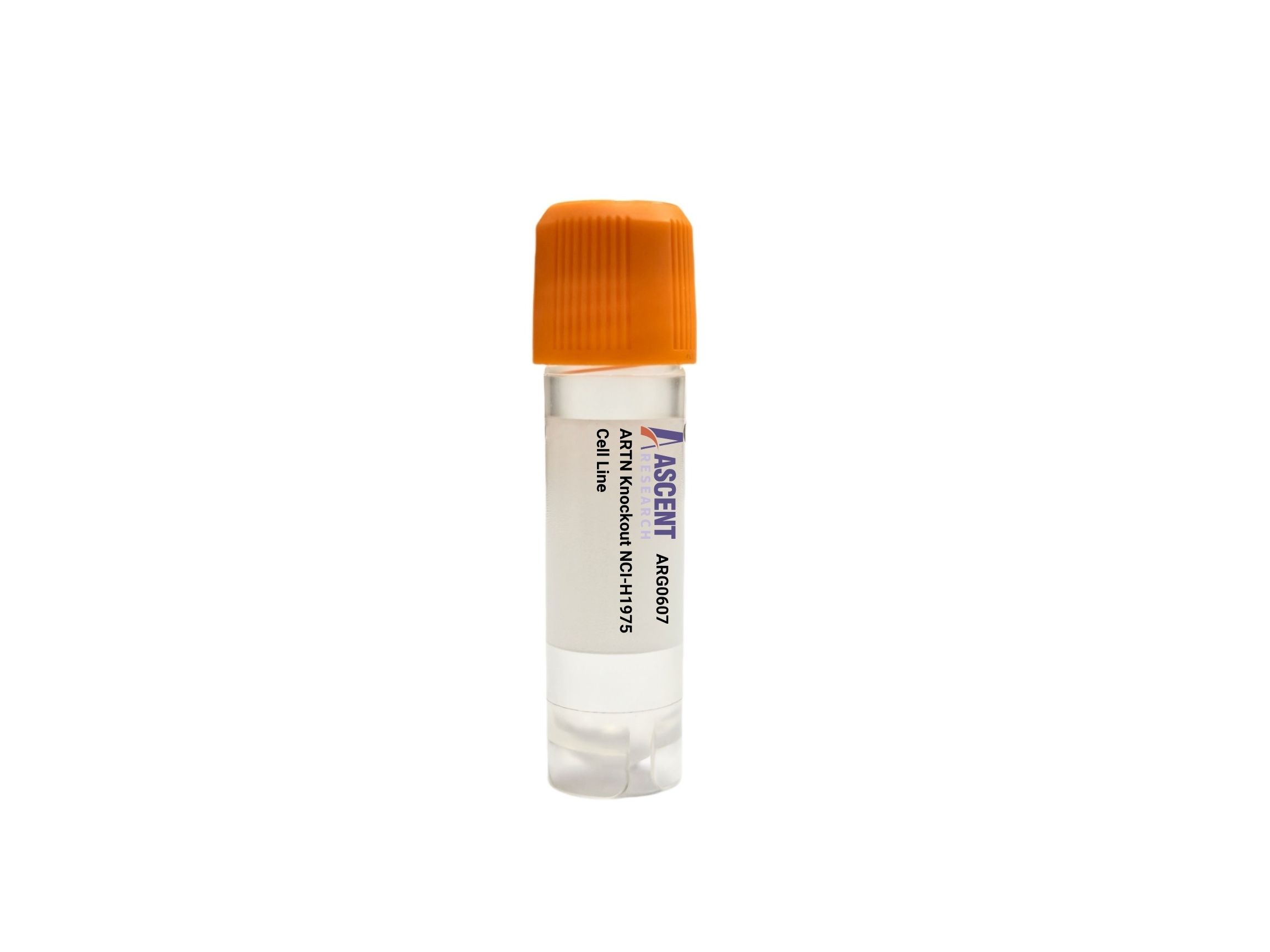
The ARTN Knockout NCI-H1975 Cell Line is a CRISPR/Cas9-edited human lung adenocarcinoma cell line with targeted disruption of the ARTN gene. Derived from the NCI-H1975 parental line harboring EGFR L858R and T790M mutations, this model eliminates artemin-mediated signaling through the GFR??3/RET receptor complex. By ablating ARTN expression, researchers can assess the loss of downstream ERK1/2 and AKT pathway activation, leading to reduced proliferation, survival, and drug resistance. Applications include investigation of GDNF family signaling in NSCLC, screening for RET pathway inhibitors, and functional studies using western blotting, cell proliferation, and migration assays.
The ARTN Knockout NCI-H1975 Cell Line is a CRISPR/Cas9-edited knockout cell line derived from the human NCI-H1975 lung adenocarcinoma cell line. This product provides a targeted loss-of-function model for the ARTN gene (encoding artemin), a member of the GDNF family of neurotrophic factors. By disrupting the endogenous ARTN locus using CRISPR/Cas9 technology, researchers can abrogate artemin expression and investigate its cellular functions in a well-characterized non-small cell lung cancer (NSCLC) background. The cell line serves as a controlled experimental platform for studying artemin-mediated signaling, cancer progression, and therapeutic resistance without the confounding effects of variable ARTN expression.
The NCI-H1975 parental line is a widely used human lung adenocarcinoma cell line harboring the EGFR L858R and T790M mutations, originally isolated from a non-smoking female patient. These activating EGFR mutations confer sensitivity to first-generation EGFR tyrosine kinase inhibitors (TKIs) like erlotinib, although the T790M mutation is associated with acquired resistance. As a model of NSCLC, NCI-H1975 cells exhibit characteristics typical of adenocarcinoma, including uncontrolled proliferation and survival signaling. The introduction of an ARTN knockout into this genetic background allows for the dissection of artemin’s role in EGFR-mutant lung cancer pathogenesis, particularly in the context of oncogenic kinase signaling and drug resistance.
Artemin (ARTN) functions as a neurotrophic factor that binds GFR??3 and activates the RET receptor tyrosine kinase. Downstream signaling through SHC, GRB2, RAS, ERK1/2, and AKT promotes cell survival, proliferation, and migration. Upstream regulators TWIST1, NF-??B, and TGF-?? control ARTN transcription. Key downstream targets include the SHC-GRB2-SOS complex, ERK1/2, AKT, BCL2, cyclin D1, and MMP9. ARTN interaction with NCAM and heparan sulfate proteoglycans further modulates signaling. Disruption of ARTN in NCI-H1975 cells eliminates RET pathway activation, impairing MAPK/ERK and PI3K/AKT cascades and thereby reducing oncogenic activities.
In the NCI-H1975 cellular context, ARTN knockout provides a valuable tool for investigating the interplay between GDNF family signaling and EGFR-driven oncogenesis. The presence of the T790M gatekeeper mutation in this cell line is a common mechanism of resistance to EGFR-TKIs in patients, and ARTN signaling has been implicated in bypass signaling that sustains cancer cell survival under TKI pressure. By ablating ARTN expression, researchers can assess the dependence of NCI-H1975 cells on artemin for maintaining proliferative and anti-apoptotic signals, as well as invasive properties. This model also enables the study of how artemin-mediated RET activation may contribute to adaptive resistance mechanisms, offering insights into combination therapies targeting both EGFR and RET pathways.
Typical applications include western blotting for RET signaling proteins, RT-qPCR for ARTN expression, cell proliferation assays, migration/invasion assays, drug sensitivity assays (EGFR-TKIs), flow cytometry for apoptosis, and immunofluorescence for RET localization. The ARTN Knockout NCI-H1975 Cell Line is thus a robust system for functional genomics studies, drug screening, and mechanistic investigations into artemin-related pathology. For additional details or technical support, please contact Ascent Research.