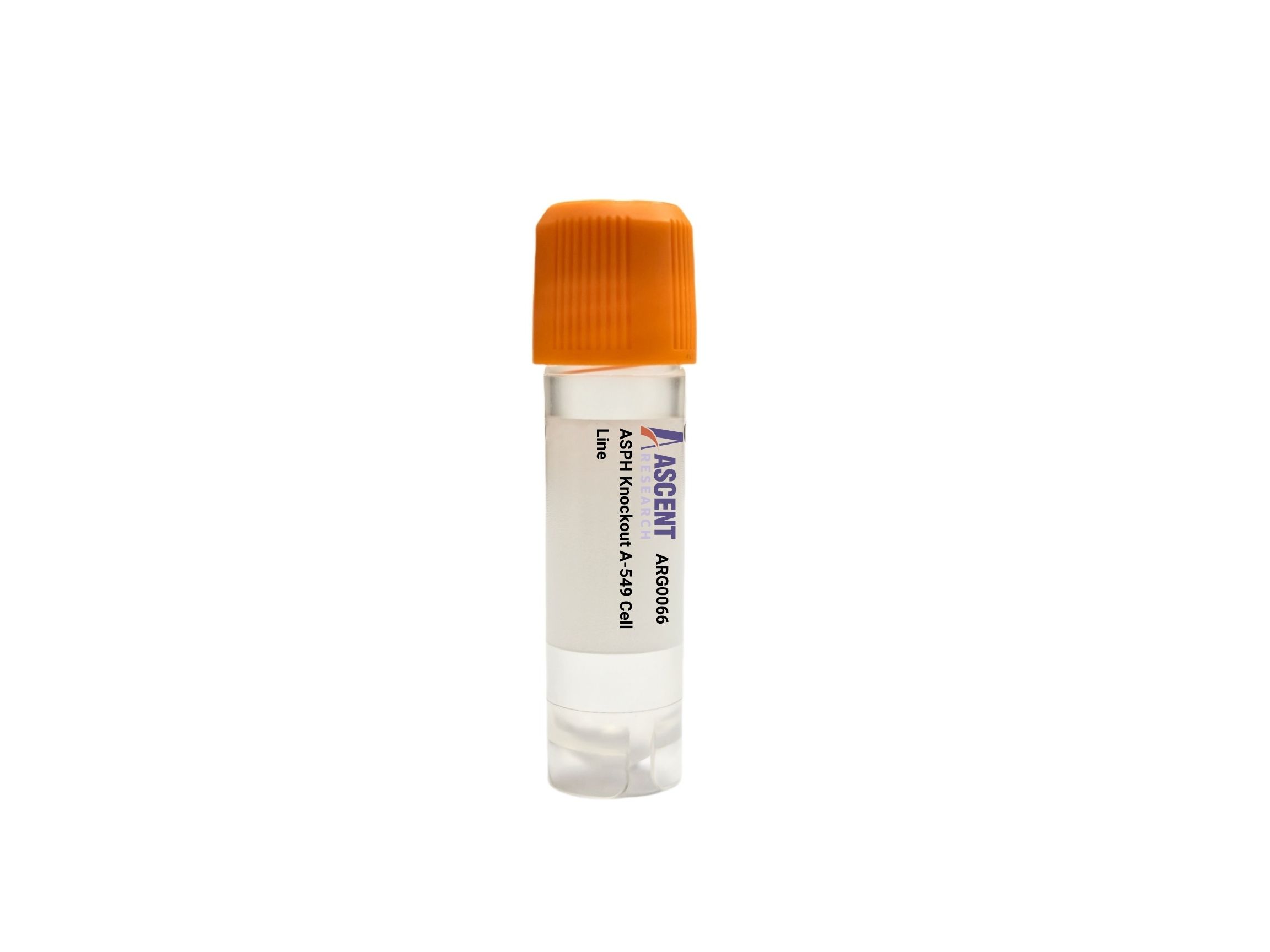
Genome-edited Cells
Lung
ASPH Knockout A-549 is a CRISPR/Cas9-engineered human lung adenocarcinoma epithelial cell line with disruption of ASPH, an endoplasmic reticulum aspartate beta-hydroxylase that modifies EGF-like domain-containing proteins. In the alveolar epithelial-like A-549 background, this model supports analysis of ASPH-dependent regulation of Notch-associated signaling involving NOTCH1, JAG1, HES1, and related pathways linked to PI3K-AKT, ERK1/2, hypoxia responses, migration, invasion, and survival. It is suitable for lung cancer signaling studies, EMT and metastasis research, target validation, and drug response profiling using western blotting, RT-qPCR, RNA-seq, reporter assays, and migration or invasion assays.
 MAD1L1 Knockout SK-HEP-1 Polyclonal Cells
Cat. No. ARG16311
LRBA Knockout HT29 Polyclonal Cells
Cat. No. ARG13893
CHEK2 Knockout NCI-H1703 Polyclonal Cells
Cat. No. ARG12560
MAN2B1 Knockout Hela Polyclonal Cells
Cat. No. ARG9075
HMMR Knockout Raji Polyclonal Cells
Cat. No. ARG23719
MAD1L1 Knockout SK-HEP-1 Polyclonal Cells
Cat. No. ARG16311
LRBA Knockout HT29 Polyclonal Cells
Cat. No. ARG13893
CHEK2 Knockout NCI-H1703 Polyclonal Cells
Cat. No. ARG12560
MAN2B1 Knockout Hela Polyclonal Cells
Cat. No. ARG9075
HMMR Knockout Raji Polyclonal Cells
Cat. No. ARG23719
 CUL5 Knockout A-549 Cell Line
Cat. No. ARG0077
CUL5 Knockout A-549 Cell Line
Cat. No. ARG0077
The ASPH Knockout A-549 Cell Line is a human gene-edited lung cancer model generated by CRISPR/Cas9-mediated disruption of the ASPH locus in A-549 cells, resulting in loss of functional ASPH expression. This stable knockout line provides an in vitro system for examining the consequences of ASPH deficiency in a human lung adenocarcinoma epithelial background. It is designed for mechanistic studies of cancer-associated signaling, tumor cell plasticity, and pathway-dependent phenotypes linked to ASPH activity.
A-549 is a widely used human lung adenocarcinoma cell line with epithelial morphology and alveolar type II-like characteristics. As an alveolar epithelial-like tumor model, A-549 is broadly applied in studies of pulmonary cancer biology, epithelial cell signaling, growth control, survival pathways, invasion, and therapeutic response. Its extensive use in lung cancer research makes it a relevant host background for evaluating how targeted gene loss alters signaling networks, transcriptional programs, and phenotypic outputs in epithelial tumor cells.
ASPH encodes aspartate beta-hydroxylase, an endoplasmic reticulum membrane alpha-ketoglutarate-dependent dioxygenase that hydroxylates aspartyl and asparaginyl residues within EGF-like domains of selected substrates. ASPH has been linked to processing of EGF-like domain-containing proteins and to enhanced Notch pathway activity, including signaling involving NOTCH1, NOTCH3, JAG1, JAG2, DLL1, and downstream transcriptional targets such as HES1 and HEY1. In cancer-associated contexts, ASPH expression is regulated by HIF1A, insulin, IGF1, PI3K-AKT signaling, MAPK-ERK signaling, growth factor stimulation, and oncogenic stress. It also interfaces with factors involved in invasion and adhesion remodeling, including SRC, MMP14, ADAM12, and focal adhesion signaling components. Through these relationships, ASPH has been associated with epithelial-mesenchymal transition, tumor motility, matrix invasion, proliferation, and apoptosis resistance across multiple malignancies, including lung cancer.
Within the A-549 background, ASPH knockout enables controlled investigation of how loss of this ER hydroxylase influences epithelial tumor-cell behavior and pathway dependency. This model is particularly useful for studying Notch-linked transcriptional outputs, hypoxia-associated signaling, and crosstalk between PI3K-AKT, ERK1/2, and SRC-centered networks in a lung adenocarcinoma setting. Comparison with parental cells can help define ASPH-dependent effects on migration, invasion, colony formation, survival under stress, and gene-expression programs associated with aggressive tumor phenotypes.
This cell line is well suited for western blotting, RT-qPCR, and RNA-seq analysis of ASPH-regulated pathways, including expression changes in NOTCH1, JAG1, HES1, and HEY1. Immunofluorescence and flow cytometry can be used to assess protein localization and surface-marker changes, while co-immunoprecipitation and reporter assays support investigation of interactions with Notch pathway components and pathway output. Phospho-signaling studies can be applied to examine PI3K-AKT, ERK1/2, and SRC pathway responses after growth factor or hypoxic stimulation. Functional applications include apoptosis assays, migration and invasion assays, colony formation studies, and drug sensitivity experiments aimed at defining ASPH-dependent vulnerabilities or biomarker relationships in lung cancer cells. Researchers may contact Ascent Research for additional technical information, product details, or related gene-edited cell models.