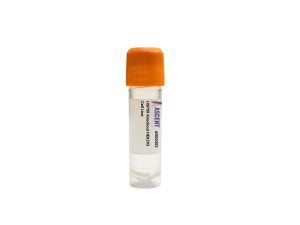
In Stock Cell Lines
Homo sapiens (Human)
Skin
Adherent
The ATG5 Knockout HaCaT Cell Line is a CRISPR/Cas9-edited human keratinocyte cell line featuring targeted disruption of the ATG5 gene, a core autophagy component. ATG5 conjugates with ATG12 and ATG16L1 to facilitate LC3 lipidation and autophagosome elongation, and its loss blocks canonical autophagy, impairs p62 degradation, and alters stress responses. This model is ideal for studying autophagy mechanisms, screening autophagy modulators, and investigating the role of ATG5 in epidermal biology, inflammation, and host?Cpathogen interactions. Typical assays include Western blotting for LC3 and p62, immunofluorescence for autophagosomes, and viability assays under starvation conditions.
 MAPK1 Knockout THP-1 Polyclonal Cells
Cat. No. ARG7398
ARFGAP2 Knockout NCI-H1975 Polyclonal Cells
Cat. No. ARG31187
AP4E1 Knockout AGS Polyclonal Cells
Cat. No. ARG26590
NUCKS1 Knockout MES-OV Polyclonal Cells
Cat. No. ARG6818
PAWR Knockout Raji Polyclonal Cells
Cat. No. ARG1042
MAPK1 Knockout THP-1 Polyclonal Cells
Cat. No. ARG7398
ARFGAP2 Knockout NCI-H1975 Polyclonal Cells
Cat. No. ARG31187
AP4E1 Knockout AGS Polyclonal Cells
Cat. No. ARG26590
NUCKS1 Knockout MES-OV Polyclonal Cells
Cat. No. ARG6818
PAWR Knockout Raji Polyclonal Cells
Cat. No. ARG1042
 Human Bronchial Epithelial Cells
Cat. No. ARP0138
Human Bronchial Epithelial Cells
Cat. No. ARP0138
The ATG5 Knockout HaCaT Cell Line is a CRISPR/Cas9-edited knockout cell line in which the ATG5 gene has been disrupted to create a loss-of-function model in an immortalized human keratinocyte background. This product provides a genetically defined tool for dissecting the core autophagy machinery within a physiologically relevant epidermal context. The knockout, introduced via targeted genome editing, eliminates functional ATG5 expression and enables precise investigation of autophagy-dependent processes, including cargo degradation, cellular homeostasis, and stress signaling. The HaCaT host cell line is a widely used, non-tumorigenic model that retains normal differentiation capacity, making this knockout system suitable for mechanistic studies, drug screening, and exploration of autophagy in skin biology and innate immunity.
The HaCaT cell line originates from spontaneously immortalized adult human skin keratinocytes and is characterized by its ability to form a stratified epidermis in organotypic culture, recapitulating barrier formation and cornified envelope assembly. These cells maintain keratinocyte-specific responses to cytokines, growth factors, and environmental stressors, and they are extensively employed to study wound healing, differentiation, and inflammatory signaling. The retention of normal differentiation potential is a critical feature, as it permits examination of how autophagy intersects with epidermal stratification and terminal differentiation programs. This background makes the ATG5 knockout cell line particularly valuable for research linking autophagy to cutaneous physiology and pathology.
ATG5 is an essential component of the autophagy conjugation systems. It is covalently attached to ATG12 via the sequential action of the E1-like enzyme ATG7 and the E2-like enzyme ATG10, and the resulting ATG5?CATG12 conjugate forms a complex with ATG16L1. This complex functions as an E3 ligase to catalyze the lipidation of LC3 and GABARAP family proteins, a pivotal event in autophagosome membrane expansion and closure. Beyond canonical autophagy, ATG5 participates in LC3-associated phagocytosis and has been implicated in apoptosis through calpain-mediated cleavage that generates a pro-death fragment. Upstream signals such as nutrient deprivation, mTORC1 inhibition, AMPK activation, ER stress, and hypoxia regulate ATG5 activity, which operates downstream of the ULK1 and Beclin-1?CVPS34 initiation complexes. Key downstream readouts include LC3 lipidation, p62/SQSTM1 degradation, and subsequent lysosomal turnover of autophagic cargo.
Knockout of ATG5 in HaCaT cells abolishes canonical autophagic flux, resulting in impaired degradation of selective autophagy substrates like p62 and defective formation of LC3 puncta. Given the role of autophagy in keratinocyte differentiation, redox balance, and immune responses, loss of ATG5 is expected to disrupt epidermal barrier maintenance, stress-induced signaling, and cytokine secretion. The non-tumorigenic nature of the HaCaT line provides a clean background for assessing autophagy??s contribution to cell survival, apoptosis, and differentiation in normal epithelium. This model is thus highly relevant for studying the interplay between autophagy and inflammatory skin disorders, as well as the autophagic response to microbial challenges encountered by the epidermis.
This ATG5 knockout cell line supports diverse experimental applications, including mechanistic dissection of autophagy using Western blotting to monitor LC3-II conversion and p62 accumulation, fluorescence microscopy to quantify LC3 puncta, and autophagic flux assays employing lysosomal inhibitors such as chloroquine or bafilomycin A1. It is suitable for drug screening campaigns aimed at identifying autophagy modulators, investigations into the role of autophagy in keratinocyte differentiation and wound healing, and studies of host?Cpathogen interactions with skin-tropic microorganisms. Additionally, the line facilitates cancer research by enabling analysis of autophagy??s role in metabolic stress adaptation, and it serves as a tool for exploring crosstalk between autophagy and innate immune pathways in the epidermis. For further information, please contact Ascent Research.