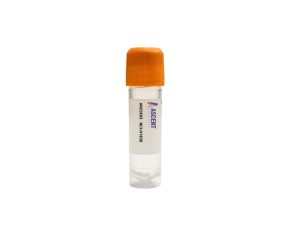
In Stock Cell Lines
Homo sapiens (Human)
Uterus (cervix)
Adherent
The ATP23 Knockout HeLa Cell Line is a CRISPR/Cas9-edited cell line featuring disruption of the ATP23 gene in HeLa cervical adenocarcinoma cells. This model abolishes the mitochondrial metalloprotease required for processing the ATP6 precursor, disrupting ATP synthase assembly and oxidative phosphorylation. Regulated by PPARGC1A and interacting with ATP6 and prohibitin, ATP23 is central to mitochondrial bioenergetics. The knockout line is ideal for studying ATP synthesis, mitochondrial diseases, and cancer metabolism. Applications include Western blotting, ATP measurement, Seahorse respirometry, and membrane potential assays. This product enables drug screening and functional investigation of mitochondrial disorders and mitochondrial biology in a cancer cell context.
 ATP7B Knockout HT29 Polyclonal Cells
Cat. No. ARG33092
MMP2 Knockout CaSki Polyclonal Cells
Cat. No. ARG9904
CNRIP1 Knockout MES-OV Polyclonal Cells
Cat. No. ARG6502
CES1 Knockout 786-O Polyclonal Cells
Cat. No. ARG4698
OPHN1 Knockout Raji Polyclonal Cells
Cat. No. ARG1927
PEPD Knockout Raji Polyclonal Cells
Cat. No. ARG1593
ATP7B Knockout HT29 Polyclonal Cells
Cat. No. ARG33092
MMP2 Knockout CaSki Polyclonal Cells
Cat. No. ARG9904
CNRIP1 Knockout MES-OV Polyclonal Cells
Cat. No. ARG6502
CES1 Knockout 786-O Polyclonal Cells
Cat. No. ARG4698
OPHN1 Knockout Raji Polyclonal Cells
Cat. No. ARG1927
PEPD Knockout Raji Polyclonal Cells
Cat. No. ARG1593
The ATP23 Knockout HeLa Cell Line is a CRISPR/Cas9-edited cell model derived from HeLa cervical adenocarcinoma cells. It carries a targeted disruption of ATP23, nullifying the mitochondrial metalloprotease. This stable loss-of-function system enables accurate dissection of ATP6 processing and mitochondrial energy metabolism without the variability of transient methods.
HeLa cells are an immortalized cervical adenocarcinoma epithelial line positive for HPV18, established as a fundamental model for cancer research and epithelial cell biology. Their rapid doubling time, extensive molecular characterization, and tractability for genetic engineering make them an optimal host for CRISPR/Cas9 knockout generation. This backdrop provides a physiologically relevant setting to examine mitochondrial function within the context of oncogenic transformation and metabolic reprogramming.
ATP23 is a mitochondrial inner membrane metalloprotease that cleaves the N-terminal extension from the ATP6 precursor (encoded by MT-ATP6), a critical step for ATP synthase assembly. Its expression is governed by PPARGC1A, NRF1, and TFAM, central regulators of mitochondrial biogenesis. ATP23 interacts physically with ATP6, ATP5A1, ATP5B, prohibitin, and TIM23 complex components, situating it at the nexus of protein import and complex V formation. Knockout disrupts ATP6 processing, resulting in defective ATP synthase, reduced oxidative phosphorylation, diminished cellular ATP, and loss of membrane potential.
Within HeLa cells, which combine a strong glycolytic phenotype with residual oxidative phosphorylation, ATP23 loss provides a unique opportunity to study metabolic adaptation in cancer. This knockout model can reveal how cervical adenocarcinoma cells compensate for mitochondrial ATP deficiency, potentially identifying metabolic dependencies targetable by therapy. Additionally, it serves as a platform to explore mitochondrial dysfunction in the context of oncogenic signaling, apoptosis resistance, and autophagy, and to model aspects of mitochondrial diseases such as Leigh syndrome and mitochondrial complex V deficiency.
The ATP23 Knockout HeLa Cell Line supports a wide range of assays, including Western blotting for ATP6 and ATP synthase subunits, quantification of cellular ATP levels via luciferase assay, and oxygen consumption rate measurement using Seahorse respirometry. Further applications encompass JC-1-based mitochondrial membrane potential analysis, enzymatic activity assays for complex V, co-immunoprecipitation of ATP23 with interacting partners, and RT-qPCR for mitochondrial biogenesis gene expression. These enable investigations into mitochondrial biology, cancer metabolism, drug screening for mitochondrial disorders, and functional studies of oxidative phosphorylation. For more information or to discuss custom requirements, please contact Ascent Research.