Genome-edited Cells
Kidney
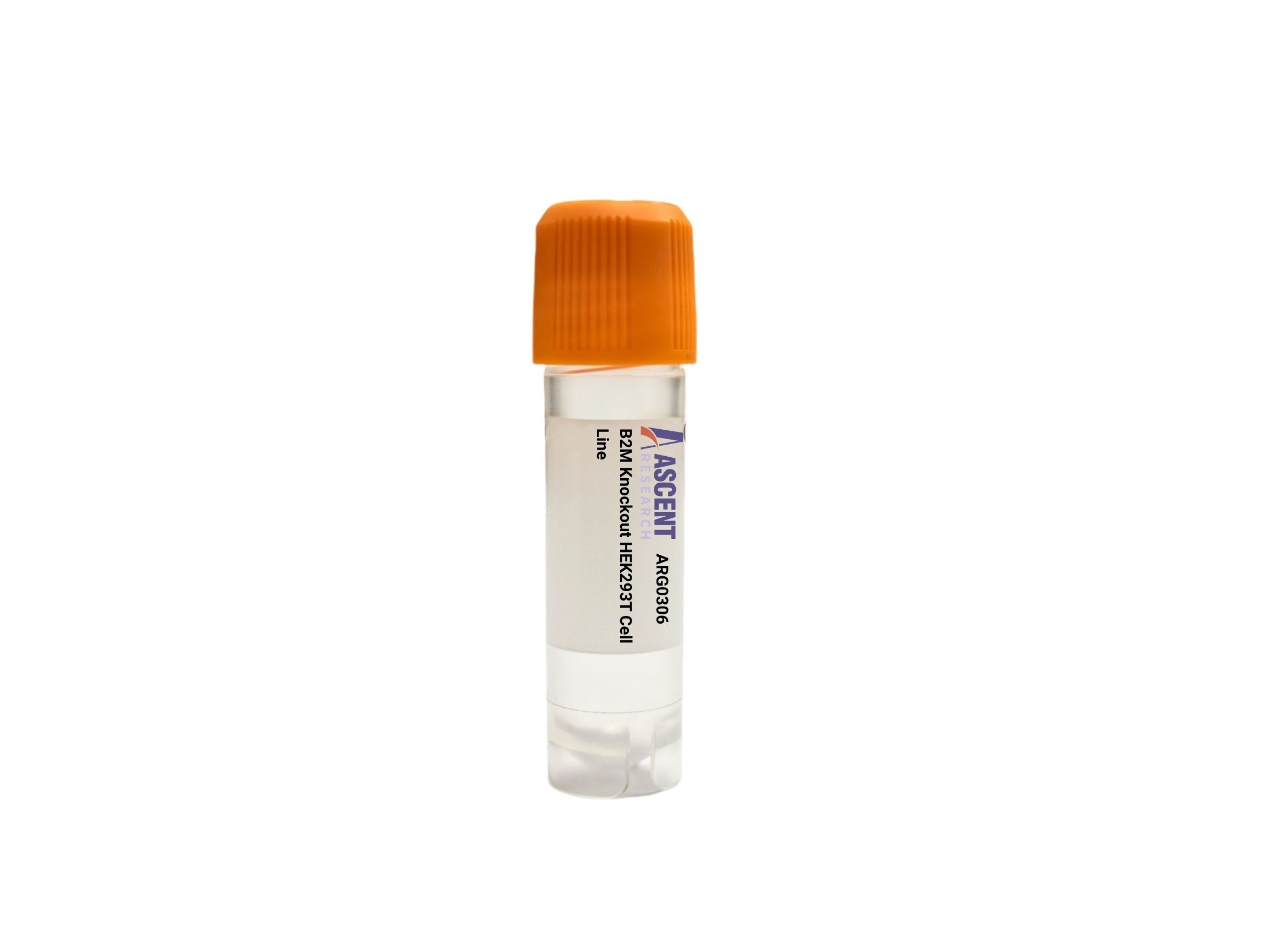
The B2M Knockout HEK293T Cell Line is a CRISPR/Cas9-edited knockout cell line derived from the HEK293T host, featuring targeted disruption of the B2M gene that encodes beta-2 microglobulin, the light chain of MHC class I molecules. This modification eliminates surface HLA-A, HLA-B, and HLA-C expression, precluding antigen presentation to CD8+ T cells and generating hypoimmunogenic cells. Key molecular partners include tapasin, calreticulin, and the TAP transporter, with expression regulated by IFNG/STAT1 signaling. Applications include allogeneic cell therapy, immune evasion studies, and transplant biology, validated by flow cytometry, T cell cytotoxicity, and NK cell degranulation assays.
 MMAB Knockout A2780 Polyclonal Cells
Cat. No. ARG18896
GALNT1 Knockout NCI-H1975 Polyclonal Cells
Cat. No. ARG16797
NUAK1 Knockout CAL27 Polyclonal Cells
Cat. No. ARG11642
IRAK1 Knockout Hela Polyclonal Cells
Cat. No. ARG26277
KIAA1217 Knockout NCI-H1299 Polyclonal Cells
Cat. No. ARG30912
NAT8L Knockout CaSki Polyclonal Cells
Cat. No. ARG9767
MMAB Knockout A2780 Polyclonal Cells
Cat. No. ARG18896
GALNT1 Knockout NCI-H1975 Polyclonal Cells
Cat. No. ARG16797
NUAK1 Knockout CAL27 Polyclonal Cells
Cat. No. ARG11642
IRAK1 Knockout Hela Polyclonal Cells
Cat. No. ARG26277
KIAA1217 Knockout NCI-H1299 Polyclonal Cells
Cat. No. ARG30912
NAT8L Knockout CaSki Polyclonal Cells
Cat. No. ARG9767
The B2M Knockout HEK293T Cell Line is a CRISPR/Cas9-edited knockout cell line that disrupts the endogenous B2M gene, encoding beta-2 microglobulin, the invariant light chain of major histocompatibility complex (MHC) class I molecules. This targeted gene disruption results in a loss-of-function model devoid of surface MHC class I expression, thereby eliminating antigen presentation to CD8+ T cells. Derived from the widely used HEK293T host, the knockout cell line provides a defined genetic platform for investigating immune recognition mechanisms and advancing allogeneic cell-based therapies.
The parental HEK293T cell line originates from human embryonic kidney epithelial cells and stably expresses the SV40 large T-antigen, supporting episomal replication of SV40 origin?containing plasmids and enabling high?efficiency transient protein production and viral packaging. These adherent cells are a standard choice for lentiviral and retroviral vector manufacturing, receptor functional analysis, and genome?scale screening, owing to their robust transfectability and well?characterized biology. The B2M knockout derivative maintains these desired characteristics, making it compatible with downstream engineering and multiplexed genetic modifications.
B2M non-covalently pairs with MHC class I heavy chains (HLA?A, HLA?B, HLA?C) to form functional heterodimers that are loaded with peptide antigens in the endoplasmic reticulum. This process depends on the peptide?loading complex, which includes tapasin, calreticulin, ERp57, and the TAP1/TAP2 transporter. Transcription of B2M and HLA class I genes is strongly induced by interferon gamma (IFNG) through the JAK?STAT pathway, leading to STAT1 nuclear translocation and activation of the transcription factor IRF1; additional positive regulation occurs via NF???B in response to tumor necrosis factor (TNF) and interleukin?1 (IL?1). By removing B2M, the entire MHC class I antigen?presentation pathway is dismantled, precluding peptide display and CD8+ T cell recognition.
In the HEK293T background, where basal MHC class I expression can be upregulated by cytokines, B2M knockout ensures complete absence of surface HLA?I even under pro?inflammatory stimulation. This immunogenetic ablation renders the cells resistant to CD8+ T cell?mediated lysis while simultaneously triggering natural killer (NK) cell activation through missing?self recognition, as NK inhibitory receptors lack adequate MHC class I engagement. Consequently, this cell line serves as a critical tool for dissecting the balance between adaptive and innate immune responses and for engineering hypoimmunogenic cellular platforms intended for allogeneic transplantation, with knockout validation routinely performed by flow cytometry for HLA?A/B/C and western blot for B2M.
Researchers utilize the B2M Knockout HEK293T Cell Line for diverse applications, including the development of universal donor cells for off?the?shelf CAR?T and iPSC?derived therapies, CRISPR?based genetic screens for modifiers of MHC class I trafficking, immune evasion profiling of cancer cells, and transplant immunology models examining graft rejection. Representative functional assays encompass T cell cytotoxicity tests, mixed lymphocyte reactions, NK cell degranulation assays, RT?qPCR for B2M transcript, and immunofluorescence to visualize MHC class I localization. For additional product details and custom inquiries, please contact Ascent Research.