Genome-edited Cells
Lung
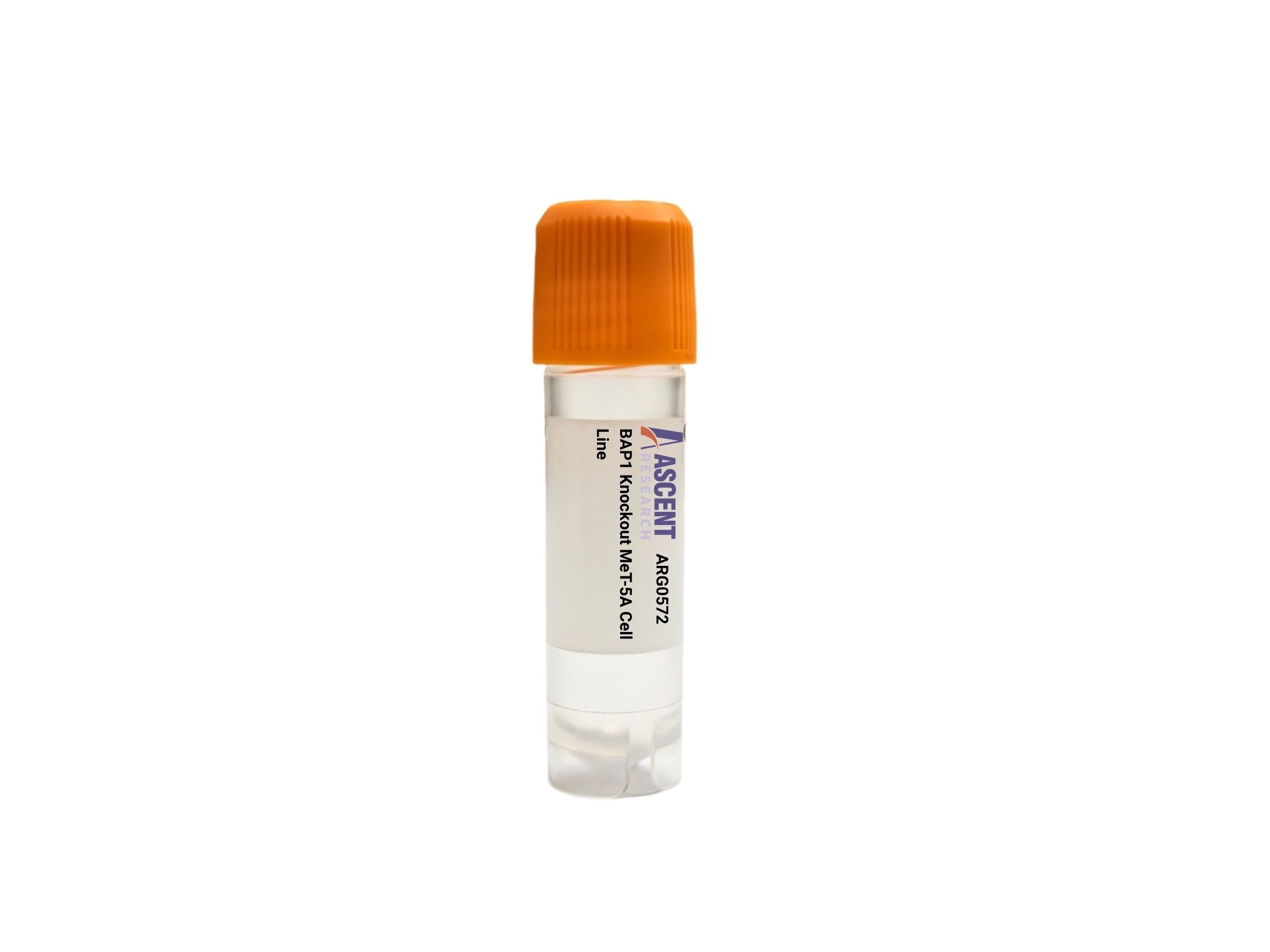
The BAP1 Knockout MeT-5A Cell Line is a CRISPR/Cas9-edited loss-of-function model in human pleural mesothelial cells, disrupting the tumor suppressor deubiquitinase BAP1. BAP1 counteracts Polycomb silencing by removing H2AK119 monoubiquitination within the PR-DUB complex, interacting with ASXL1/2, BRCA1, and HCFC1, thereby regulating DNA repair and gene expression. Ideal for mesothelioma research, DNA damage response studies, and drug screening, this cell line enables assays such as H2AK119ub level analysis, ??H2AX immunofluorescence, and apoptosis evaluation. It provides a physiologically relevant system to investigate BAP1-driven tumorigenesis and therapeutic vulnerabilities.
 GNPTG Knockout HAP1 Polyclonal Cells
Cat. No. ARG22281
PGM2 Knockout NCI-H1299 Polyclonal Cells
Cat. No. ARG17649
MKI67 Knockout 143B Polyclonal Cells
Cat. No. ARG11828
ARPC1B Knockout A2780 Polyclonal Cells
Cat. No. ARG28800
PEX5 Knockout AGS Polyclonal Cells
Cat. No. ARG2633
CNNM3 Knockout Raji Polyclonal Cells
Cat. No. ARG1139
GNPTG Knockout HAP1 Polyclonal Cells
Cat. No. ARG22281
PGM2 Knockout NCI-H1299 Polyclonal Cells
Cat. No. ARG17649
MKI67 Knockout 143B Polyclonal Cells
Cat. No. ARG11828
ARPC1B Knockout A2780 Polyclonal Cells
Cat. No. ARG28800
PEX5 Knockout AGS Polyclonal Cells
Cat. No. ARG2633
CNNM3 Knockout Raji Polyclonal Cells
Cat. No. ARG1139
The BAP1 Knockout MeT-5A Cell Line is a CRISPR/Cas9-edited knockout cell line that disrupts the BAP1 gene in the human pleural mesothelial cell line MeT-5A, creating a loss-of-function model of this critical tumor suppressor. This knockout cell line enables researchers to dissect the role of BAP1 in DNA damage response, chromatin remodeling, and cell cycle regulation, providing a physiologically relevant platform for studying mechanisms that predispose to malignant transformation in mesothelial cells.
The host cell line, MeT-5A, is an SV40 large T antigen-immortalized normal human pleural mesothelial cell line that retains key functional characteristics of primary mesothelial cells, including barrier protection, fluid secretion, and immune modulation. Its derivation from the pleural mesothelium makes it an appropriate in vitro model for studying pleural malignancies such as mesothelioma, where BAP1 mutations are frequently observed. The immortalized status of MeT-5A also provides a consistent and scalable system for reproducible experimental outcomes.
BAP1 encodes a deubiquitinase that specifically removes monoubiquitin from histone H2A at lysine 119 (H2AK119ub), a modification mediated by the Polycomb repressive complex. Through its catalytic activity within the BAP1-ASXL1-HCFC1 complex (PR-DUB), BAP1 counteracts Polycomb-mediated gene silencing and regulates transcription of genes involved in DNA repair, apoptosis, and cell cycle progression. BAP1 expression and activity are modulated by upstream signals such as DNA damage, TP53, and the ATM/ATR kinases. It interacts with key partners including ASXL1, ASXL2, BRCA1, HCFC1, FOXK1, and FOXK2, and deubiquitinates substrates like H2AK119 and HCFC1, thereby influencing downstream targets that govern genomic stability and cell fate decisions.
In the context of MeT-5A mesothelial cells, BAP1 knockout disrupts this delicate regulatory network, leading to elevated levels of H2AK119ub and impaired DNA damage response, as evidenced by altered ??H2AX foci dynamics. The loss of BAP1??s tumor suppressor function promotes genomic instability and deregulates cell cycle and apoptosis checkpoints, mirroring events that underlie the pathogenesis of BAP1-associated malignancies such as mesothelioma and uveal melanoma. This cell line thus offers a valuable tool for dissecting the molecular steps from BAP1 loss to mesothelial cell transformation.
Researchers can employ this BAP1 knockout cell line in a wide range of applications, including mechanistic studies of tumor suppression, DNA damage response, and chromatin remodeling. It is suited for drug sensitivity screening against BAP1-deficient cancers, biomarker discovery, and functional assays such as western blotting for BAP1 and H2AK119ub levels, RT-qPCR, immunofluorescence for DNA damage foci, cell viability and apoptosis assays, cell cycle flow cytometry, colony formation, and xenograft tumor models. For further information or technical support, please contact Ascent Research.