In Stock Cell Lines
Homo sapiens (Human)
Skin
Adherent
The BCL11A Knockout HaCaT Cell Line is a CRISPR/Cas9-edited human keratinocyte cell line featuring targeted disruption of BCL11A, a transcriptional repressor that orchestrates fetal hemoglobin silencing and epidermal differentiation via the NuRD complex. In HaCaT cells, BCL11A functions downstream of p63 to repress terminal differentiation genes, including KRT1, KRT10, and IVL. This model supports investigation of keratinocyte differentiation, skin barrier function, and related pathologies such as psoriasis and squamous cell carcinoma. Key applications encompass transcriptomic profiling, barrier integrity assays, and wound healing studies.
 FNDC3B Knockout NCI-H1975 Polyclonal Cells
Cat. No. ARG17278
ARHGEF10 Knockout Raji Polyclonal Cells
Cat. No. ARG21244
KLF13 Knockout NCI-H1299 Polyclonal Cells
Cat. No. ARG30934
GRK2 Knockout Hela Polyclonal Cells
Cat. No. ARG37636
PAH Knockout HCT116 Polyclonal Cells
Cat. No. ARG6975
FNDC3B Knockout NCI-H1975 Polyclonal Cells
Cat. No. ARG17278
ARHGEF10 Knockout Raji Polyclonal Cells
Cat. No. ARG21244
KLF13 Knockout NCI-H1299 Polyclonal Cells
Cat. No. ARG30934
GRK2 Knockout Hela Polyclonal Cells
Cat. No. ARG37636
PAH Knockout HCT116 Polyclonal Cells
Cat. No. ARG6975
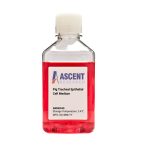 Pig Tracheal Epithelial Cell Medium
Cat. No. ARM0940
Pig Tracheal Epithelial Cell Medium
Cat. No. ARM0940
The BCL11A Knockout HaCaT Cell Line is a CRISPR/Cas9-edited knockout cell line derived from the spontaneously immortalized human HaCaT keratinocyte line, engineered for targeted disruption of the BCL11A gene. This loss-of-function model provides a defined genetic background for dissecting BCL11A-dependent mechanisms in epidermal homeostasis and disease, without introducing specific mutation annotations. The cell line retains the parental HaCaT characteristics of non-tumorigenic growth and epidermal differentiation capacity, making it a tractable tool for skin biology research.
HaCaT cells originate from adult human skin and represent a widely used keratinocyte model that maintains the ability to undergo terminal differentiation and form stratified epithelia in vitro. Unlike primary keratinocytes, HaCaT cells offer an extended lifespan and phenotypic stability, facilitating reproducible experiments in barrier function, keratinization, and wound healing. Their spontaneous immortalization preserves key signaling networks, including p63 and Notch pathways, which orchestrate epidermal morphogenesis and are directly relevant to BCL11A function.
BCL11A functions as a transcriptional repressor by assembling with the NuRD complex, which includes HDAC1, HDAC2, and MTA2, to modulate gene expression programs. In the erythroid lineage, it silences fetal hemoglobin genes HBG1 and HBG2, whereas in keratinocytes it is transcriptionally regulated by p63 and acts to suppress terminal differentiation markers such as KRT1, KRT10, and the cornified envelope precursor involucrin (IVL). Upstream signals from Notch and TGF-?? pathways converge on BCL11A, while direct protein interactions with GATA1, FOG1, and BCL11B further contextualize its repressive activity. Knockout of BCL11A disrupts this repressive network, leading to derepression of differentiation-associated genes and altered cell cycle control via CDKN1A.
The BCL11A Knockout HaCaT Cell Line serves as a physiologically relevant model to examine the molecular events controlling epidermal stratification and barrier integrity. Disruption of BCL11A-mediated repression results in precocious expression of terminal differentiation products, compromising the formation of a functional cornified layer. This phenotype mirrors aspects of hyperproliferative skin disorders such as psoriasis, where keratinocyte differentiation is aberrant, and provides a platform for investigating squamous cell carcinoma, a malignancy characterized by dysregulated BCL11A expression. The model also retains ties to B-cell development and hemoglobin switching, though its primary utility lies in cutaneous biology.
Researchers can employ this knockout line in a variety of experimental paradigms, including quantitative analysis of differentiation markers by western blotting, RT-qPCR, and immunofluorescence staining for KRT1, KRT10, and IVL. Functional studies such as scratch wound healing assays and transepithelial electrical resistance (TEER) measurements allow assessment of collective cell migration and barrier formation, respectively. Additionally, flow cytometry for cell cycle profiling and RNA-seq transcriptomic analyses enable comprehensive phenotyping. This cell line is compatible with high-throughput screening workflows for identifying modulators of keratinocyte biology. For further information, please contact Ascent Research.