Genome-edited Cells
Large intestine (colon)
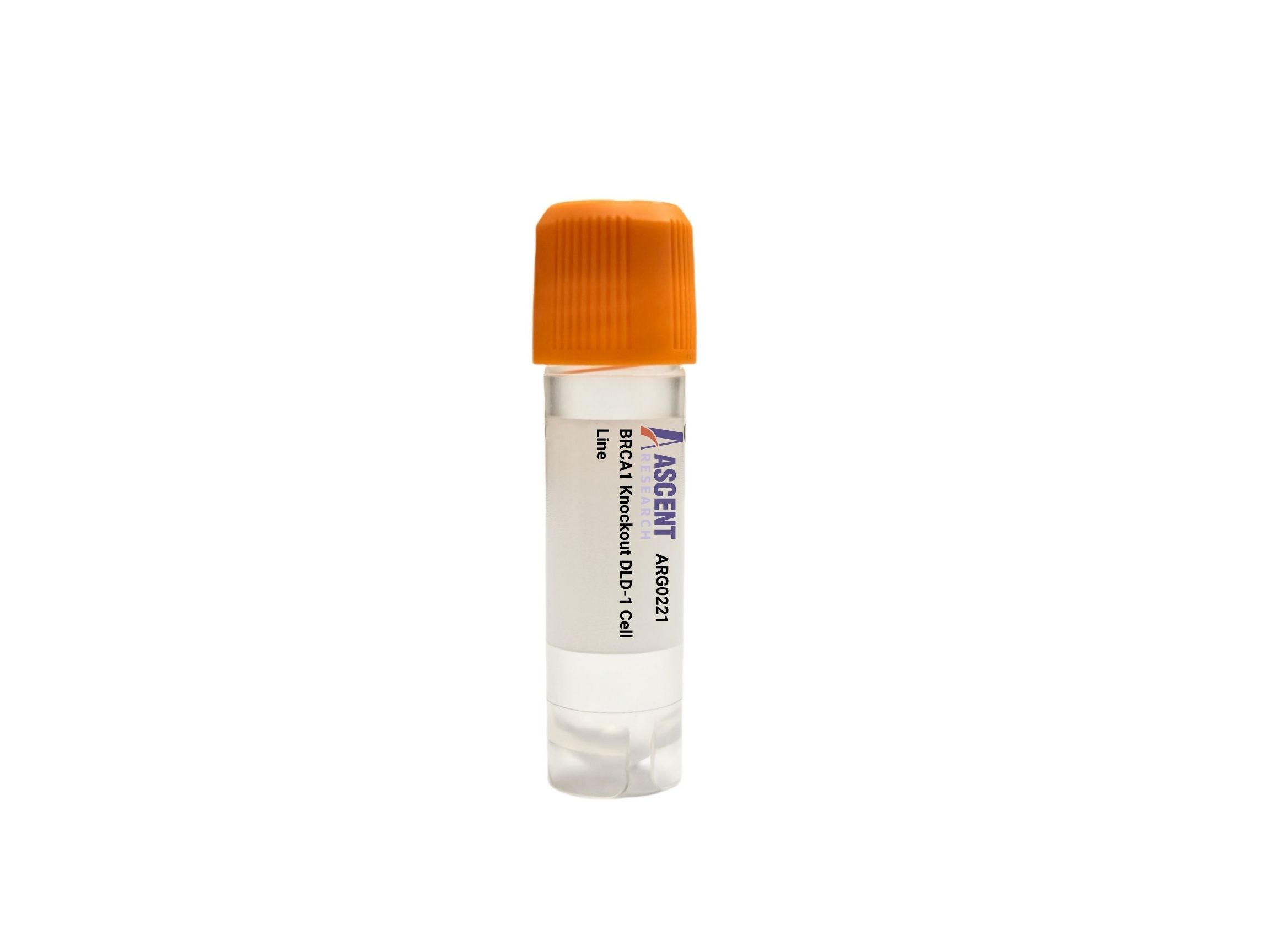
The BRCA1 Knockout DLD-1 Cell Line offers a CRISPR/Cas9-mediated loss-of-function model in a colorectal adenocarcinoma epithelial background. BRCA1, a critical tumor suppressor in homologous recombination repair, interacts with BARD1, BRCA2, and RAD51 to preserve genomic stability. This knockout line enables investigation of DNA damage response, PARP inhibitor sensitivity, and cell cycle checkpoint control, serving functional genomics studies and anticancer drug development.
 DCAF16 Knockout SK-HEP-1 Polyclonal Cells
Cat. No. ARG15440
KDM5D Knockout HCT116 Polyclonal Cells
Cat. No. ARG36065
CCDC97 Knockout SK-HEP-1 Polyclonal Cells
Cat. No. ARG43146
DNMT3A Knockout PATU8988T Polyclonal Cells
Cat. No. ARG39449
PBX1 Knockout A549 Polyclonal Cells
Cat. No. ARG10057
NUAK1 Knockout MCF7 Polyclonal Cells
Cat. No. ARG11465
DCAF16 Knockout SK-HEP-1 Polyclonal Cells
Cat. No. ARG15440
KDM5D Knockout HCT116 Polyclonal Cells
Cat. No. ARG36065
CCDC97 Knockout SK-HEP-1 Polyclonal Cells
Cat. No. ARG43146
DNMT3A Knockout PATU8988T Polyclonal Cells
Cat. No. ARG39449
PBX1 Knockout A549 Polyclonal Cells
Cat. No. ARG10057
NUAK1 Knockout MCF7 Polyclonal Cells
Cat. No. ARG11465
The BRCA1 Knockout DLD-1 Cell Line is a CRISPR/Cas9-edited knockout cell line designed for targeted disruption of the BRCA1 gene in the DLD-1 human colorectal adenocarcinoma epithelial cell line. This loss-of-function model enables researchers to investigate BRCA1-dependent cellular processes without residual gene expression, providing a clean background for functional genomics and DNA repair studies. The knockout product is supplied as a ready-to-use cell line, facilitating reproducible experiments in cancer biology and beyond.
The parental DLD-1 cell line was derived from a colorectal adenocarcinoma and exhibits epithelial morphology. Widely employed in cancer research, DLD-1 cells harbor mutations in key oncogenic pathways, including APC and KRAS, making them a relevant model for colorectal tumorigenesis. Their adherent growth characteristics and robust proliferation support a broad range of in vitro assays, from high-content imaging to drug response profiling.
BRCA1 functions as a tumor suppressor integral to the DNA damage response, primarily by facilitating homologous recombination repair of double-strand breaks. It is transcriptionally regulated by E2F1 and estrogen receptor alpha, and is activated by ATM and ATR kinases upon genotoxic stress. BRCA1 forms a core complex with BARD1 and interacts with BRCA2, PALB2, RAD51, and BRCC36 to orchestrate repair. Downstream, BRCA1 promotes RAD51 filament formation, and influences p53-dependent cell cycle checkpoint control and c-Myc-mediated transcriptional programs, thereby maintaining genomic integrity.
In the DLD-1 background, loss of BRCA1 disrupts these repair and checkpoint mechanisms, leading to accumulation of unrepaired DNA damage and genomic instability. This unmasks synthetic lethal vulnerabilities, notably hypersensitivity to PARP inhibitors, and recapitulates molecular features of BRCA1-mutated cancers. The knockout model thus provides a tractable system for exploring therapeutic strategies targeting DNA repair deficiencies in a colorectal cancer context.
Typical applications include assessing DNA repair kinetics via ??H2AX immunofluorescence, measuring homologous recombination efficiency with reporter assays, and evaluating PARP inhibitor sensitivity through viability or colony formation assays. Cell cycle profiling and transcriptomic analyses by RNA-seq further illuminate downstream effects. This cell line is a versatile tool for preclinical drug discovery and mechanistic studies. For additional details, please contact Ascent Research.