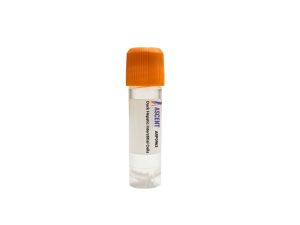
In Stock Cell Lines
Homo sapiens (Human)
Blood (peripheral blood)
Suspension
The C3 Knockout THP-1 Cell Line is a CRISPR/Cas9-edited knockout cell line derived from human THP-1 monocytic cells, offering a defined loss-of-function model for complement component C3. This line abrogates expression of C3, a central opsonin and anaphylatoxin precursor, and is designed for studies of complement-dependent innate immunity, phagocytosis, and inflammatory signaling. C3 is regulated by NF-??B and IL-6 and mediates downstream signaling through C3aR and opsonin receptors CR1/CR3/CR4. The knockout model is appropriate for complement cascade analysis, host-pathogen interaction assays, drug screening, and autoimmune disease research. Typical readouts include C3a/C3b ELISA and phagocytosis of opsonized targets.
 ENPP2 Knockout Hela Polyclonal Cells
Cat. No. ARG8542
AMPD2 Knockout huh-7 Polyclonal Cells
Cat. No. ARG27884
ANP32A Knockout A2780 Polyclonal Cells
Cat. No. ARG28705
AAGAB Knockout A549 Polyclonal Cells
Cat. No. ARG30987
BIRC6 Knockout A549 Polyclonal Cells
Cat. No. ARG38615
NUDT19 Knockout Raji Polyclonal Cells
Cat. No. ARG909
ENPP2 Knockout Hela Polyclonal Cells
Cat. No. ARG8542
AMPD2 Knockout huh-7 Polyclonal Cells
Cat. No. ARG27884
ANP32A Knockout A2780 Polyclonal Cells
Cat. No. ARG28705
AAGAB Knockout A549 Polyclonal Cells
Cat. No. ARG30987
BIRC6 Knockout A549 Polyclonal Cells
Cat. No. ARG38615
NUDT19 Knockout Raji Polyclonal Cells
Cat. No. ARG909
The C3 Knockout THP-1 Cell Line is a CRISPR/Cas9-edited knockout cell line engineered to disrupt the C3 gene in human THP-1 monocytic cells. This loss-of-function model eliminates complement component C3, a central mediator of complement-driven opsonization, anaphylatoxin signaling, and innate immune regulation.
THP-1 cells are an acute monocytic leukemia-derived monocyte-like line from a one-year-old male. Widely used for their ability to differentiate into macrophage-like cells, they retain phagocytic activity and responsiveness to inflammatory stimuli, making them a standard model for innate immunity, host-pathogen interactions, and cancer biology studies.
C3 encodes complement C3, a pivotal protein of the complement system. It is activated by the classical, lectin, and alternative pathways, generating C3a (anaphylatoxin) and C3b (opsonin). C3a signals through C3aR to drive inflammation, while C3b tags pathogens for phagocytosis via CR1 (CD35), CR3, and CR4. C3 expression is regulated by IL-1??, IL-6, TNF-??, NF-??B, STAT3, LPS, IFN-??, and C/EBP??. In the cascade, C3b forms part of the C3 convertases (C4b2a, C3bBb) with Factor B, Factor D, and Properdin, and is controlled by Factor H and Factor I. C3b also contributes to C5 convertase generation. Thus, C3 knockout abrogates opsonin-mediated phagocytosis and C3a/C3aR signaling.
In THP-1 monocytes, the loss of C3 disrupts complement-dependent phagocytosis and alters differentiation-related responses. This knockout model is ideal for dissecting C3-dependent innate immune functions, particularly how C3 fragments influence monocyte inflammatory signaling through NF-??B and STAT3 pathways under LPS or cytokine stimulation. It is relevant to studying complement dysregulation in atypical hemolytic uremic syndrome, C3 glomerulopathy, and systemic lupus erythematosus.
Applications include complement system studies in monocytic cells, host-pathogen interaction assays requiring opsonization, and screening of complement-targeted therapeutics. Representative assays: Western blot for C3, RT-qPCR, C3a/C3b ELISA, phagocytosis of opsonized targets, flow cytometry of complement receptors, and macrophage differentiation with complement stimulation. These tools support research in inflammation, autoimmunity, and innate immunity. For further information, please contact Ascent Research.