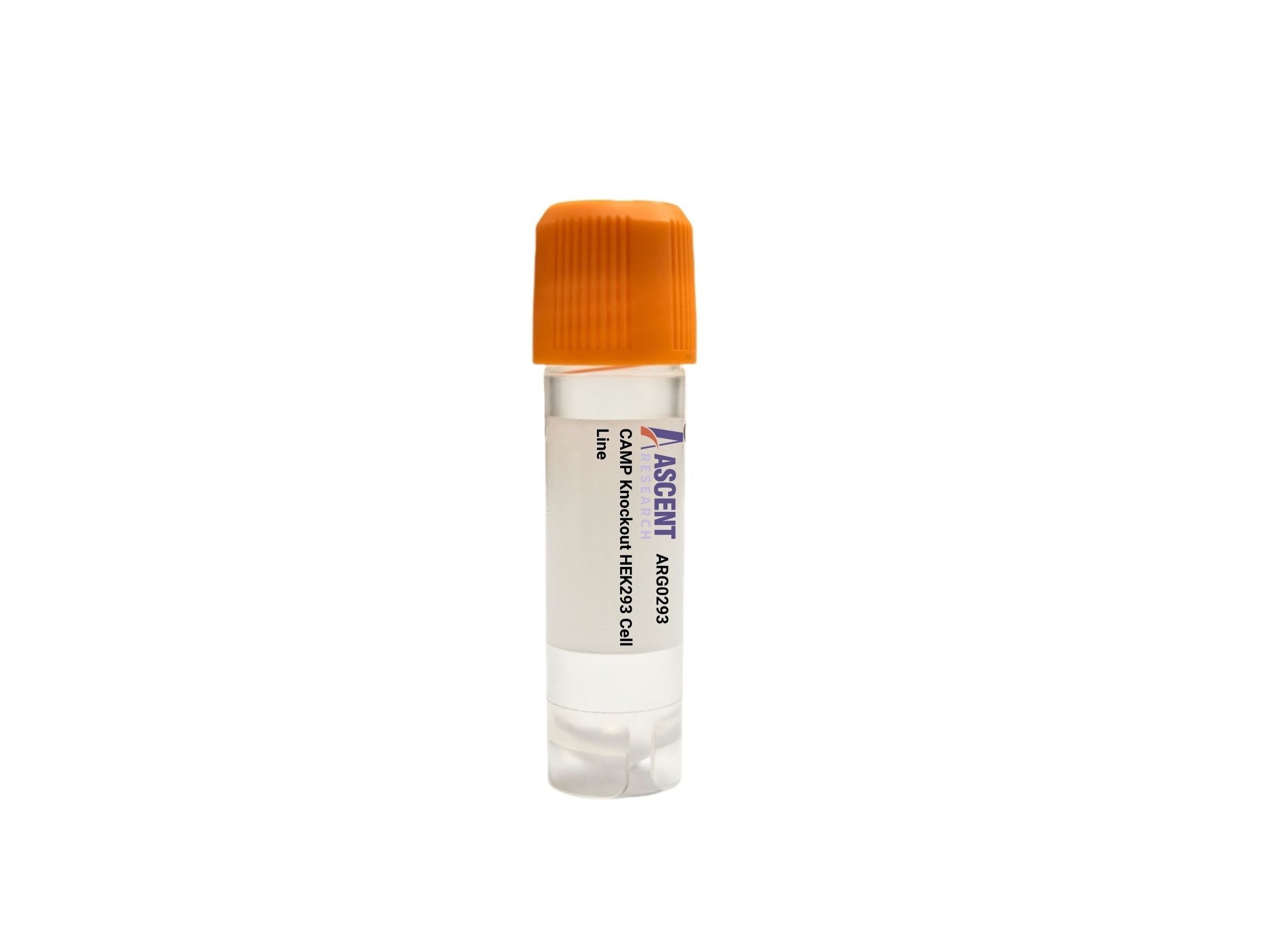
Genome-edited Cells
The CAMP Knockout HEK293 Cell Line is a CRISPR/Cas9-edited human embryonic kidney epithelial cell line featuring targeted disruption of the CAMP gene, which encodes the antimicrobial peptide LL-37. This loss-of-function model eliminates LL-37-dependent innate immune signaling, including FPR2-mediated chemotaxis and cytokine modulation, within a well-characterized epithelial background that retains TLR, vitamin D receptor, and NF-??B pathways. Applications include mechanistic studies of host-pathogen interactions, vitamin D signaling, and wound healing, utilizing assays such as qPCR, ELISA, and antimicrobial activity tests. The cell line provides a robust tool for dissecting cathelicidin biology in epithelial immunity and inflammatory disease research.
 CAD Knockout HEK293T Polyclonal Cells
Cat. No. ARG41777
C1S Knockout A549 Polyclonal Cells
Cat. No. ARG31978
HCAR2 Knockout 786O Polyclonal Cells
Cat. No. ARG35723
CD274 Knockout MCF7 Polyclonal Cells
Cat. No. ARG43442
DCAF11 Knockout HEK293T Polyclonal Cells
Cat. No. ARG4353
MAPKAPK2 Knockout HEK293T Polyclonal Cells
Cat. No. ARG3777
CAD Knockout HEK293T Polyclonal Cells
Cat. No. ARG41777
C1S Knockout A549 Polyclonal Cells
Cat. No. ARG31978
HCAR2 Knockout 786O Polyclonal Cells
Cat. No. ARG35723
CD274 Knockout MCF7 Polyclonal Cells
Cat. No. ARG43442
DCAF11 Knockout HEK293T Polyclonal Cells
Cat. No. ARG4353
MAPKAPK2 Knockout HEK293T Polyclonal Cells
Cat. No. ARG3777
The CAMP Knockout HEK293 Cell Line is a CRISPR/Cas9-edited knockout cell line designed for loss-of-function studies of the CAMP gene, which encodes the human cathelicidin antimicrobial peptide LL-37. This engineered cell line provides a stable, renewable knockout model by disrupting the CAMP gene in the HEK293 human embryonic kidney epithelial host background, enabling rigorous investigation of LL-37-dependent biological processes.
The host cell line, HEK293, is a widely utilized epithelial model derived from human embryonic kidney cells and transformed with adenoviral E1A/E1B genes, conferring robust proliferation and high transfection efficiency. Its human origin, ease of culture, and capacity for expressing ectopic proteins make it a versatile platform for studying signaling cascades, host-pathogen interactions, and gene function in an immunologically relevant epithelial context.
The CAMP gene encodes the pro-protein hCAP18, which is processed to release the cationic antimicrobial peptide LL-37, a key effector of innate immunity. LL-37 expression is transcriptionally regulated by the vitamin D3?CVDR axis, TLR ligands such as LPS, and pro-inflammatory cytokines including TNF-?? and IL-1??. Once secreted, LL-37 engages the formyl peptide receptor 2 (FPR2) to activate downstream MAPK/ERK signaling and modulate cytokine production (e.g., IL-8, IL-6), thereby coordinating antimicrobial defense, chemotaxis, and wound healing responses. The peptide also interacts with LPS and CD14, neutralizes bacterial endotoxins, and can bind DNA to influence immunomodulation. Thus, CAMP integrates inputs from VDR, TLR4-MyD88-NF-??B, and MAPK cascades to control LL-37-dependent antimicrobial and immunoregulatory outputs.
In the HEK293 epithelial background, disruption of the CAMP gene ablates production of LL-37, creating a clean loss-of-function system for dissecting cathelicidin biology in kidney epithelial cells. Because HEK293 cells retain functional TLR, vitamin D receptor, and NF-??B/MAPK signaling modules, the knockout line permits selective interrogation of LL-37-mediated antimicrobial activity, cytokine regulation, and cellular migration without interference from endogenous peptide. This model is particularly valuable for exploring epithelial innate immunity and the role of LL-37 in disorders such as cystic fibrosis and chronic kidney inflammation, where cathelicidin expression is often dysregulated.
Researchers can employ this cell line to investigate vitamin D-dependent and -independent regulation of CAMP expression using quantitative PCR or ELISA, to dissect FPR2-mediated signaling via phospho-ERK western blotting, or to assess functional antimicrobial activity through bactericidal or LPS-neutralization assays. The knockout line also serves as an ideal host for reconstitution experiments to study LL-37 interactions with DNA, LPS, and other pattern-recognition receptors, as well as for co-culture models of infection and inflammation. Additionally, it supports flow cytometric analysis of FPR2 surface expression and chemotaxis assays to evaluate LL-37??s role in leukocyte recruitment. For further information or to discuss custom applications, contact Ascent Research.