In Stock Cell Lines
Homo sapiens (Human)
Blood (peripheral blood)
Suspension
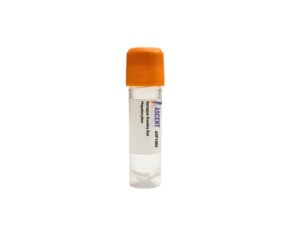
The CAMP Knockout HL-60 Cell Line is a CRISPR/Cas9-edited knockout cell line lacking functional cathelicidin antimicrobial peptide (LL-37) expression in a human promyelocytic leukemia background. Disruption of CAMP eliminates LL-37, a multifunctional peptide regulated by vitamin D receptor and NF-??B, which normally signals through FPR2 and P2X7 to drive chemotaxis and inflammatory mediator release. This loss-of-function model enables precise dissection of innate immune signaling and myeloid differentiation pathways in a leukemic context. Applications include antimicrobial activity assays, chemotaxis studies, flow cytometric differentiation analysis, and drug screening for CAMP pathway modulators. For technical specifications or custom inquiries, please contact Ascent Research.
 MAPK4 Knockout HT29 Polyclonal Cells
Cat. No. ARG14396
ADAM28 Knockout HAP1 Polyclonal Cells
Cat. No. ARG21627
BLOC1S3 Knockout HGC-27 Polyclonal Cells
Cat. No. ARG29729
ECEL1 Knockout HAP1 Polyclonal Cells
Cat. No. ARG40317
MAEA Knockout Raji Polyclonal Cells
Cat. No. ARG1892
MAPK4 Knockout HT29 Polyclonal Cells
Cat. No. ARG14396
ADAM28 Knockout HAP1 Polyclonal Cells
Cat. No. ARG21627
BLOC1S3 Knockout HGC-27 Polyclonal Cells
Cat. No. ARG29729
ECEL1 Knockout HAP1 Polyclonal Cells
Cat. No. ARG40317
MAEA Knockout Raji Polyclonal Cells
Cat. No. ARG1892
 RALA Knockout MDA-MB-468 Cell Line
Cat. No. ARG0566
RALA Knockout MDA-MB-468 Cell Line
Cat. No. ARG0566
The CAMP Knockout HL-60 Cell Line is a CRISPR/Cas9-edited knockout cell line with targeted disruption of the CAMP gene. This model eliminates expression of the cathelicidin antimicrobial peptide LL-37 in the HL-60 human promyelocytic leukemia background, providing a defined loss-of-function system to study innate immunity and myeloid differentiation.
HL-60 cells, derived from a patient with acute promyelocytic leukemia, serve as a standard model for myeloid differentiation and leukemogenesis. They retain a promyelocytic phenotype and can be induced to differentiate into granulocytic or monocytic lineages. The suspension-adapted nature of HL-60 cells facilitates automated liquid handling and large-scale screening applications, making them amenable to genetic manipulation and high-throughput assays.
CAMP encodes the precursor for LL-37, a multifunctional peptide regulated by 1,25-dihydroxyvitamin D3 via VDR and by inflammatory signals such as TNF-??, IL-1??, and LPS through NF-??B and MAPK pathways. Mature LL-37 interacts with FPR2 and P2X7 receptors, activating downstream chemotaxis, IL-8 production, and EGFR transactivation. Additionally, LL-37 forms complexes with apolipoprotein A-I and modulates MMP9 expression, linking antimicrobial activity to tissue remodeling. In the knockout, removal of CAMP disrupts LL-37-mediated signaling through these receptors, impairing chemotaxis and inflammatory responses, and potentially altering ERK1/2 and NF-??B-driven transcriptional programs.
Within the HL-60 leukemic context, CAMP knockout allows dissection of LL-37’s role in myeloid differentiation and innate immune function. Loss of LL-37 may affect differentiation kinetics or response to differentiation agents, and it provides a platform to study how antimicrobial peptides influence leukemic cell behavior, tumor microenvironment interactions, and immune evasion in APL. Given that CAMP mutations are associated with Morbus Kostmann (severe congenital neutropenia) and its deficiency is linked to rosacea and psoriasis, this model enables investigation of disease-relevant mechanisms in a hematopoietic cell background.
Applications include antimicrobial killing assays, flow cytometry for CD11b/CD15 during differentiation, chemotaxis and IL-8 ELISA for assessing FPR2/P2X7 activity, and RNA-seq or RT-qPCR for transcriptional profiling. The line supports drug screening for CAMP inducers or compounds that bypass LL-37 deficiency, as well as studies of toll-like receptor and vitamin D receptor crosstalk. These assays enable rigorous investigation of CAMP-dependent signaling networks and their impact on myeloid cell function. For further information, please contact Ascent Research.