Genome-edited Cells
Pleural effusion
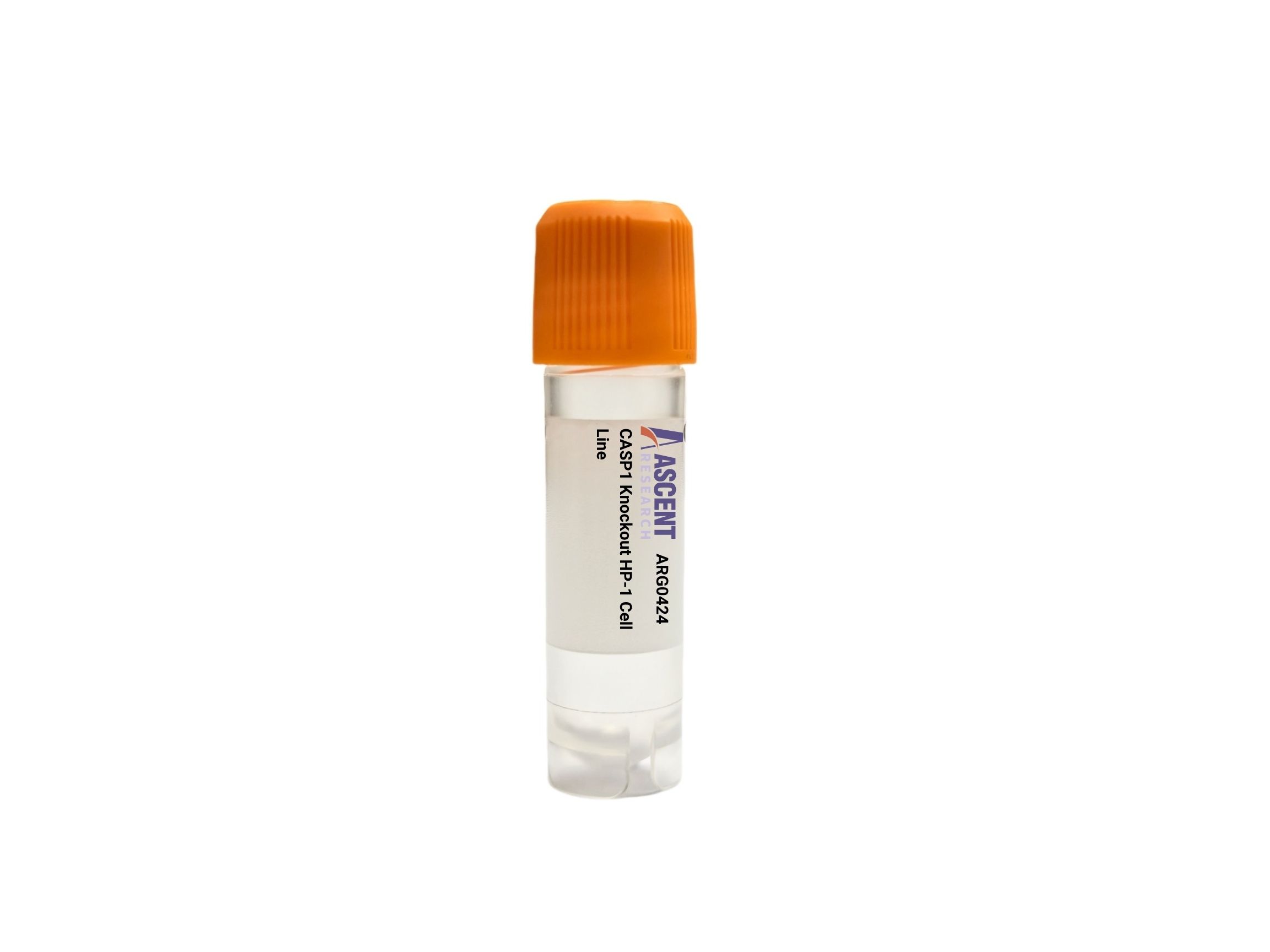
The CASP1 Knockout HP-1 Cell Line is a CRISPR/Cas9-edited knockout cell line in human pancreatic ductal HP-1 cells, disrupting the CASP1 gene. Caspase-1, an inflammatory protease activated by NLRP3 and other inflammasomes, cleaves pro-IL-1?? and pro-IL-18 and mediates pyroptosis via gasdermin D. This model blocks these events, enabling targeted inflammasome research in a pancreatic context. The non-tumorigenic HP-1 background retains ductal secretion and barrier functions, making it suited for pancreatitis, pancreatic cancer, and inflammatory disease research. Typical applications include drug screening, pyroptosis analysis, and IL-1??/IL-18 pathway studies with assays such as ELISA and Western blot.
 PEPD Knockout NCI-H1975 Polyclonal Cells
Cat. No. ARG16960
LMF2 Knockout HT29 Polyclonal Cells
Cat. No. ARG14872
MYL9 Knockout CaSki Polyclonal Cells
Cat. No. ARG9890
OSBPL10 Knockout Raji Polyclonal Cells
Cat. No. ARG1371
PEPD Knockout NCI-H1975 Polyclonal Cells
Cat. No. ARG16960
LMF2 Knockout HT29 Polyclonal Cells
Cat. No. ARG14872
MYL9 Knockout CaSki Polyclonal Cells
Cat. No. ARG9890
OSBPL10 Knockout Raji Polyclonal Cells
Cat. No. ARG1371
 Rat Ventricular Cardiomyocyte Medium
Cat. No. ARM0213
Rat Ventricular Cardiomyocyte Medium
Cat. No. ARM0213
 HSPA4 Knockout HCCLM3 Cell Line
Cat. No. ARG0267
HSPA4 Knockout HCCLM3 Cell Line
Cat. No. ARG0267
The CASP1 Knockout HP-1 Cell Line is a CRISPR/Cas9-edited knockout cell line derived from the HP-1 human pancreatic ductal epithelial cell line. It features targeted disruption of the CASP1 gene, which encodes caspase-1, a pivotal cysteine protease that mediates inflammatory signaling through cytokine maturation and pyroptosis induction. This loss-of-function model enables investigation of inflammasome pathways in a physiologically relevant pancreatic ductal environment and facilitates screening of potential inflammasome modulators.
HP-1 is a well-characterized, non-tumorigenic human pancreatic ductal epithelial cell line that retains key physiological properties, including secretion, barrier function, and ductal fluid and electrolyte transport. These cells provide a faithful in vitro platform for studying pancreatic duct cell biology and pathophysiology. Their relevance extends to inflammatory conditions such as pancreatitis, where ductal cell integrity and function are compromised, making them particularly suitable for examining the role of inflammatory signaling.
Caspase-1 is the effector protease of canonical inflammasomes, activated within complexes assembled by sensors such as NLRP3, NLRC4, AIM2, and Pyrin upon PAMP or DAMP detection. These sensors, responding to diverse stimuli like ATP, uric acid crystals, and bacterial products, nucleate ASC (PYCARD) to recruit pro-caspase-1. Active caspase-1 cleaves pro-IL-1?? and pro-IL-18 into mature cytokines and processes gasdermin D (GSDMD) to trigger pyroptosis. In CASP1 knockout HP-1 cells, this cascade is abrogated, preventing IL-1??/IL-18 secretion and blocking GSDMD-mediated pyroptosis, thereby impairing inflammatory responses.
In the pancreatic context, caspase-1-mediated inflammation drives pancreatitis, involving sustained inflammasome activation in ductal and acinar cells and contributing to cytokine storm and tissue damage. The HP-1 knockout model enables direct study of how caspase-1 deficiency impacts ductal responses to triggers like ATP and uric acid crystals. It also facilitates investigation of the interplay between barrier function, electrolyte transport, and inflammasome signaling, aiding elucidation of caspase-1’s role in pancreatic inflammation and the evaluation of therapeutic strategies targeting inflammasome-mediated injury.
This cell line supports diverse applications: mechanistic inflammasome studies, drug screening for caspase-1/NLRP3 inhibitors, and functional analysis of pyroptosis in pancreatic ductal cells. Key assays include Western blotting for caspase-1, IL-1??, and GSDMD; ELISA for secreted IL-1??/IL-18; LDH release for pyroptosis; caspase-1 activity assays; flow cytometric detection of pyroptotic cells; and co-immunoprecipitation to assess inflammasome complex assembly. It is ideal for research on pancreatitis, diabetes, and pancreatic cancer. For further details, please contact Ascent Research.