Genome-edited Cells
Lung
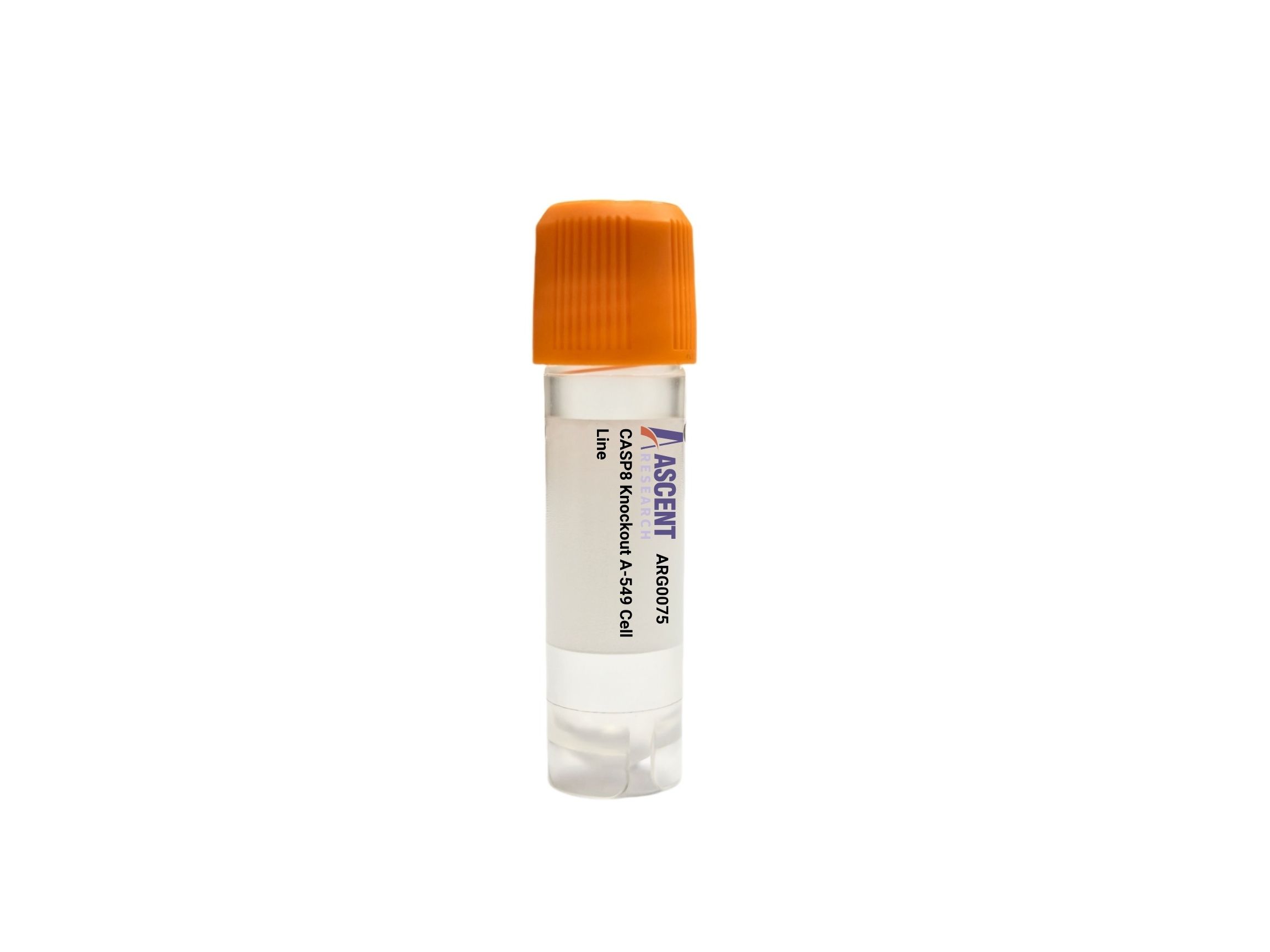
CASP8 Knockout A-549 is a CRISPR/Cas9-edited human lung alveolar epithelial carcinoma cell line with disruption of the CASP8 gene, encoding the initiator protease caspase-8. In A-549 cells, this model supports analysis of death receptor signaling downstream of FAS, DR4/DR5, TNF, and FADD, with effects on CASP3/7 activation, BID cleavage, and RIPK1-RIPK3-MLKL-regulated necroptosis control. It is useful for studies of lung cancer apoptosis resistance, TRAIL or Fas responsiveness, immune-mediated cytotoxicity, combination drug testing, and caspase-dependent versus necroptotic cell death using western blotting, flow cytometry, viability assays, and RNA-seq.
 NUDT5 Knockout NCI-H1975 Polyclonal Cells
Cat. No. ARG16595
ARHGAP1 Knockout HGC-27 Polyclonal Cells
Cat. No. ARG29586
HLA-DRA Knockout HT29 Polyclonal Cells
Cat. No. ARG33352
FAM174A Knockout Hela Polyclonal Cells
Cat. No. ARG7827
NUDT5 Knockout NCI-H1975 Polyclonal Cells
Cat. No. ARG16595
ARHGAP1 Knockout HGC-27 Polyclonal Cells
Cat. No. ARG29586
HLA-DRA Knockout HT29 Polyclonal Cells
Cat. No. ARG33352
FAM174A Knockout Hela Polyclonal Cells
Cat. No. ARG7827
 Mouse Chondrocyte Medium
Cat. No. ARM0557
Mouse Chondrocyte Medium
Cat. No. ARM0557
 Rat Lymphatic Fibroblast Medium
Cat. No. ARM0353
Rat Lymphatic Fibroblast Medium
Cat. No. ARM0353
The CASP8 Knockout A-549 Cell Line is a CRISPR/Cas9-engineered human cell model in which the CASP8 gene has been disrupted to eliminate functional caspase-8 expression. Generated in the A-549 background, this stable knockout line provides an in vitro system for interrogating caspase-8-dependent signaling in a lung alveolar epithelial carcinoma context. The model is suited for mechanistic studies of programmed cell death, death receptor signaling, and therapeutic response pathways in human tumor cells.
A-549 is a human lung adenocarcinoma epithelial cell line derived from alveolar type II-like tumor cells and is extensively used in cancer and cell signaling research. Its broad use reflects its relevance to lung cancer biology, epithelial tumor behavior, apoptosis regulation, drug response, and host-pathogen interaction studies. As an alveolar epithelial carcinoma model, A-549 offers a tractable platform for examining how tumor cells integrate inflammatory and cytotoxic stimuli with survival and cell death programs, including responses to TNF family ligands and anticancer agents.
CASP8 encodes caspase-8, an initiator cysteine-aspartate protease that functions downstream of death receptors including FAS/CD95, TNFR1/TNFRSF1A, DR4/TNFRSF10A, and DR5/TNFRSF10B. Following stimulation by FAS ligand, TNF, or TRAIL/TNFSF10, caspase-8 is recruited to FADD-containing death-inducing signaling complexes, where its activation is regulated in part by CFLAR/c-FLIP and other DED-containing DISC components. Activated caspase-8 promotes proteolytic signaling to CASP3 and CASP7, cleaves BID to connect extrinsic death receptor signaling with BAX/BAK-dependent mitochondrial apoptosis, and contributes to PARP1 cleavage, apoptotic DNA fragmentation, and phosphatidylserine externalization. CASP8 also suppresses necroptotic signaling by restraining RIPK1-RIPK3-MLKL pathway activation, in part through RIPK1 cleavage.
In the A-549 setting, loss of CASP8 provides a relevant model for studying apoptosis resistance in lung cancer cells and for defining conditions under which death receptor stimulation fails to produce efficient extrinsic apoptosis. This knockout context is particularly useful for examining pathway rewiring between apoptotic and necroptotic outputs, as well as the balance between FADD-CASP8-CFLAR complexes and RIPK1/RIPK3-dependent inflammatory cell death signaling. The model can therefore support investigations into treatment sensitivity, immune-mediated cytotoxicity, and determinants of tumor cell susceptibility to TNF-, Fas-, or TRAIL-driven responses.
This cell line is well suited for western blot analysis of caspase-8, CASP3/CASP7 activation, BID processing, RIPK1 cleavage, and PARP cleavage; flow cytometric Annexin V/propidium iodide assays; caspase-3/7 activity measurements; cell viability and drug sensitivity testing; and immunofluorescence or phospho-signaling studies under death receptor agonist or combination treatment conditions. It can also be applied to co-immunoprecipitation studies of DISC-associated factors such as FADD and CFLAR, RT-qPCR or RNA-seq analysis of pathway-adaptive transcriptional responses, and comparative profiling of apoptotic versus necroptotic phenotypes in lung cancer research. Researchers may contact Ascent Research for additional technical information, product details, or related gene-edited cell models.