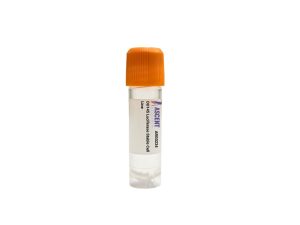
In Stock Cell Lines
Homo sapiens (Human)
Kidney
Adherent
The CBX7 Knockout 769-P Cell Line is a CRISPR/Cas9-edited knockout cell line derived from the 769-P renal proximal tubule epithelial cell line. It disrupts the CBX7 gene, which encodes a Polycomb protein that recognizes H3K27me3 and represses transcription via PRC1. The 769-P line originated from a primary clear cell renal cell carcinoma, providing a disease-relevant model for epigenetic studies. CBX7 interacts with PRC1 components RING1B and BMI1, and its loss dysregulates targets like CDKN2A, impacting senescence and proliferation. This cell line is ideal for investigating PRC1 function, chromatin modification, and renal cancer biology using assays such as ChIP-qPCR, senescence staining, and proliferation assays.
 MBD4 Knockout HT29 Polyclonal Cells
Cat. No. ARG14562
BID Knockout NCI-H1299 Polyclonal Cells
Cat. No. ARG30532
CBX8 Knockout MES-OV Polyclonal Cells
Cat. No. ARG42809
ANXA6 Knockout AGS Polyclonal Cells
Cat. No. ARG26582
AKAP13 Knockout AGS Polyclonal Cells
Cat. No. ARG26511
EPB41 Knockout HEK293T Polyclonal Cells
Cat. No. ARG3826
MBD4 Knockout HT29 Polyclonal Cells
Cat. No. ARG14562
BID Knockout NCI-H1299 Polyclonal Cells
Cat. No. ARG30532
CBX8 Knockout MES-OV Polyclonal Cells
Cat. No. ARG42809
ANXA6 Knockout AGS Polyclonal Cells
Cat. No. ARG26582
AKAP13 Knockout AGS Polyclonal Cells
Cat. No. ARG26511
EPB41 Knockout HEK293T Polyclonal Cells
Cat. No. ARG3826
The CBX7 Knockout 769-P Cell Line is a CRISPR/Cas9-edited knockout cell line providing targeted disruption of the CBX7 gene in the 769-P renal cell carcinoma model. This tool enables loss-of-function analysis of the Polycomb group protein CBX7, facilitating investigation of its role in chromatin-mediated gene silencing and tumor biology.
The 769-P cell line originates from a primary clear cell renal cell carcinoma (CCRCC) and exhibits features of renal proximal tubule epithelial cells. It is a widely employed in vitro model for studying CCRCC pathogenesis, including epigenetic alterations and tumor suppressor inactivation, and serves as a relevant system for exploring Polycomb-mediated silencing in kidney cancer.
CBX7 functions as a chromodomain-containing subunit of Polycomb repressive complex 1 (PRC1). It recognizes H3K27me3 marks placed by PRC2 (EZH2) and recruits PRC1 components RING1B, BMI1, and PHC1 to compact chromatin and repress transcription. CBX7 is regulated by AKT phosphorylation, TGF-beta and p53 pathways, and microRNAs including miR-125b, and acts downstream of PRC2. A major target is the CDKN2A locus, where CBX7 silences p16INK4a and p14ARF to inhibit senescence and promote proliferation. In renal cancer, CBX7 may have tumor-suppressive roles, and its loss alters apoptosis and cell cycle programs.
Disruption of CBX7 in the 769-P background allows dissection of its context-dependent functions in renal epithelium. The knockout model helps clarify whether CBX7 acts as an oncogene or tumor suppressor in CCRCC and reveals its impact on global H3K27me3 distribution and PRC1 target gene repression. It also enables studies of compensatory interactions with HDAC1/2 and other chromatin factors.
Researchers can utilize this cell line for chromatin immunoprecipitation (ChIP) assays mapping H3K27me3 and CBX7 occupancy, transcriptomic analysis by RNA-seq, and phenotypic assays for senescence, proliferation, apoptosis, and cell cycle progression using senescence-associated beta-galactosidase staining, MTT, Annexin V, and flow cytometry. It is also suitable for soft agar colony formation and xenograft tumor models to evaluate tumorigenicity. For additional details or collaborative inquiries, please contact Ascent Research.