Genome-edited Cells
Kidney
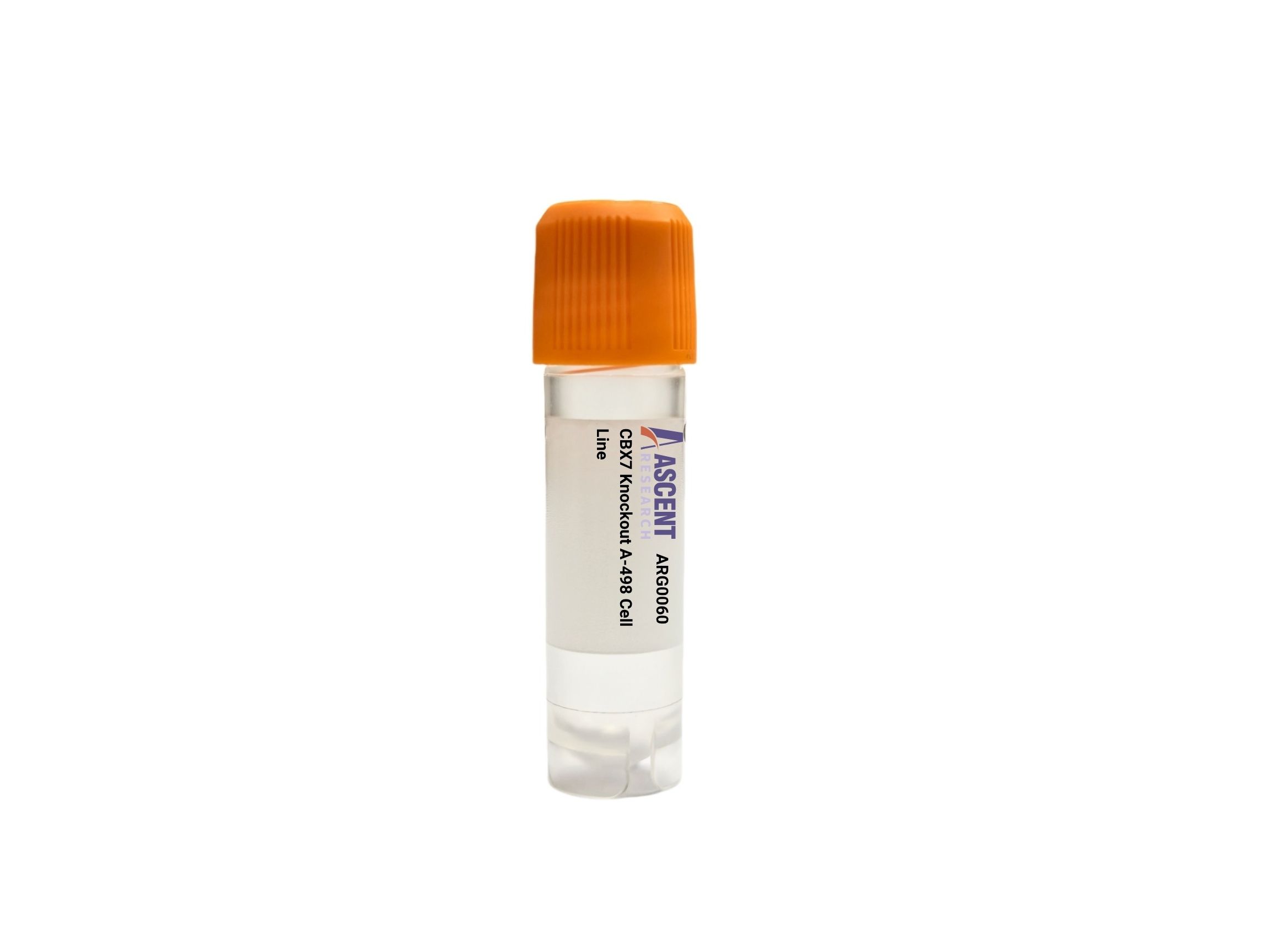
CBX7 Knockout A-498 is a human CRISPR/Cas9-engineered renal cell carcinoma epithelial cell line with disruption of the PRC1 chromobox gene CBX7. In A-498 kidney tumor cells, CBX7 normally recognizes PRC2-deposited H3K27me3 and interacts with factors such as RING1B/RNF2 and BMI1 to repress loci including CDKN2A and other cell-cycle or senescence-associated genes. This model supports studies of Polycomb-mediated chromatin repression, transcriptional derepression, renal cancer proliferation and senescence, chromatin-state analysis by ChIP-seq or ChIP-qPCR, RNA-seq profiling, and drug sensitivity or synthetic lethal screening in a kidney carcinoma context.
 COPS7B Knockout A2780 Polyclonal Cells
Cat. No. ARG18500
CASP6 Knockout 786-O Polyclonal Cells
Cat. No. ARG42471
DNAL1 Knockout A549 Polyclonal Cells
Cat. No. ARG39351
DNAJC6 Knockout HEK293T Polyclonal Cells
Cat. No. ARG39324
LZTFL1 Knockout MES-OV Polyclonal Cells
Cat. No. ARG6093
CRABP2 Knockout Raji Polyclonal Cells
Cat. No. ARG1393
COPS7B Knockout A2780 Polyclonal Cells
Cat. No. ARG18500
CASP6 Knockout 786-O Polyclonal Cells
Cat. No. ARG42471
DNAL1 Knockout A549 Polyclonal Cells
Cat. No. ARG39351
DNAJC6 Knockout HEK293T Polyclonal Cells
Cat. No. ARG39324
LZTFL1 Knockout MES-OV Polyclonal Cells
Cat. No. ARG6093
CRABP2 Knockout Raji Polyclonal Cells
Cat. No. ARG1393
The CBX7 Knockout A-498 Cell Line is a human CRISPR/Cas9-engineered renal carcinoma model in which the CBX7 gene has been disrupted to abolish functional CBX7 expression. This stable knockout line is generated in A-498 cells, a kidney-derived epithelial tumor cell line, and provides an in vitro system for investigating how loss of a canonical Polycomb chromobox protein alters chromatin-dependent transcriptional control in a renal cancer background. The model is suited to studies of epigenetic repression, proliferation control, senescence-associated programs, and cancer cell responses to perturbation.
A-498 is a human renal cell carcinoma epithelial cell line derived from kidney tumor tissue and is widely used to study renal carcinoma biology, including tumor cell growth, survival, and therapeutic response. As an established in vitro model of renal cancer, A-498 offers a relevant cellular context for examining mechanisms that influence epithelial tumor behavior, transcriptional plasticity, and drug sensitivity. Its use in renal oncology research makes it a practical background for dissecting gene-function relationships that contribute to solid tumor progression and treatment-associated phenotypes.
CBX7 is a chromobox Polycomb group protein that functions as a canonical subunit of Polycomb repressive complex 1 (PRC1). CBX7 binds H3K27me3-marked chromatin generated upstream by PRC2 components including EZH2, SUZ12, and EED, and helps recruit or stabilize PRC1 complexes containing RING1A, RING1B/RNF2, BMI1/PCGF4, and PHC family proteins at target loci. Through these interactions, CBX7 promotes chromatin compaction and represses transcription of Polycomb-regulated genes, including cell-cycle and senescence-associated targets such as the CDKN2A locus encoding p16INK4A and p14ARF, as well as CDKN1A/p21 and other E2F-responsive genes. CBX7 activity is further influenced by noncoding RNAs, differentiation cues, mitogenic stress, and associated chromatin regulators such as HDAC2. Loss of CBX7 can therefore derepress H3K27me3-dependent gene silencing programs and alter pathways linked to RB1, TP53, proliferation, senescence, and differentiation.
In the A-498 host background, CBX7 deletion creates a useful system for defining how Polycomb-dependent repression supports renal carcinoma cell-state maintenance. The model can be used to examine how disruption of CBX7 affects gene-expression programs relevant to renal cell carcinoma, metastatic progression, and epigenetic vulnerability, particularly where tumor phenotypes depend on repression of anti-proliferative or differentiation-associated loci.
This knockout cell line is applicable to mechanistic studies using western blotting and RT-qPCR to assess CBX7 loss and downstream marker expression, RNA-seq to profile transcriptional derepression, and ChIP-qPCR or ChIP-seq to interrogate changes in H3K27me3- and PRC1-associated chromatin occupancy. Researchers can pair immunofluorescence and co-immunoprecipitation with functional assays such as cell proliferation, colony formation, flow-cytometric cell-cycle analysis, senescence-associated beta-galactosidase staining, apoptosis measurements, and migration or invasion assays to define phenotype-level consequences of CBX7 disruption. The model is also relevant for drug sensitivity testing and synthetic lethal studies involving PRC1/PRC2 pathway dependencies or broader chromatin regulatory networks in renal cancer cells. Researchers may contact Ascent Research for additional technical information, product details, or related gene-edited cell models.