Genome-edited Cells
Large intestine (colon)
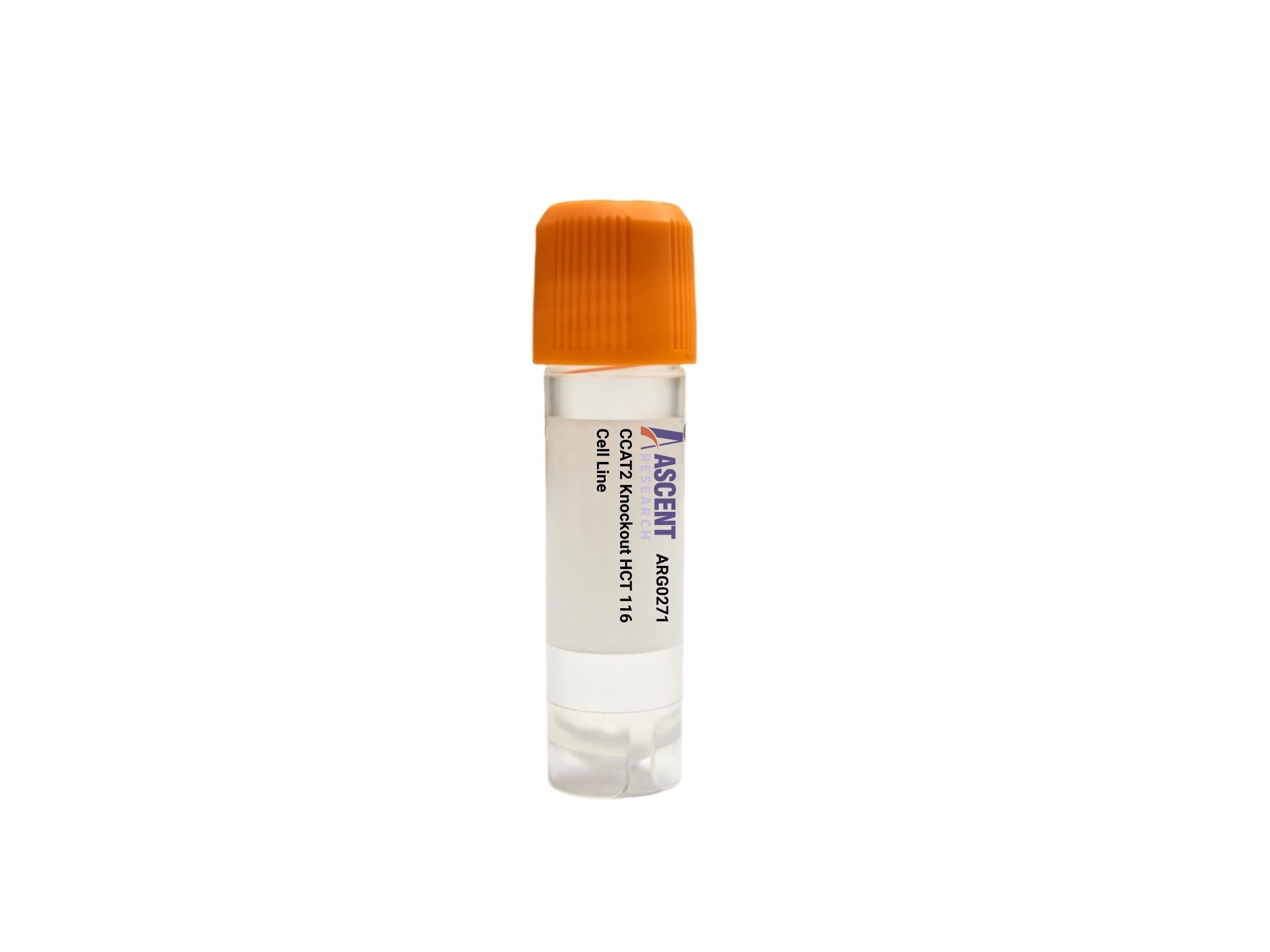
The CCAT2 Knockout HCT 116 Cell Line is a CRISPR/Cas9-edited loss-of-function model targeting the oncogenic long non-coding RNA CCAT2. Derived from the HCT 116 colorectal adenocarcinoma cell line (KRAS G13D, PIK3CA mutant), this knockout enables investigation of CCAT2??s role in promoting proliferation and metastasis via WNT/??-catenin and MYC signaling. CCAT2 interacts with TCF7L2 to upregulate MYC and CCND1, making it a critical node in colorectal cancer biology. Ideal for lncRNA functional studies, drug target validation, and mechanistic dissection of transcriptional regulation in colorectal cancer, gastric cancer, and hepatocellular carcinoma. The model supports a range of assays including RT-qPCR, western blotting, colony formation, and luciferase reporter assays. For custom inquiries, contact Ascent Research.
 CARD8 Knockout jurkat Polyclonal Cells
Cat. No. ARG34091
ARHGEF18 Knockout 786-O Polyclonal Cells
Cat. No. ARG24977
ARHGAP17 Knockout NCI-H1975 Polyclonal Cells
Cat. No. ARG31197
CABLES1 Knockout Hela Polyclonal Cells
Cat. No. ARG41725
DNAJB4 Knockout NCI-H1299 Polyclonal Cells
Cat. No. ARG39140
CCAR2 Knockout AGS Polyclonal Cells
Cat. No. ARG42856
CARD8 Knockout jurkat Polyclonal Cells
Cat. No. ARG34091
ARHGEF18 Knockout 786-O Polyclonal Cells
Cat. No. ARG24977
ARHGAP17 Knockout NCI-H1975 Polyclonal Cells
Cat. No. ARG31197
CABLES1 Knockout Hela Polyclonal Cells
Cat. No. ARG41725
DNAJB4 Knockout NCI-H1299 Polyclonal Cells
Cat. No. ARG39140
CCAR2 Knockout AGS Polyclonal Cells
Cat. No. ARG42856
The CCAT2 Knockout HCT 116 Cell Line is a genetically engineered human cell model featuring CRISPR/Cas9-mediated disruption of the CCAT2 gene. This product is provided as a CRISPR/Cas9-edited knockout cell line that abrogates expression of the long non-coding RNA CCAT2, enabling rigorous loss-of-function studies. The targeted gene disruption generates a clean cellular system for dissecting CCAT2-dependent phenotypes without altering the broader genomic context, making it suitable for isogenic comparisons with parental HCT 116 cells. Researchers can use this model to investigate the oncogenic roles of CCAT2 in colorectal cancer and related malignancies.
HCT 116 is a widely utilized human colorectal carcinoma epithelial cell line derived from a male patient. It harbors well-characterized activating mutations in KRAS (G13D) and PIK3CA and serves as an established model of colorectal adenocarcinoma. The cell line exhibits aggressive tumorigenic properties, including rapid proliferation, anchorage-independent growth, and invasive capacity, which are driven in part by constitutively active oncogenic signaling pathways. Its stable genetic background and extensive characterization make HCT 116 a reliable host for studying the molecular mechanisms underlying colorectal cancer progression and for evaluating the impact of specific gene disruptions.
CCAT2 is a long non-coding RNA that functions as a potent oncogenic regulator in colorectal cancer, promoting cell proliferation and metastasis. Mechanistically, CCAT2 enhances WNT/??-catenin signaling and MYC expression by interacting with TCF7L2, a key transcription factor downstream of ??-catenin. This interaction upregulates MYC and cell cycle genes such as CCND1, while also influencing downstream targets including MMP7 and the miR-17-92 cluster. CCAT2 is regulated by ??-catenin and is embedded within a network involving the MAPK/ERK pathway, contributing to feed-forward signaling amplification. By disrupting CCAT2, researchers can uncouple its specific contributions to transcriptional regulation, WNT pathway output, and MYC-driven oncogenic programs.
In the HCT 116 background, CCAT2 is aberrantly overexpressed and contributes significantly to the malignant phenotype of this colorectal adenocarcinoma model. Knockout of CCAT2 in HCT 116 cells provides a unique isogenic platform to assess the requirement of this lncRNA for tumorigenic properties such as anchorage-independent growth, migration, and invasion. This engineered line is especially valuable for elucidating how oncogenic KRAS and PIK3CA mutations cooperate with CCAT2-dependent transcriptional networks. It enables systematic dissection of signaling crosstalk and functional dependencies in a defined mutational context, facilitating translational research in colorectal cancer.
The CCAT2 Knockout HCT 116 Cell Line is ideally suited for a wide range of functional assays, including RT-qPCR and RNA-seq for gene expression profiling, western blotting for protein analysis, and cell-based assays such as MTT, colony formation, and wound healing to evaluate proliferation, clonogenicity, and migration. Additionally, it can be employed in ChIP-qPCR to probe chromatin interactions and in luciferase reporter assays to measure WNT/??-catenin and MYC transcriptional activity. This model supports lncRNA functional studies, drug target validation, and mechanistic investigations of CCAT2 in colorectal cancer, gastric cancer, and hepatocellular carcinoma. For further information or to discuss custom solutions, please contact Ascent Research.