Genome-edited Cells
Large intestine (colon)
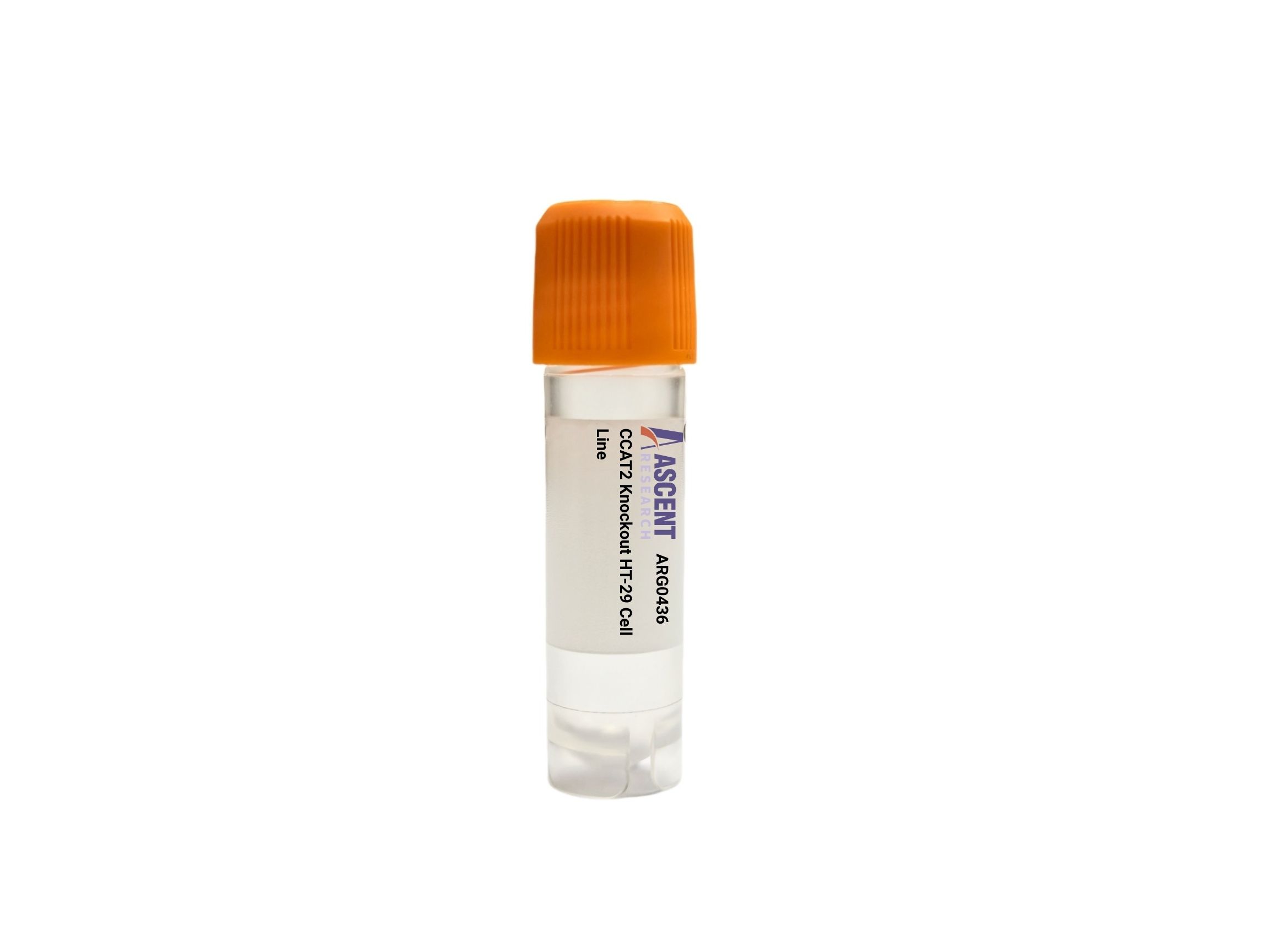
The CCAT2 Knockout HT-29 Cell Line provides a CRISPR/Cas9-edited loss-of-function model of the oncogenic long non-coding RNA CCAT2 in human colorectal adenocarcinoma cells. This engineered cell line enables targeted investigation of CCAT2-dependent signaling in the context of an APC-mutant, TP53-mutant, KRAS-mutant background. CCAT2 functions by binding TCF7L2 to enhance MYC expression and drive proliferation and invasion, while also acting as a ceRNA for miR-145. The knockout cell line is a valuable tool for colorectal cancer research, Wnt pathway analysis, and drug screening studies.
 FHL3 Knockout NCI-H1975 Polyclonal Cells
Cat. No. ARG16427
PCCA Knockout SK-HEP-1 Polyclonal Cells
Cat. No. ARG15277
MST1R Knockout HT29 Polyclonal Cells
Cat. No. ARG14187
IRF2 Knockout MES-OV Polyclonal Cells
Cat. No. ARG24653
DIABLO Knockout jurkat Polyclonal Cells
Cat. No. ARG38744
MPZL1 Knockout HEK293T Polyclonal Cells
Cat. No. ARG3361
FHL3 Knockout NCI-H1975 Polyclonal Cells
Cat. No. ARG16427
PCCA Knockout SK-HEP-1 Polyclonal Cells
Cat. No. ARG15277
MST1R Knockout HT29 Polyclonal Cells
Cat. No. ARG14187
IRF2 Knockout MES-OV Polyclonal Cells
Cat. No. ARG24653
DIABLO Knockout jurkat Polyclonal Cells
Cat. No. ARG38744
MPZL1 Knockout HEK293T Polyclonal Cells
Cat. No. ARG3361
The CCAT2 Knockout HT-29 Cell Line is a genetically engineered human colorectal adenocarcinoma cell model generated by CRISPR/Cas9-mediated disruption of the CCAT2 gene locus. This loss-of-function cell line enables precise investigation of CCAT2-dependent molecular mechanisms in colorectal cancer. Established in the HT-29 epithelial background, the knockout product is supplied as a ready-to-use cell line optimized for downstream assays. The targeted gene ablation is achieved through CRISPR/Cas9 technology, providing a stable and reproducible system for functional genomics studies.
The HT-29 parental cell line was originally derived from a primary colorectal adenocarcinoma of a 44-year-old female and represents a widely utilized model in intestinal cancer research. HT-29 cells harbor well-characterized oncogenic mutations in APC, TP53, and KRAS, resulting in constitutively active Wnt/??-catenin signaling and aberrant cell proliferation. The epithelial morphology and robust in vitro growth characteristics make HT-29 a preferred host for studying colorectal cancer biology, epithelial?Cmesenchymal transition, and therapeutic interventions.
CCAT2 is a long non-coding RNA that functions as a potent oncogene in colorectal cancer. It physically interacts with TCF7L2 to enhance transcriptional activation of the MYC proto-oncogene, driving expression of proliferation and invasion regulators such as CCND1 and MMP7. CCAT2 also acts as a ceRNA, sponging tumor-suppressive miRNAs like miR-145. These activities are integrated into the Wnt/??-catenin pathway, where upstream Wnt ligands (e.g., Wnt3a) through Frizzled/LRP receptors stabilize ??-catenin, which then complexes with TCF7L2 and CCAT2 to activate a pro-tumorigenic transcriptional program.
In HT-29 cells, APC loss-of-function mutations result in constitutive ??-catenin stabilization and persistent TCF/LEF transcriptional activity. CCAT2 knockout therefore disrupts a critical downstream effector of aberrant Wnt signaling, enabling dissection of lncRNA-specific contributions to tumor cell proliferation, survival, and invasiveness. This model is particularly useful for validating CCAT2 as a therapeutic target and for studying lncRNA function in a mutationally defined colorectal cancer background.
Applications include RT-qPCR and Western blot for expression analysis of CCAT2, MYC, CCND1, and ??-catenin; TOP/FOP Flash luciferase assays for TCF/LEF activity; RNA immunoprecipitation for CCAT2-TCF7L2 interaction; proliferation (MTT/CCK-8), colony formation, and Transwell migration/invasion assays; cell cycle analysis by flow cytometry; and in vivo xenograft tumor models. The cell line also supports high-throughput drug screening for Wnt/MYC inhibitors and transcriptomic studies via RNA-seq. For additional information or to inquire about custom gene-edited cell models, please contact Ascent Research.