Genome-edited Cells
Unknown
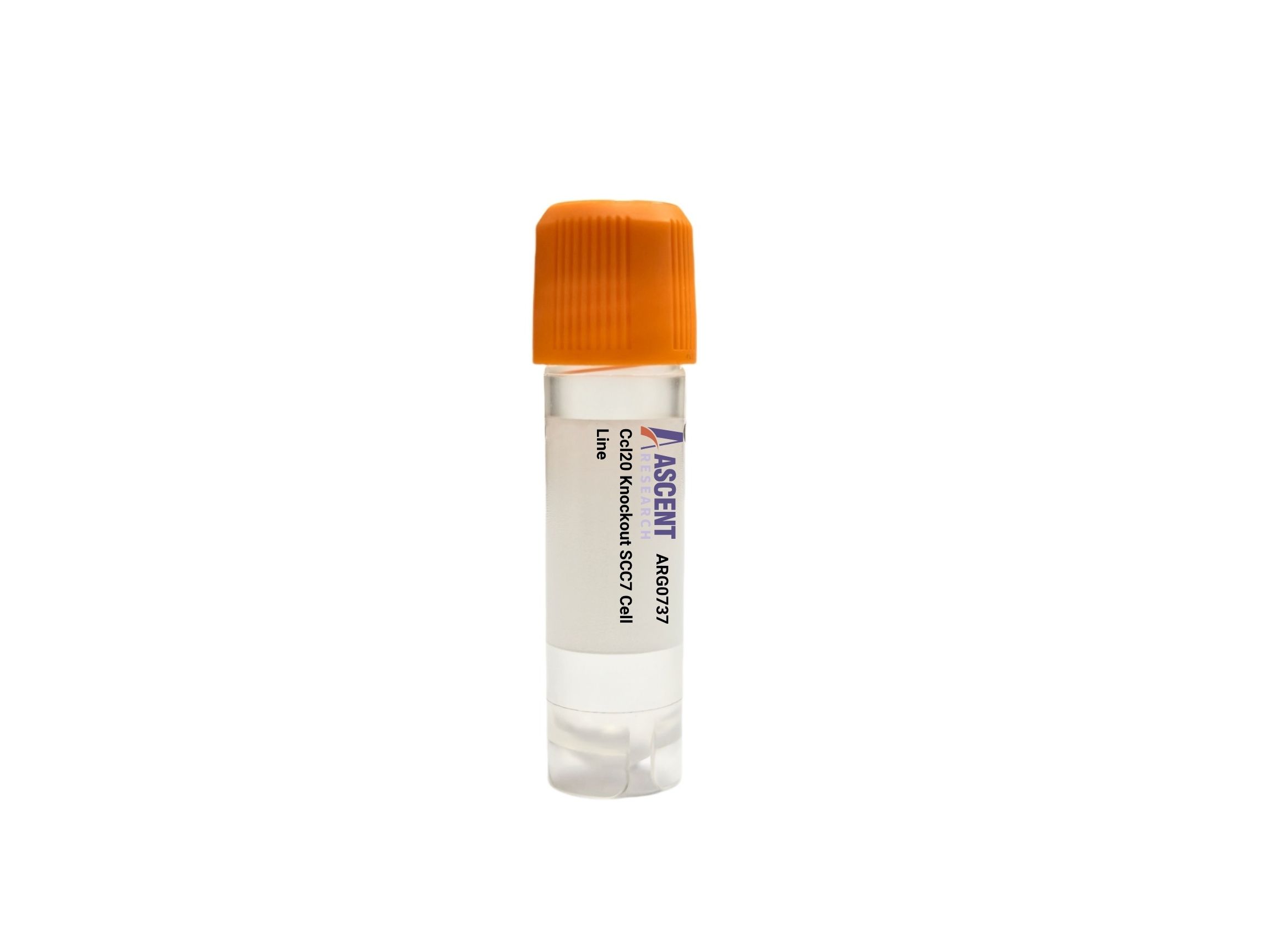
The Ccl20 Knockout SCC7 Cell Line is a CRISPR/Cas9-edited knockout line derived from the murine oral squamous cell carcinoma line SCC7. This loss-of-function model disrupts expression of the chemokine CCL20, which acts through the CCR6 receptor and downstream PI3K/Akt and ERK1/2 pathways to mediate immune cell recruitment. By eliminating CCL20 secretion, the cell line enables investigation of chemokine-dependent tumor microenvironment modulation in head and neck cancer. Key applications include studying tumor immunology, screening therapeutics targeting the CCL20?CCCR6 axis, and performing chemotaxis assays. In vivo tumor models can assess the impact of CCL20 loss on immune infiltration and tumor growth. This product is ideal for researchers exploring chemokine signaling in cancer and inflammation.
 PDK1 Knockout Hela Polyclonal Cells
Cat. No. ARG8269
AGAP3 Knockout Raji Polyclonal Cells
Cat. No. ARG21087
KIF5B Knockout K562 Polyclonal Cells
Cat. No. ARG20774
KCTD21 Knockout HAP1 Polyclonal Cells
Cat. No. ARG22984
HDDC3 Knockout jurkat Polyclonal Cells
Cat. No. ARG34232
LATS1 Knockout HCT116 Polyclonal Cells
Cat. No. ARG7135
PDK1 Knockout Hela Polyclonal Cells
Cat. No. ARG8269
AGAP3 Knockout Raji Polyclonal Cells
Cat. No. ARG21087
KIF5B Knockout K562 Polyclonal Cells
Cat. No. ARG20774
KCTD21 Knockout HAP1 Polyclonal Cells
Cat. No. ARG22984
HDDC3 Knockout jurkat Polyclonal Cells
Cat. No. ARG34232
LATS1 Knockout HCT116 Polyclonal Cells
Cat. No. ARG7135
The Ccl20 Knockout SCC7 Cell Line is a CRISPR/Cas9-edited knockout cell line generated from the SCC7 murine oral squamous cell carcinoma line. This product provides a stable loss-of-function model for the Ccl20 gene, which encodes the chemokine CCL20. By disrupting endogenous Ccl20 expression, the cell line enables precise investigation of CCL20-dependent signaling and cellular processes without the confounding effects of variable protein expression.
SCC7 cells were derived from a spontaneously arising oral squamous cell carcinoma in the C3H/HeN mouse strain. They are a well-established syngeneic model for head and neck squamous cell carcinoma (HNSCC), exhibiting robust tumorigenicity when implanted into immunocompetent mice. This host cell line retains key characteristics of the original tumor, including its epithelial origin and the capacity to form a tumor microenvironment that supports immune cell infiltration and cancer progression.
CCL20 is a chemokine that attracts lymphocytes and dendritic cells expressing the CCR6 receptor. Its expression is induced by TNF-??, IL-1??, and IL-17 through NF-??B and AP-1 transcription factors. Binding to CCR6 activates G??i, leading to PI3K, Akt, and ERK1/2 signaling, which promotes cytoskeletal rearrangement and chemotaxis. CCL20 also binds glycosaminoglycans and ??-arrestins, modulating its function. This pathway is crucial for immune cell trafficking in mucosal tissues and tumors.
Disruption of Ccl20 in SCC7 cells abolishes CCL20 secretion, thereby eliminating the chemotactic gradient necessary for recruiting CCR6-expressing immune cells, including regulatory T cells and dendritic cells. The absence of CCL20 impairs the recruitment of these immune populations, potentially altering the balance between pro- and anti-tumor immunity. Consequently, this cell line serves as a critical tool for investigating the functional consequences of chemokine disruption in syngeneic tumor models.
This cell line is employed in studies of HNSCC immunology, screening of agents targeting the CCL20?CCCR6 pathway, and modeling immune cell migration. Key assays include RT-qPCR and ELISA for Ccl20 expression and secretion, Transwell chemotaxis assays with immune cells, and western blotting for Akt and ERK1/2 phosphorylation. In vivo, it can be used in syngeneic tumor models with immunohistochemistry for tumor-infiltrating lymphocytes. For further information or custom requests, please contact Ascent Research.