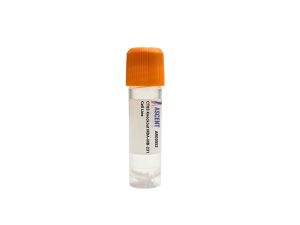
In Stock Cell Lines
Homo sapiens (Human)
Blood (peripheral blood)
Suspension
CD19 Knockout HMy2.C1R Cell Line is a CRISPR/Cas9-edited B-lymphoblastoid model lacking the CD19 co-receptor. Derived from HMy2.C1R cells that express HLA-A*0201, this knockout line enables investigation of BCR signaling without CD19-mediated amplification. CD19 interacts with CD21, CD81, and LYN to recruit PI3K and activate AKT, NF-??B, and MAP kinase pathways. Applications include dissection of B-cell activation thresholds, B-cell malignancy research, and T-cell stimulation assays where CD19 loss may alter antigen-presenting cell function. Researchers can assess CD19-dependent signaling through flow cytometry, western blotting, and functional assays of B-cell proliferation and NF-??B activity.
 MYH14 Knockout NCI-H1299 Polyclonal Cells
Cat. No. ARG18099
ALKBH2 Knockout NCI-H1299 Polyclonal Cells
Cat. No. ARG30311
BNIP3L Knockout NCI-H1975 Polyclonal Cells
Cat. No. ARG31359
HSF1 Knockout 143B Polyclonal Cells
Cat. No. ARG35680
EID2 Knockout Hela Polyclonal Cells
Cat. No. ARG40888
DDX60L Knockout AGS Polyclonal Cells
Cat. No. ARG2204
MYH14 Knockout NCI-H1299 Polyclonal Cells
Cat. No. ARG18099
ALKBH2 Knockout NCI-H1299 Polyclonal Cells
Cat. No. ARG30311
BNIP3L Knockout NCI-H1975 Polyclonal Cells
Cat. No. ARG31359
HSF1 Knockout 143B Polyclonal Cells
Cat. No. ARG35680
EID2 Knockout Hela Polyclonal Cells
Cat. No. ARG40888
DDX60L Knockout AGS Polyclonal Cells
Cat. No. ARG2204
The CD19 Knockout HMy2.C1R Cell Line is a CRISPR/Cas9-edited human B-lymphoblastoid cell line in which the CD19 gene has been disrupted, generating a loss-of-function model for probing B-cell biology. This knockout cell line is derived from the HMy2.C1R host, enabling researchers to analyze CD19-dependent mechanisms without altering the host cell??s engineered antigen-presenting capabilities.
The HMy2.C1R cell line is a human B-lymphoblastoid line that lacks endogenous HLA-A and -B expression and has been stably transfected with the class I MHC allele HLA-A*0201. This modification makes HMy2.C1R a versatile tool for T-cell stimulation assays, as it presents peptide epitopes restricted through HLA-A*0201 while minimizing interference from other classical MHC class I molecules. The B-cell origin of the host provides a physiologically relevant environment for studying B-cell receptor (BCR) signaling and antigen processing.
CD19 functions as a critical co-receptor for BCR signaling, enhancing signal transduction upon antigen engagement. It forms a complex with CD21 (complement receptor 2), CD81 (TAPA-1), and CD225 (Leu-13). Upon BCR activation, CD19 is phosphorylated by Src-family kinases, including LYN, which creates docking sites for PI3K (via the p85 subunit) and adaptor proteins such as Vav, GRB2, and BLNK. This recruitment amplifies downstream cascades, including PI3K-AKT, NF-??B, and MAP kinase (ERK, JNK, p38) pathways, ultimately driving B-cell survival, proliferation, and differentiation. CD19 integrates signals from the BCR and complement system, serving as a rheostat for B-cell activation thresholds.
In the HMy2.C1R context, CD19 knockout allows dissection of BCR signal transduction independently of CD19 co-receptor activity. Since HMy2.C1R is used as an antigen-presenting cell for T-cell stimulation, the absence of CD19 may alter B-cell signaling events that influence antigen presentation and cytokine responses. This model is valuable for distinguishing CD19-dependent from CD19-independent pathways downstream of the BCR, as well as for evaluating CD19 as a therapeutic target in B-cell malignancies. The knockout cell line retains the HLA-A*0201 restriction element, supporting studies that require a defined MHC-I context.
This knockout cell line is suitable for a wide range of research applications, including studies of B-cell receptor signaling, leukemia and lymphoma pathogenesis, and immunotherapy target validation. Researchers can employ flow cytometry to confirm CD19 surface loss, western blotting to assess downstream phosphorylation events (e.g., phospho-CD19, phospho-AKT), co-immunoprecipitation to probe CD19-containing complexes, and calcium flux assays to measure early BCR signaling events. NF-??B reporter assays and B-cell proliferation assays can further delineate functional consequences of CD19 loss. Additionally, the HMy2.C1R background allows for T-cell cytotoxicity and epitope presentation experiments, linking B-cell co-receptor function to adaptive immunity. For further information, please contact Ascent Research.