Genome-edited Cells
Breast (mammary gland)
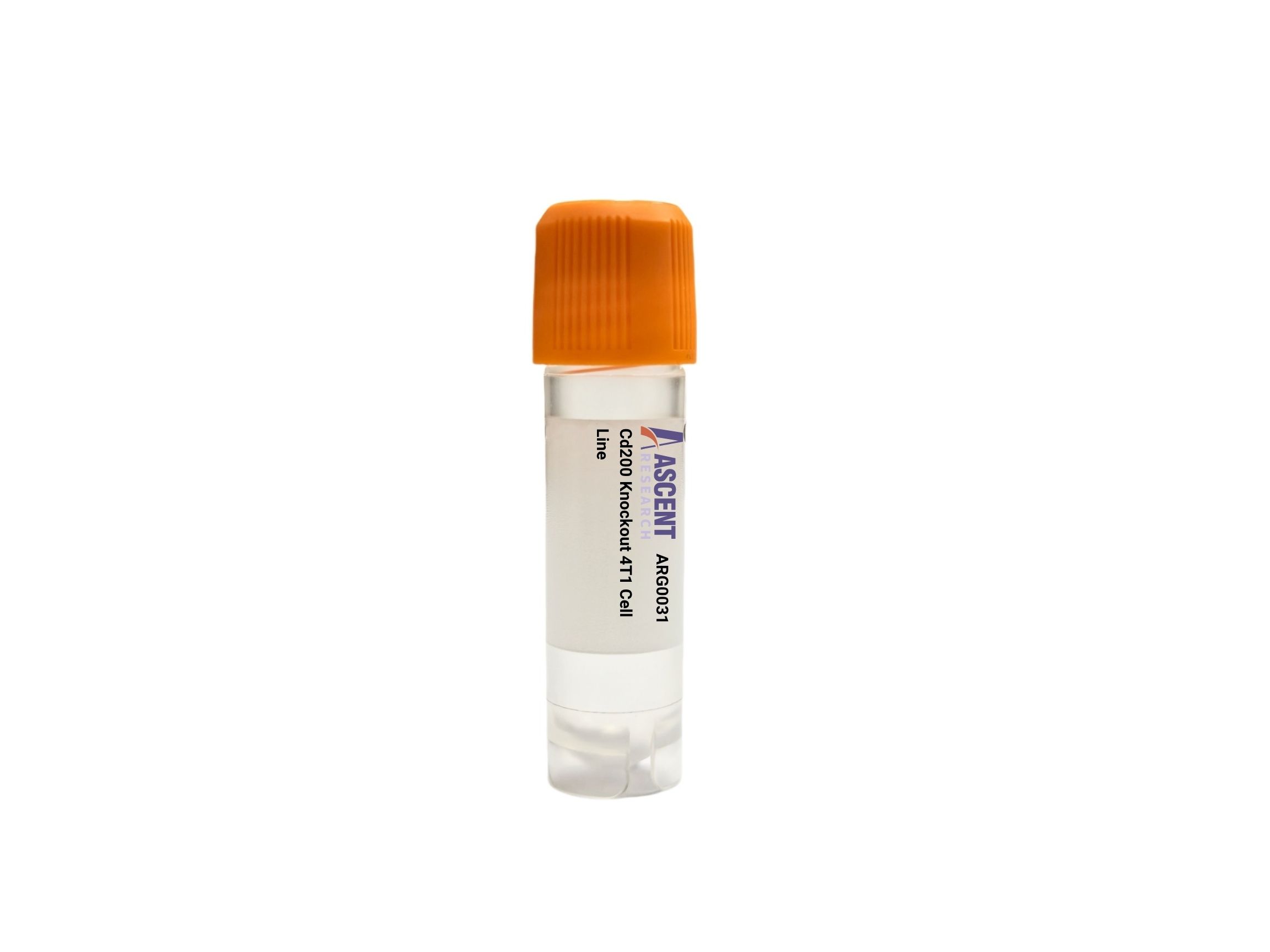
Cd200 Knockout 4T1 is a CRISPR/Cas9-edited mouse mammary carcinoma cell line generated in the aggressive 4T1 triple-negative breast cancer background. CD200 normally binds CD200R1 on myeloid cells and signals through factors including DOK2 and RASA1 to suppress inflammatory activation, reducing TNF-alpha, IL-6, and IL-12 output and dampening antigen-presenting cell function. This knockout model is useful for studies of tumor immune evasion, myeloid suppression, cytokine regulation, metastasis, macrophage or dendritic cell co-culture, and syngeneic breast cancer experiments using flow cytometry, RNA-seq, ELISA, and in vivo metastasis assays.
 NQO1 Knockout SK-HEP-1 Polyclonal Cells
Cat. No. ARG15236
DDHD2 Knockout HT29 Polyclonal Cells
Cat. No. ARG14927
IFIT5 Knockout HAP1 Polyclonal Cells
Cat. No. ARG22699
AGO3 Knockout NCI-H1975 Polyclonal Cells
Cat. No. ARG31058
ANP32A Knockout A549 Polyclonal Cells
Cat. No. ARG31497
EHHADH Knockout AGS Polyclonal Cells
Cat. No. ARG40839
NQO1 Knockout SK-HEP-1 Polyclonal Cells
Cat. No. ARG15236
DDHD2 Knockout HT29 Polyclonal Cells
Cat. No. ARG14927
IFIT5 Knockout HAP1 Polyclonal Cells
Cat. No. ARG22699
AGO3 Knockout NCI-H1975 Polyclonal Cells
Cat. No. ARG31058
ANP32A Knockout A549 Polyclonal Cells
Cat. No. ARG31497
EHHADH Knockout AGS Polyclonal Cells
Cat. No. ARG40839
The Cd200 Knockout 4T1 Cell Line is a CRISPR/Cas9-engineered murine mammary carcinoma model in which the Cd200 gene has been disrupted to eliminate functional CD200 expression. This gene-edited derivative of the 4T1 host line provides a stable in vitro system for investigating the contribution of tumor-cell CD200 to immune regulatory signaling, inflammatory crosstalk, and metastatic breast cancer biology. As a knockout model generated in a well-established syngeneic tumor background, it is suited for mechanistic studies requiring direct comparison of Cd200-deficient and parental 4T1 cells.
4T1 is a mouse triple-negative mammary carcinoma cell line with high tumorigenic and metastatic capacity in immunocompetent BALB/c mice. It is widely used as an aggressive, poorly immunogenic breast cancer model because it spontaneously disseminates to lung, liver, bone, and brain, thereby recapitulating key features of advanced metastatic disease. In vitro and in vivo, 4T1 cells support studies of tumor progression, invasion, immune escape, and therapy response in a host setting that preserves native antitumor and protumor immune interactions. This background makes 4T1 particularly valuable for interrogating tumor-intrinsic regulators of myeloid-cell behavior and adaptive-innate immune crosstalk.
CD200 is a cell-surface immunoglobulin superfamily ligand that interacts with CD200R1 and related CD200R family receptors expressed on myeloid cells, including macrophages and dendritic cells. Signaling downstream of CD200R is mediated through adaptor proteins such as DOK2 and RASA1 and is associated with suppression of proinflammatory activation programs, including reduced TNF-alpha, IL-6, and IL-12 production, decreased nitric oxide and inflammatory mediator output, and diminished antigen-presenting cell activation. Cd200 expression can be regulated by inflammatory cytokines, including IFN-gamma and TNF-alpha, and is linked to NF-kB-associated inflammatory signaling, STAT1-associated interferon signaling, and cellular differentiation state. Within this regulatory network, CD200-CD200R signaling modulates pathways involving ERK, p38 MAPK, JNK, and NF-kB, thereby contributing to tumor immune evasion and myeloid suppression.
In the context of 4T1 biology, Cd200 knockout provides a targeted system for examining how loss of a tumor-associated inhibitory ligand alters communication with macrophages, dendritic cells, and other CD200R-expressing populations. This model is relevant for defining the role of tumor-cell CD200 in myeloid-driven immunosuppression, inflammatory cytokine regulation, metastatic niche conditioning, and antitumor immune activation in triple-negative breast cancer.
Applications include flow cytometric or immunofluorescent assessment of CD200 loss, RT-qPCR, western blotting, and RNA-seq analysis of inflammatory and immune-regulatory gene expression, and co-culture experiments with macrophages or dendritic cells to quantify effects on cytokine secretion and antigen-presenting phenotypes by ELISA or phospho-signaling analysis. The model is also useful for migration and invasion assays, as well as syngeneic in vivo studies of primary tumor growth, metastatic dissemination, and immunotherapy response. Researchers may contact Ascent Research for additional technical information, product details, or related gene-edited cell models.