Genome-edited Cells
Ascites
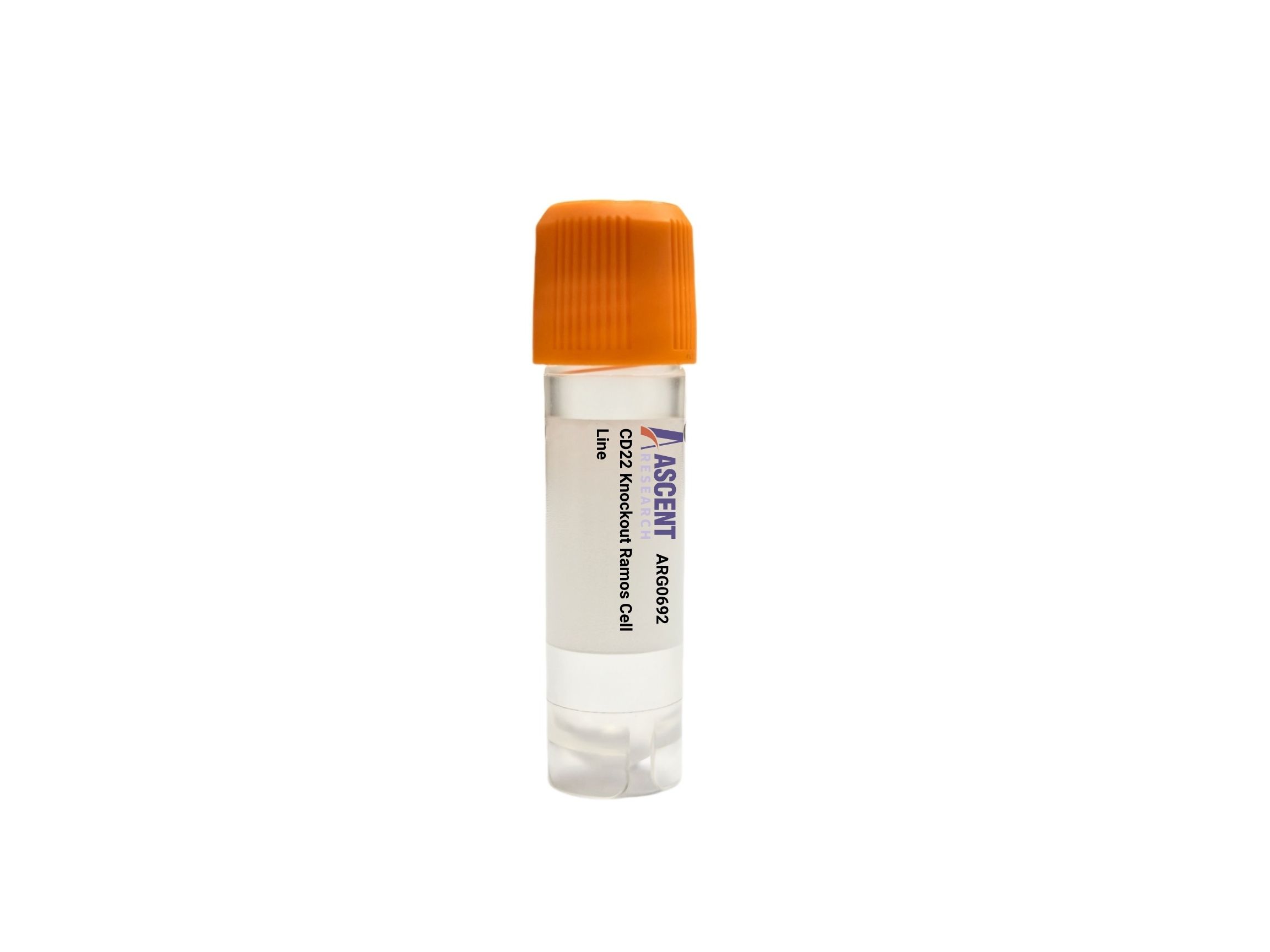
The CD22 Knockout Ramos Cell Line is a CRISPR/Cas9-edited human B lymphocyte model derived from a Burkitt lymphoma patient. This cell line carries a targeted disruption of the CD22 gene, which encodes an inhibitory coreceptor that dampens B-cell receptor (BCR) signaling through recruitment of SHP-1 phosphatase. Knocking out CD22 removes this brake, enabling investigation of hyperactivated B-cell states. Ideal for research on B-cell malignancies, autoimmune diseases, and BCR signaling dynamics, the model supports assays such as calcium flux, phospho-signaling analysis, and co-immunoprecipitation. Key molecular factors include LYN kinase and SHP-1. For additional information, contact Ascent Research.
 NEXN Knockout NCI-H1299 Polyclonal Cells
Cat. No. ARG17747
PATZ1 Knockout NCI-H1975 Polyclonal Cells
Cat. No. ARG17206
NID1 Knockout jurkat Polyclonal Cells
Cat. No. ARG13469
H4C1 Knockout AGS Polyclonal Cells
Cat. No. ARG35312
IFT88 Knockout 143B Polyclonal Cells
Cat. No. ARG35057
DUS1L Knockout jurkat Polyclonal Cells
Cat. No. ARG39988
NEXN Knockout NCI-H1299 Polyclonal Cells
Cat. No. ARG17747
PATZ1 Knockout NCI-H1975 Polyclonal Cells
Cat. No. ARG17206
NID1 Knockout jurkat Polyclonal Cells
Cat. No. ARG13469
H4C1 Knockout AGS Polyclonal Cells
Cat. No. ARG35312
IFT88 Knockout 143B Polyclonal Cells
Cat. No. ARG35057
DUS1L Knockout jurkat Polyclonal Cells
Cat. No. ARG39988
The CD22 Knockout Ramos Cell Line is a genetically engineered human B lymphocyte model featuring a CRISPR/Cas9-mediated disruption of the CD22 gene. This cell line serves as a defined loss-of-function system for dissecting inhibitory signaling mechanisms in B cells. By ablating CD22 expression, researchers gain a precise tool to investigate B-cell receptor (BCR) regulation in a lymphoma-derived cellular context, supporting studies in immunology, cancer biology, and therapeutic target validation.
Hosted in the Ramos cell line, originally derived from a patient with Burkitt lymphoma, this model retains characteristic features of germinal center B cells. Ramos cells are widely employed for their rapid proliferation, robust BCR signaling, antigen presentation capacity, and antibody production. This background provides a well-characterized and physiologically relevant platform for exploring the consequences of CD22 knockout on B-cell homeostasis and malignancy.
CD22 functions as an inhibitory coreceptor and sialic acid-binding lectin that modulates BCR signaling strength. Upon BCR engagement, the kinase LYN phosphorylates CD22 on immunoreceptor tyrosine-based inhibitory motifs, promoting recruitment of the tyrosine phosphatase SHP-1. This interaction attenuates downstream signaling through PI3K/AKT, NF-??B, and MAPK pathways, suppresses calcium mobilization, and limits B-cell activation and proliferation. CD22 also interacts with ??2,6-linked sialic acids on glycoproteins and associates with BCR components, integrating extracellular cues with intracellular regulatory networks.
In the Ramos B lymphocyte line, endogenous CD22 normally restrains both tonic and antigen-induced BCR signaling. CRISPR/Cas9-mediated knockout removes this inhibitory checkpoint, leading to enhanced signaling, sustained activation, and altered proliferative responses. This disinhibition models aspects of lymphomagenesis and autoimmunity, as dysregulated CD22 function is implicated in non-Hodgkin lymphoma and B-cell acute lymphoblastic leukemia. The knockout thus recapitulates a hyperactivated B-cell state relevant to mechanistic and translational research.
This cell line facilitates detailed interrogation of BCR signal transduction using phospho-signaling analysis, calcium flux assays, and co-immunoprecipitation to map changes in protein interactions. It is applicable in proliferation and apoptosis studies to evaluate functional outcomes of unchecked BCR activity, and in cell adhesion experiments to dissect CD22?Csialic acid interactions. The model also supports therapeutic development by enabling assessment of CD22 as a drug target in B-cell malignancies and autoimmune diseases. For further details or custom inquiries, please contact Ascent Research.