Genome-edited Cells
Breast (mammary gland)
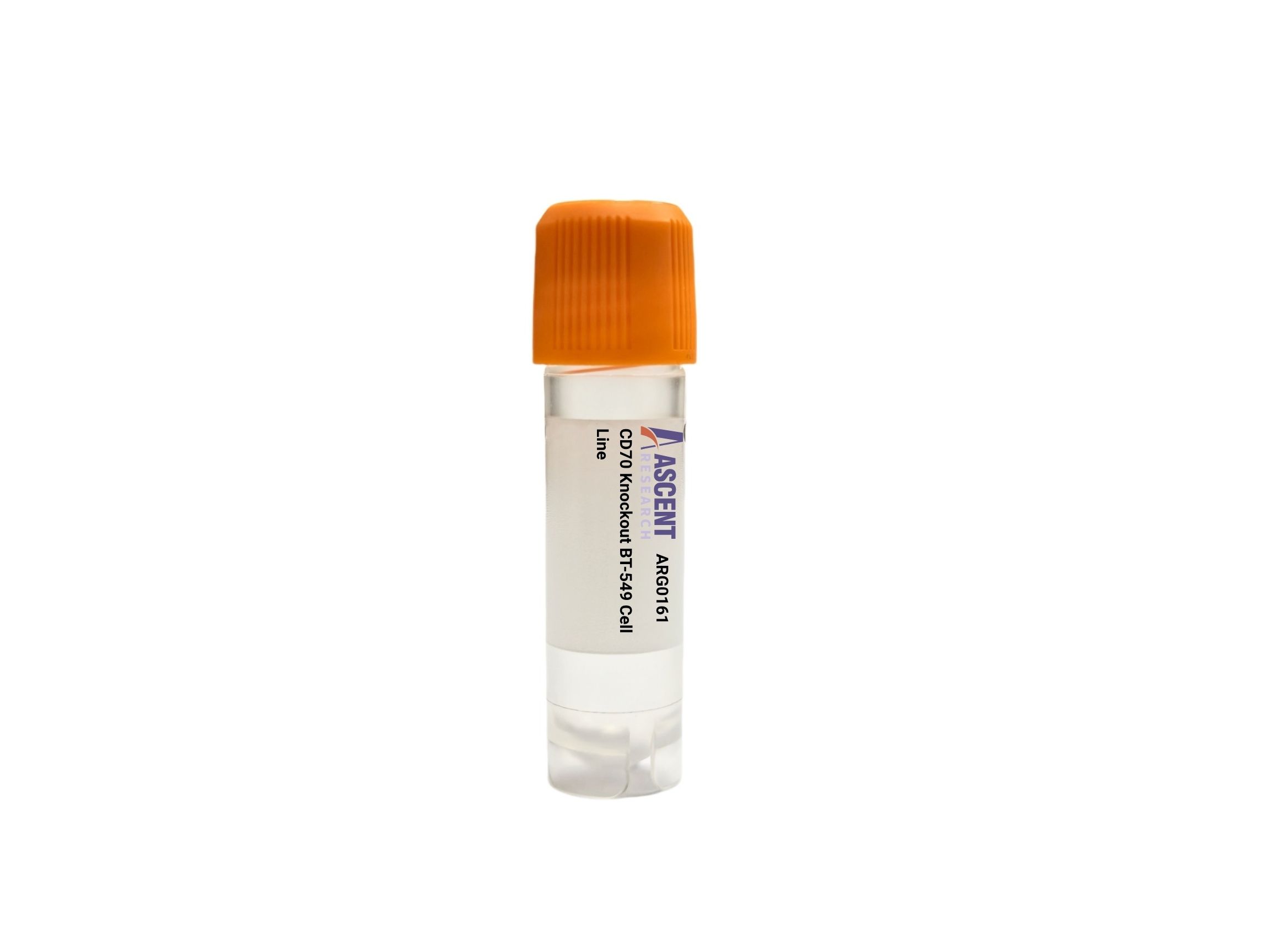
The CD70 Knockout BT-549 Cell Line is a human CRISPR/Cas9-edited triple-negative breast cancer model generated in the BT-549 breast carcinoma epithelial background. CD70 is a TNF superfamily ligand that binds CD27 and promotes TRAF2/TRAF5-dependent NF-kB signaling involved in lymphocyte activation, cytokine responses, and tumor-immune interactions. In BT-549 cells, CD70 disruption supports studies of immune evasion, inflammatory signaling, and breast cancer-associated phenotypes such as proliferation, migration, and invasion. Typical applications include flow cytometry, RT-qPCR, RNA-seq, NF-kB reporter assays, cytokine profiling, and co-culture with CD27-positive immune cells.
 MARK1 Knockout SK-HEP-1 Polyclonal Cells
Cat. No. ARG15911
ARL6IP5 Knockout 786-O Polyclonal Cells
Cat. No. ARG24990
AGPAT1 Knockout HT29 Polyclonal Cells
Cat. No. ARG32887
C3 Knockout HEK293T Polyclonal Cells
Cat. No. ARG41437
ESYT1 Knockout KYSE30 Polyclonal Cells
Cat. No. ARG9704
DCBLD2 Knockout AGS Polyclonal Cells
Cat. No. ARG3188
MARK1 Knockout SK-HEP-1 Polyclonal Cells
Cat. No. ARG15911
ARL6IP5 Knockout 786-O Polyclonal Cells
Cat. No. ARG24990
AGPAT1 Knockout HT29 Polyclonal Cells
Cat. No. ARG32887
C3 Knockout HEK293T Polyclonal Cells
Cat. No. ARG41437
ESYT1 Knockout KYSE30 Polyclonal Cells
Cat. No. ARG9704
DCBLD2 Knockout AGS Polyclonal Cells
Cat. No. ARG3188
The CD70 Knockout BT-549 Cell Line is a human CRISPR/Cas9-engineered breast carcinoma epithelial cell model in which the CD70 gene has been disrupted to eliminate functional CD70 expression. This edited line provides a stable in vitro system for investigating the consequences of CD70 loss in a triple-negative breast cancer-relevant background. As a defined knockout model derived from BT-549 cells, it is suited for mechanistic studies requiring controlled comparison of CD70-dependent and CD70-independent cellular phenotypes, signaling outputs, and immune interaction profiles.
BT-549 is a human breast ductal carcinoma cell line widely used as a model of triple-negative breast cancer with mesenchymal-like features. It is experimentally valuable for studying tumor progression-related behaviors, including proliferation, migration, invasion, and cytokine-responsive signaling. Because BT-549 cells are commonly applied in analyses of tumor cell plasticity, inflammatory pathway regulation, and therapeutic response, they provide a relevant host background for examining how loss of an immune modulatory surface ligand alters cancer-associated signaling states and tumor cell interactions with the microenvironment.
CD70 encodes a type II transmembrane ligand of the TNF superfamily that binds the receptor CD27 and mediates costimulatory signaling in immune cells. CD70 is regulated by inflammatory and stress-associated inputs including NF-kB, IFNG, TNF, IL1B, and T-cell receptor-associated inflammatory signaling. Upon CD27 engagement, CD70-dependent signaling promotes recruitment of TRAF2 and TRAF5 and contributes to downstream activation of canonical and noncanonical NF-kB pathway components, including NFKB1/RELA and RELB/NFKB2. These events are associated with induction of targets such as NFKBIA, as well as enhanced T-cell proliferation, cytokine production, and survival signaling in activated lymphocytes. In cancer, this ligand-receptor axis is relevant to tumor-immune crosstalk, immune evasion, and inflammatory signaling networks.
In the BT-549 context, CD70 knockout enables direct investigation of how a tumor-associated immune ligand contributes to breast cancer cell behavior and communication with CD27-positive immune cells. This model is useful for dissecting whether cytokine-induced inflammatory states, NF-kB-associated transcriptional programs, or tumor cell phenotypes linked to migration and invasion are altered when CD70 is absent. It also supports comparative studies of pathway dependency and gene-regulatory changes in a triple-negative breast cancer background.
Applications include flow cytometry, western blotting, and RT-qPCR to confirm loss of CD70-associated expression; RNA-seq to profile transcriptional consequences of knockout under basal or IFNG, TNF, or IL1B stimulation; and NF-kB reporter assays to assess effects on inflammatory signaling outputs. In co-culture systems with CD27-positive immune cells, the model can be used to evaluate effects on lymphocyte activation, cytokine production, or apoptosis-related responses. Additional use cases include co-immunoprecipitation or immunofluorescence for pathway interrogation, cytokine profiling, proliferation assays, migration and invasion studies, and drug sensitivity testing in immuno-oncology or combination-treatment workflows. Researchers may contact Ascent Research for additional technical information, product details, or related gene-edited cell models.