Genome-edited Cells
Blood (peripheral blood)
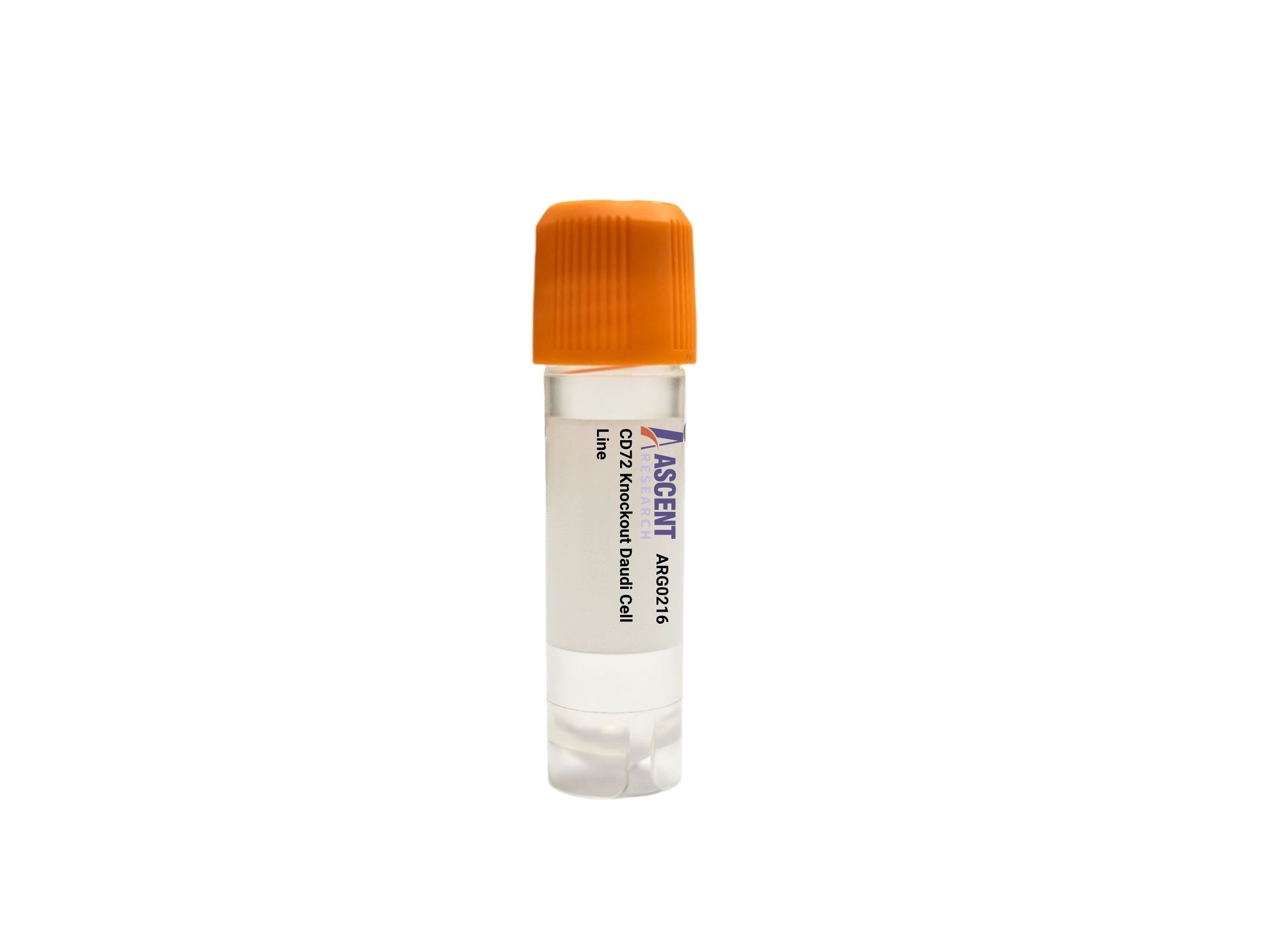
The CD72 Knockout Daudi Cell Line is a CRISPR/Cas9-edited knockout cell line derived from the human Daudi B lymphocyte line. This model eliminates CD72, a negative regulator of B cell receptor (BCR) signaling. CD72 normally recruits SHP-1 phosphatase upon binding CD5 or SEMA4D, suppressing phosphorylation of Syk and BLNK to attenuate B cell activation. Loss of CD72 unleashes BCR signaling, making this cell line valuable for research on B cell activation, systemic lupus erythematosus, and B cell lymphomas. Representative assays include phospho-specific flow cytometry and calcium mobilization for functional analysis and drug screening.
 ARFIP2 Knockout NCI-H1975 Polyclonal Cells
Cat. No. ARG31192
IFI30 Knockout NCI-H1975 Polyclonal Cells
Cat. No. ARG31699
ITGB3 Knockout MC3T3-E1 Polyclonal Cells
Cat. No. ARG34979
C2orf68 Knockout Hela Polyclonal Cells
Cat. No. ARG41406
NDEL1 Knockout AGS Polyclonal Cells
Cat. No. ARG2355
ARFIP2 Knockout NCI-H1975 Polyclonal Cells
Cat. No. ARG31192
IFI30 Knockout NCI-H1975 Polyclonal Cells
Cat. No. ARG31699
ITGB3 Knockout MC3T3-E1 Polyclonal Cells
Cat. No. ARG34979
C2orf68 Knockout Hela Polyclonal Cells
Cat. No. ARG41406
NDEL1 Knockout AGS Polyclonal Cells
Cat. No. ARG2355
 TRPA1 Knockout HEK293T Cell Line
Cat. No. ARG0320
TRPA1 Knockout HEK293T Cell Line
Cat. No. ARG0320
The CD72 Knockout Daudi Cell Line is a CRISPR/Cas9-edited knockout cell product in which the CD72 gene has been disrupted to eliminate target protein expression. This loss-of-function model enables investigation of CD72-dependent regulatory mechanisms in a human B lymphocyte context. The knockout cell line is generated via CRISPR/Cas9-mediated genome engineering, resulting in stable disruption of the CD72 gene, and is provided as a ready-to-use cellular resource for downstream functional assays.
The Daudi cell line is a widely utilized B lymphocyte model derived from a patient with Burkitt??s lymphoma. Notably, these cells are deficient in ??2-microglobulin, which leads to minimal surface expression of classical MHC class I molecules and provides a distinctive background for immunological and signal transduction studies. Daudi cells retain key features of mature B cells and respond to B cell receptor (BCR) stimulation, making them suitable for dissecting BCR-proximal signaling events. This host line is therefore an established system for examining B cell activation, lymphoma biology, and checkpoint regulation.
CD72 functions as an inhibitory co-receptor on B cells and exerts negative regulation on BCR signaling. Upon engagement by its ligands CD5 or SEMA4D, CD72 recruits SHP-1 phosphatase, which dephosphorylates critical signaling mediators including Syk kinase and BLNK adaptor protein, thereby attenuating downstream PLC??2 activation and calcium flux. This mechanism provides a tonic inhibition of B cell activation. In the CD72 knockout Daudi cells, this regulatory constraint is removed, leading to enhanced and sustained BCR signaling following antigen receptor engagement. The pathway components affected include CD5, SEMA4D, SHP-1, Syk, BLNK, and PLC??2, all of which are relevant to B cell tolerance and autoimmunity.
Disruption of CD72 in the Daudi background eliminates a key checkpoint, permitting dissection of its precise role in B cell activation, survival, and lymphomagenesis. The ??2-microglobulin-deficient status of Daudi cells provides an additional layer of relevance, as it mimics certain immune evasion features observed in B cell malignancies. Consequently, this knockout model facilitates exploration of CD72?CSHP-1 interactions and their impact on BCR signal strength, offering a defined system to study how loss of inhibitory co-receptors contributes to B cell hyperactivity. Observations in this model may inform understanding of systemic lupus erythematosus and B cell lymphomas, where dysregulated BCR signaling is a hallmark.
The CD72 Knockout Daudi Cell Line is well-suited for diverse research applications in B cell receptor signaling, autoimmune disease, and lymphoma biology. Users can validate CD72 knockout via flow cytometry or western blot, and assess functional consequences using phospho-specific flow cytometry for phosphorylated Syk or BLNK following anti-IgM stimulation, or through calcium mobilization assays. The cell line serves as a platform for screening small molecules targeting the CD72?CSHP-1 axis and for studying B cell tolerance checkpoints. For additional details, pricing, or technical inquiries, researchers are encouraged to contact Ascent Research.