Genome-edited Cells
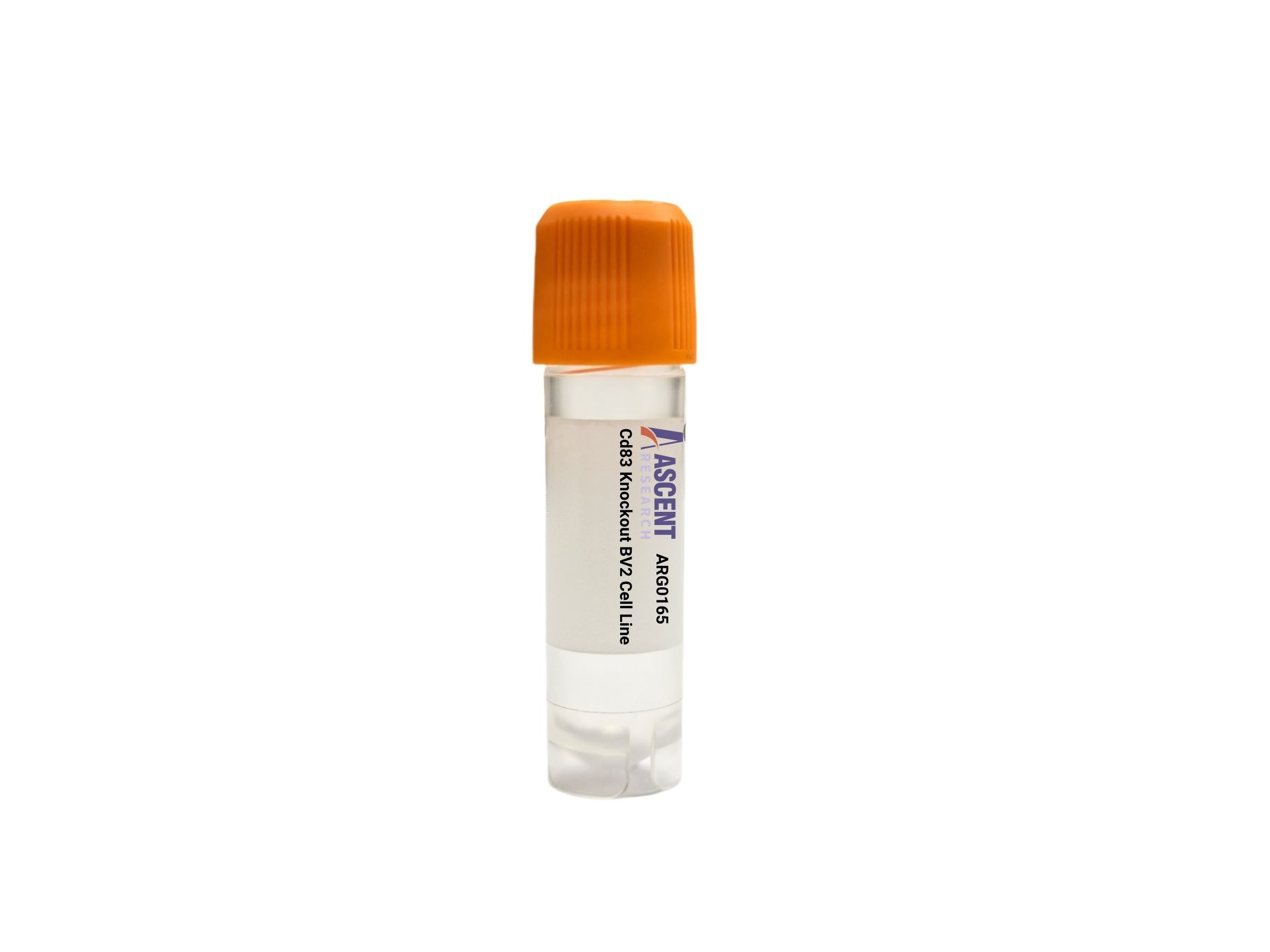
Cd83 Knockout BV2 is a CRISPR/Cas9-engineered mouse microglia-like cell line with disruption of the Cd83 immunoregulatory surface glycoprotein. In the widely used BV2 neuroinflammation model, this knockout supports analysis of how CD83 modulates TLR4-driven signaling, including MYD88/TRIF-dependent NF-kB and MAPK responses, cytokine output, and antigen-presentation programs. The model is suited for studies of microglial activation, neuroinflammation, CNS infection, and immune regulation using RT-qPCR, ELISA, flow cytometry, RNA-seq, phospho-signaling assays, NF-kB reporter assays, and phagocytosis or cytokine secretion assays.
 IFNK Knockout HAP1 Polyclonal Cells
Cat. No. ARG22712
DRAM2 Knockout jurkat Polyclonal Cells
Cat. No. ARG39773
FBXO38 Knockout MES-OV Polyclonal Cells
Cat. No. ARG6235
CKS1B Knockout 786O Polyclonal Cells
Cat. No. ARG4827
NMRAL1 Knockout AGS Polyclonal Cells
Cat. No. ARG2494
NEK4 Knockout Raji Polyclonal Cells
Cat. No. ARG1680
IFNK Knockout HAP1 Polyclonal Cells
Cat. No. ARG22712
DRAM2 Knockout jurkat Polyclonal Cells
Cat. No. ARG39773
FBXO38 Knockout MES-OV Polyclonal Cells
Cat. No. ARG6235
CKS1B Knockout 786O Polyclonal Cells
Cat. No. ARG4827
NMRAL1 Knockout AGS Polyclonal Cells
Cat. No. ARG2494
NEK4 Knockout Raji Polyclonal Cells
Cat. No. ARG1680
The Cd83 Knockout BV2 Cell Line is a CRISPR/Cas9-engineered mouse microglia-like model in which the Cd83 gene has been disrupted to eliminate functional CD83 expression. This stable edited cell population provides an in vitro system for investigating CD83-dependent regulatory mechanisms in innate immune signaling and antigen-presentation-associated responses. The host background, BV2, is an immortalized murine microglial cell line that offers a tractable platform for mechanistic studies of neuroimmune activation under controlled stimulation conditions.
BV2 cells are widely used as a surrogate model of resident central nervous system innate immune cells. As an immortalized microglia-like line, BV2 recapitulates key features of activated microglia relevant to pathogen sensing, phagocytosis, cytokine production, and inflammatory signal transduction. The model is particularly useful for studies of Toll-like receptor responses and neuroinflammatory cascades because it can be robustly stimulated by agents such as lipopolysaccharide and supports analysis of transcriptional, secretory, and surface-marker changes associated with microglial activation. Accordingly, BV2 cells are frequently applied in research on neuroinflammation, CNS infection, neurodegeneration, and inflammatory signaling in disorders including Alzheimer??s disease, Parkinson??s disease, and multiple sclerosis.
CD83 is an inducible immunoregulatory surface glycoprotein of the immunoglobulin superfamily with established functions in immune cell activation, antigen presentation, and inflammatory modulation. In inflammatory contexts, Cd83 expression is regulated downstream of LPS-triggered TLR4 signaling through adaptor pathways involving MYD88 and TICAM1/TRIF, with downstream engagement of IRAK4, TRAF6, MAPK8, MAPK14, and the NFKB1/RELA transcriptional axis. CD83 is linked to control of cytokine and chemokine outputs including TNF, IL6, IL1B, CCL2, and CXCL10, and it interfaces with antigen-presentation machinery through factors such as CIITA, H2-Ab1, MHC class II complex components, CD80, and CD86. Reported interacting factors including MARCH1 and MARCH8 further connect CD83 to regulation of immune surface programs and checkpoint-like immunoregulatory states.
Within BV2 cells, Cd83 loss is therefore relevant for dissecting how microglial activation state is shaped during innate immune challenge. This model can support studies on how CD83 constrains or coordinates signaling downstream of TLR4, TNF, IL1B, or IFN-gamma, and how these inputs alter inflammatory mediator production, NF-kB-responsive transcription, MAPK pathway activity, and antigen-presentation-associated phenotypes. Because microglia are central effectors of CNS inflammatory injury and immune crosstalk, the knockout background is useful for examining pathway dependency in disease-relevant neuroinflammatory programs.
Researchers can apply this cell line in LPS or cytokine stimulation paradigms followed by RT-qPCR, ELISA, or RNA-seq to quantify changes in TNF, Il6, Il1b, Ccl2, and Cxcl10 expression. Flow cytometry and immunofluorescence can be used to assess CD80, CD86, and MHC class II-associated responses, while western blotting, phospho-signaling analysis, and NF-kB reporter assays enable interrogation of TLR4-MYD88-TRAF6 and MAPK/NF-kB pathway dynamics. The model is also suitable for phagocytosis assays, co-immunoprecipitation studies of CD83-associated regulatory complexes, and inflammatory drug-response profiling in neuroinflammation, sepsis, autoimmune disease, and innate-adaptive immune crosstalk studies. Researchers may contact Ascent Research for additional technical information, product details, or related gene-edited cell models.