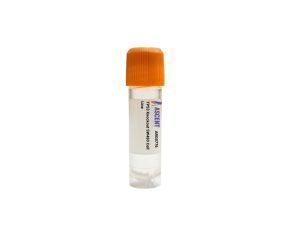
In Stock Cell Lines
Homo sapiens (Human)
Blood (peripheral blood)
Suspension
The CSF2 Knockout Jurkat Cell Line is a CRISPR/Cas9-edited human T-lymphocyte cell line lacking functional GM-CSF expression. Derived from the Jurkat leukemia model, this product enables precise loss-of-function studies of CSF2-mediated signaling, including the JAK2/STAT5, RAS/MAPK, and PI3K/AKT pathways. Applications encompass investigation of T-cell/myeloid cross-talk, inflammatory cytokine responses, and leukemic microenvironment interactions. Researchers can employ ELISA, western blotting, and co-culture assays to validate target disruption and explore GM-CSF-dependent mechanisms in autoimmune and cancer research.
 MERTK Knockout A2780 Polyclonal Cells
Cat. No. ARG18427
ALDH9A1 Knockout A2780 Polyclonal Cells
Cat. No. ARG28669
IFI27 Knockout 786O Polyclonal Cells
Cat. No. ARG35732
CASP7 Knockout Hela Polyclonal Cells
Cat. No. ARG42512
C9orf40 Knockout SK-HEP-1 Polyclonal Cells
Cat. No. ARG41593
PGM5 Knockout HEK293T Polyclonal Cells
Cat. No. ARG3874
MERTK Knockout A2780 Polyclonal Cells
Cat. No. ARG18427
ALDH9A1 Knockout A2780 Polyclonal Cells
Cat. No. ARG28669
IFI27 Knockout 786O Polyclonal Cells
Cat. No. ARG35732
CASP7 Knockout Hela Polyclonal Cells
Cat. No. ARG42512
C9orf40 Knockout SK-HEP-1 Polyclonal Cells
Cat. No. ARG41593
PGM5 Knockout HEK293T Polyclonal Cells
Cat. No. ARG3874
The CSF2 Knockout Jurkat Cell Line is a CRISPR/Cas9-edited cell line derived from the human T-lymphocyte Jurkat line, featuring targeted disruption of the CSF2 gene. This genetic ablation creates a definitive loss-of-function model for studying granulocyte-macrophage colony-stimulating factor (GM-CSF) biology and its roles in immune signaling.
Jurkat cells, originating from a T-cell leukemia patient, serve as a widely used model for T-cell receptor signaling, apoptosis, and leukemogenesis. Their robust growth, ease of manipulation, and well-mapped signaling pathways make them an ideal host for investigating cytokine-mediated functions in lymphocyte biology and cancer.
CSF2 encodes GM-CSF, a cytokine critical for myeloid cell differentiation, proliferation, and activation. Signal transduction initiates with GM-CSF binding to its heterodimeric receptor, composed of CSF2RA and CSF2RB, which recruits and activates JAK2. Activated JAK2 phosphorylates STAT5, leading to transcriptional regulation of targets such as BCL2L1 and CCND1, while also triggering RAS/MAPK (RAS-RAF-MEK-ERK) and PI3K-AKT cascades. In T cells, CSF2 transcription is induced by stimuli including TNF-alpha, IL-1, LPS, and TCR/CD28 costimulation, mediated by transcription factors NF-??B, AP-1, and NFAT. GM-CSF further induces cytokines like IL-6 and TNF, amplifying inflammatory responses. Thus, CSF2 sits at a crossroads of innate-adaptive immune communication and inflammatory pathway activation.
In Jurkat cells, CSF2 knockout eliminates the ability to produce GM-CSF upon stimulation, providing a clean system to dissect T-cell-derived GM-CSF functions. This model is especially valuable for studying how T cells communicate with myeloid cells in inflammatory milieus and leukemia microenvironments, without confounding effects from endogenous cytokine production. It enables precise examination of T-cell-intrinsic signaling alterations and downstream consequences on myeloid effector functions.
Applications include co-culture assays with monocytes or macrophages to evaluate myeloid cell activation, supported by flow cytometry and cytokine multiplex analysis. ELISA confirms GM-CSF ablation, while RT-qPCR verifies transcript loss. Western blotting for phosphorylated JAK2, STAT5, ERK1/2, and AKT elucidates pathway activity. The line also facilitates screening of GM-CSF-targeted agents and mechanistic studies in autoimmune and inflammatory disease models, such as rheumatoid arthritis and multiple sclerosis. For further information, contact Ascent Research.