Genome-edited Cells
Uterus (endometrium)
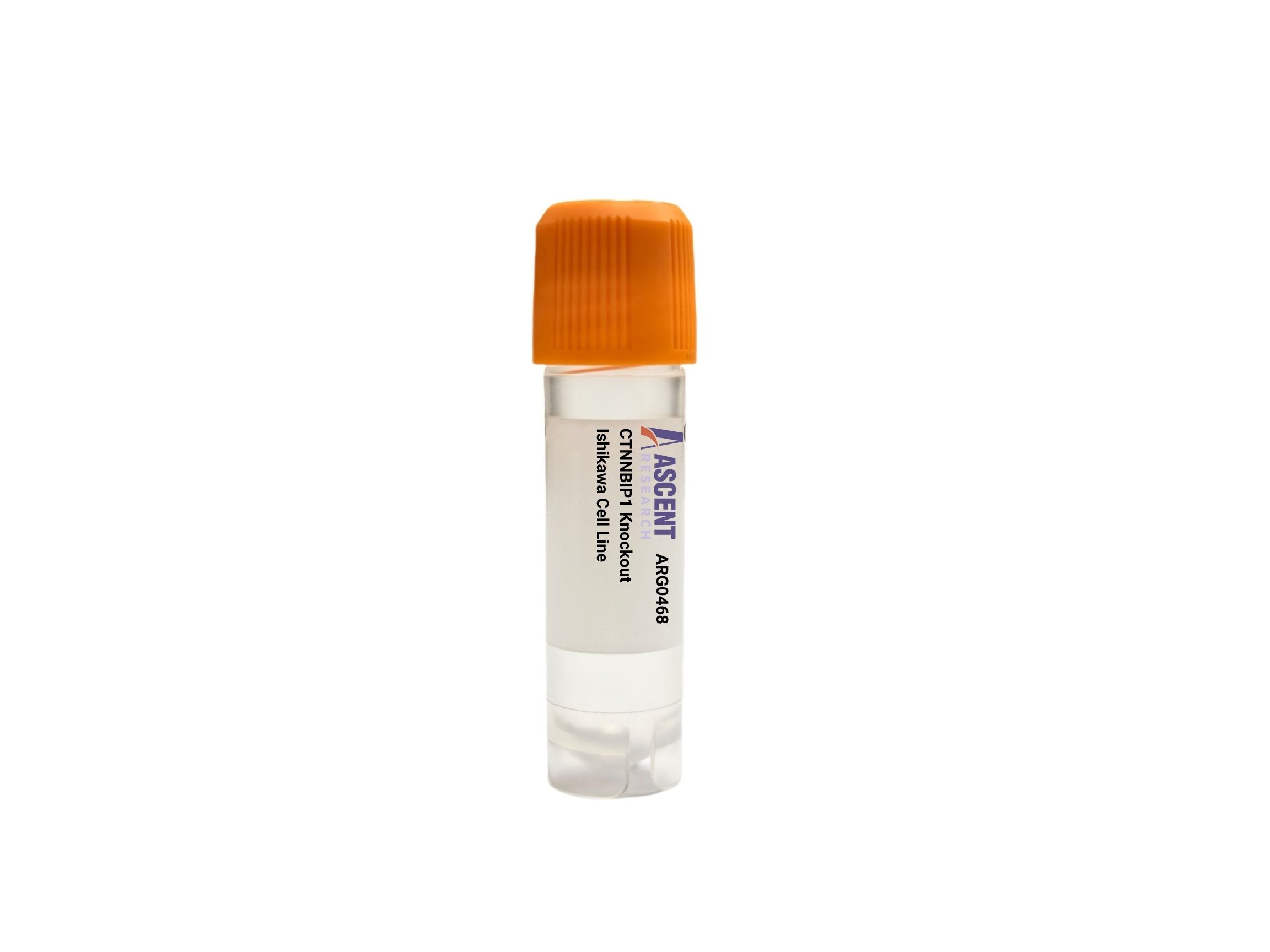
The CTNNBIP1 Knockout Ishikawa Cell Line is a CRISPR/Cas9-edited knockout cell line in which the CTNNBIP1 gene, encoding the ???catenin?interacting protein ICAT, has been disrupted. ICAT is a negative regulator of canonical Wnt/???catenin signaling that binds ???catenin and prevents its interaction with TCF/LEF transcription factors. The host Ishikawa cell line is a hormone?responsive endometrial adenocarcinoma model that expresses estrogen and progesterone receptors. Knockout of CTNNBIP1 removes this inhibitory brake, leading to elevated ???catenin/TCF transcriptional activity and upregulation of target genes such as MYC, CCND1, and AXIN2. This cell line is suitable for functional assays including TOP/FOP reporter, proliferation, apoptosis, and migration, as well as Wnt inhibitor screening, providing a powerful tool for investigating Wnt-driven endometrial carcinogenesis and tumor?suppressive mechanisms.
 GM2A Knockout K562 Polyclonal Cells
Cat. No. ARG19236
AHCYL2 Knockout 786-O Polyclonal Cells
Cat. No. ARG24855
KMT2A Knockout NCI-H1299 Polyclonal Cells
Cat. No. ARG30938
AKR1C3 Knockout HT29 Polyclonal Cells
Cat. No. ARG32906
BRD3 Knockout AGS Polyclonal Cells
Cat. No. ARG26773
GM2A Knockout K562 Polyclonal Cells
Cat. No. ARG19236
AHCYL2 Knockout 786-O Polyclonal Cells
Cat. No. ARG24855
KMT2A Knockout NCI-H1299 Polyclonal Cells
Cat. No. ARG30938
AKR1C3 Knockout HT29 Polyclonal Cells
Cat. No. ARG32906
BRD3 Knockout AGS Polyclonal Cells
Cat. No. ARG26773
 Fgl2 Knockout 4T1 Cell Line
Cat. No. ARG0028
Fgl2 Knockout 4T1 Cell Line
Cat. No. ARG0028
The CTNNBIP1 Knockout Ishikawa Cell Line is a CRISPR/Cas9-edited knockout cell line that disrupts the CTNNBIP1 gene, encoding the ???catenin?interacting protein ICAT. This loss?of?function model is designed to abrogate CTNNBIP1 expression, enabling the study of negative regulation of canonical Wnt/???catenin signaling. The knockout was generated through CRISPR/Cas9-mediated gene disruption; the precise editing event has not been characterized at the clonal level. It is suitable for functional genomics, pathway analysis, and drug discovery.
Ishikawa cells are a well-characterized human endometrial adenocarcinoma line established from a well?differentiated tumor of a 39?year?old Japanese patient. They retain estrogen receptor alpha (ER??) and progesterone receptor (PR) expression and display adherent epithelial morphology. These features make Ishikawa cells a widely used model for hormone?responsive endometrial differentiation, proliferation, and carcinogenesis, and for studying crosstalk between steroid hormones and oncogenic pathways.
CTNNBIP1 encodes ICAT, a negative regulator that directly binds ???catenin and prevents its association with TCF/LEF transcription factors such as TCF7L2 (TCF4) and LEF1, thereby repressing transcription of Wnt targets MYC, CCND1, and AXIN2. Canonical Wnt ligands (e.g., WNT3A) bind Frizzled/LRP5/6 receptors, activate DVL, and inhibit the APC/AXIN1/GSK3B destruction complex, leading to ???catenin stabilization and nuclear TCF/LEF?dependent gene activation. CTNNBIP1 knockout removes this inhibitory check, resulting in elevated ???catenin/TCF transcriptional output and upregulation of proliferative and survival programs.
In the Ishikawa endometrial cancer setting, CTNNBIP1 knockout is highly informative. Endometrial carcinomas often harbor aberrant Wnt signaling via ???catenin mutations or silencing of negative regulators like CTNNBIP1. The hormone?responsive Ishikawa model allows investigation of how CTNNBIP1 loss cooperates with ER??/PR pathways to drive proliferation, reduce apoptosis, and promote invasion. This knockout cell line thus serves as a platform to dissect CTNNBIP1??s tumor?suppressive function and the interplay between Wnt and steroid hormone signaling in endometrial carcinogenesis.
Key applications include TOP/FOP Flash reporter assays for TCF/LEF activity, western blotting and RT?qPCR for active ???catenin, AXIN2, MYC, and CCND1, immunofluorescence for ???catenin localization, and co?immunoprecipitation of ???catenin?TCF4 complexes. Functional studies encompass MTT/BrdU proliferation, Annexin V apoptosis, colony formation, and transwell migration/invasion assays. The cell line is also ideal for screening Wnt inhibitors and conducting genetic rescue experiments. For additional details, contact Ascent Research.