In Stock Cell Lines
Mus musculus (Mouse)
Ascites
Adherent
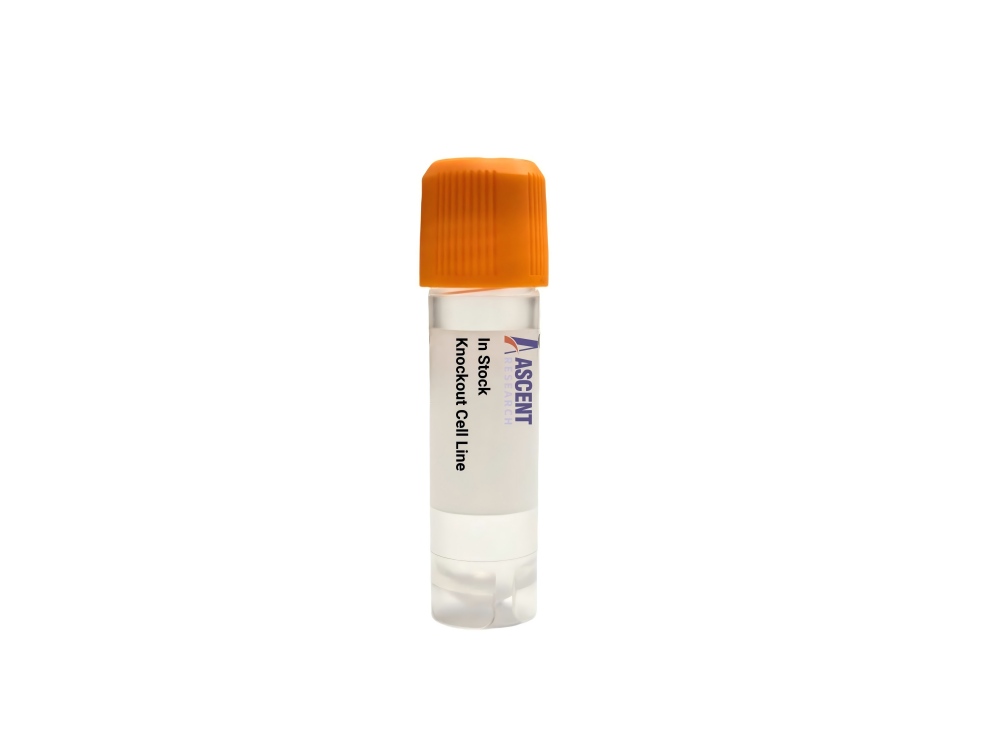
The Cul3 Knockout RAW 264.7 Cell Line is a CRISPR/Cas9-edited murine macrophage model with targeted disruption of the Cul3 gene, encoding a scaffold for cullin-RING E3 ubiquitin ligase complexes. CUL3 regulates protein turnover of key factors such as NRF2, Cyclin E, and Dishevelled, controlling oxidative stress responses, cell cycle progression, and Wnt signaling in immune cells. This knockout line enables investigation of macrophage ubiquitination pathways, inflammatory signaling, and proteasomal degradation in contexts including cancer biology, hypertension, and drug discovery. Suitable for a broad range of assays from protein analysis to functional studies.
 AKR1B1 Knockout Hela Polyclonal Cells
Cat. No. ARG20662
GYG1 Knockout K562 Polyclonal Cells
Cat. No. ARG20520
ID4 Knockout HAP1 Polyclonal Cells
Cat. No. ARG22683
CCDC3 Knockout HAP1 Polyclonal Cells
Cat. No. ARG43010
GATAD1 Knockout HEK293T Polyclonal Cells
Cat. No. ARG3844
AKR1B1 Knockout Hela Polyclonal Cells
Cat. No. ARG20662
GYG1 Knockout K562 Polyclonal Cells
Cat. No. ARG20520
ID4 Knockout HAP1 Polyclonal Cells
Cat. No. ARG22683
CCDC3 Knockout HAP1 Polyclonal Cells
Cat. No. ARG43010
GATAD1 Knockout HEK293T Polyclonal Cells
Cat. No. ARG3844
 NCI-H2342
Cat. No. ARC0624
NCI-H2342
Cat. No. ARC0624
The Cul3 Knockout RAW 264.7 Cell Line is a CRISPR/Cas9-edited loss-of-function model featuring disruption of the Cul3 gene in the RAW 264.7 murine macrophage background. This stable cell line provides a platform for studying CUL3-dependent ubiquitination pathways without reliance on transient interventions, enabling long-term investigation of protein homeostasis and signaling in immune cells.
RAW 264.7 is a BALB/c mouse monocyte/macrophage cell line recognized for robust phagocytic activity, inducible inflammatory cytokine production, and responsiveness to microbial ligands. Its well-characterized phenotype makes it a standard model for innate immunity, macrophage polarization, and host defense mechanisms. Combining this host with Cul3 knockout yields a genetically defined system for exploring how ubiquitin-proteasome function shapes macrophage biology.
CUL3 acts as a scaffold for cullin-RING E3 ubiquitin ligase (CRL3) complexes, which, after neddylation, recruit BTB adaptors (KEAP1, SPOP, KLHL3) to ubiquitinate substrates for proteasomal degradation. Central targets include NRF2 (KEAP1-CUL3-RBX1-NRF2 axis controlling antioxidant responses), Cyclin E (CUL3-RBX1-SPOP module regulating cell cycle), and Dishevelled (modulating Wnt signaling). Additional components like RBX1, CAND1, and the COP9 signalosome modulate CRL3 dynamics. Through these interactions, CUL3 influences NF-??B signaling via I??B?? turnover and ion homeostasis through KLHL3.
In macrophages, Cul3 disruption consequently impairs degradation of NRF2, Cyclin E, and I??B??, leading to dysregulated oxidative defense, cell proliferation, and inflammatory cytokine output. This knockout model allows dissection of how CUL3-mediated proteolysis balances cytoprotective and pro-inflammatory programs, with implications for diseases such as cancer, hypertension, and neuroinflammation.
Applications include ubiquitin-proteasome research in immune cells, oxidative stress response analysis via NRF2 reporter assays and ROS detection, and Wnt pathway studies through Dishevelled stabilization. The cell line supports drug target validation (NEDD8-activating enzyme inhibitors), mechanistic work using Western blotting, co-immunoprecipitation, RNA-seq, and functional assays like phagocytosis and cytokine ELISAs. Contact Ascent Research for further details.