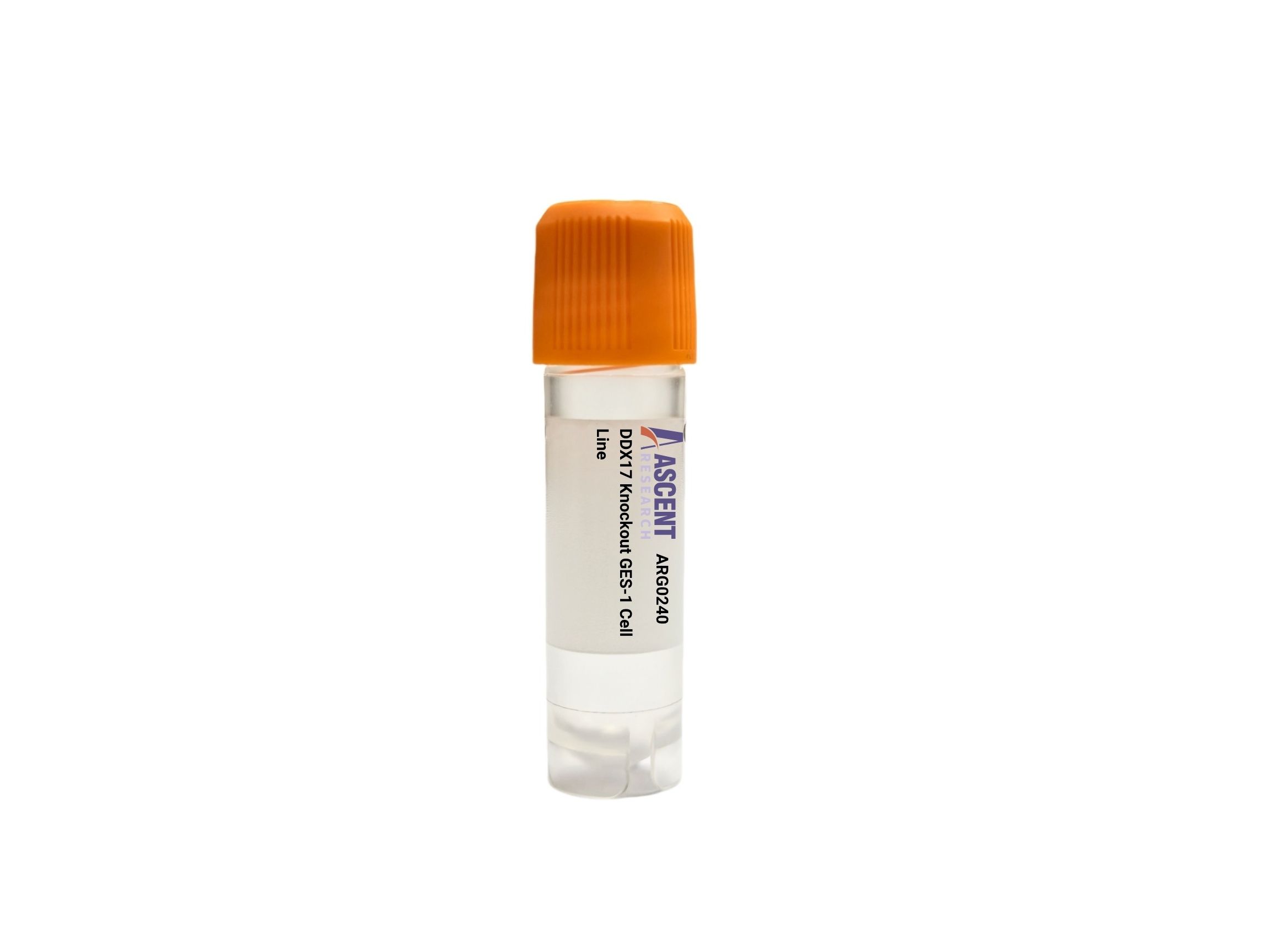
Genome-edited Cells
Stomach
The DDX17 Knockout GES-1 Cell Line is a CRISPR/Cas9-edited knockout cell line based on the immortalized human gastric epithelial GES-1 cell line. This loss-of-function model disrupts DDX17, an ATP-dependent RNA helicase and transcriptional co-regulator that interacts with ESR1, p53, CBP/p300, and SRA to modulate steroid hormone signaling and stress responses. Knockout of DDX17 impairs transcriptional regulation, alternative splicing, and miRNA biogenesis, affecting pathways such as p53 and TGF-?? signaling. This cell line is ideal for investigating gene function, gastric epithelial homeostasis, cancer biology, and RNA metabolism using assays like Western blotting, RT-qPCR, and reporter assays.
 ARHGEF17 Knockout HT29 Polyclonal Cells
Cat. No. ARG33028
HS3ST1 Knockout HGC-27 Polyclonal Cells
Cat. No. ARG36132
KAT7 Knockout HCT116 Polyclonal Cells
Cat. No. ARG36060
BDH2 Knockout HAP1 Polyclonal Cells
Cat. No. ARG27393
ARHGEF17 Knockout HT29 Polyclonal Cells
Cat. No. ARG33028
HS3ST1 Knockout HGC-27 Polyclonal Cells
Cat. No. ARG36132
KAT7 Knockout HCT116 Polyclonal Cells
Cat. No. ARG36060
BDH2 Knockout HAP1 Polyclonal Cells
Cat. No. ARG27393
 Rat Ventricular Cardiomyocyte Medium
Cat. No. ARM0213
Rat Ventricular Cardiomyocyte Medium
Cat. No. ARM0213
 Cul3 Knockout NIH 3T3 Cell Line
Cat. No. ARG0643
Cul3 Knockout NIH 3T3 Cell Line
Cat. No. ARG0643
The DDX17 Knockout GES-1 Cell Line is a CRISPR/Cas9-edited knockout cell line derived from the immortalized human gastric epithelial cell line GES-1. This product provides a stable loss-of-function model for DDX17, an ATP-dependent RNA helicase implicated in transcriptional regulation, alternative splicing, and miRNA biogenesis. The knockout cell line is generated through CRISPR/Cas9-mediated gene disruption, resulting in ablation of DDX17 protein expression, enabling precise dissection of DDX17-dependent cellular functions.
GES-1 is a non-tumorigenic, immortalized human gastric epithelial cell line that maintains key characteristics of the gastric epithelium, serving as a well-established in vitro model for studying gastric mucosal barrier function, epithelial homeostasis, and gastric pathophysiology. Derived from normal gastric tissue, GES-1 cells retain epithelial morphology and respond to physiological signals, making them suitable for investigating the molecular mechanisms underlying gastric epithelial cell biology in health and disease.
DDX17 functions as a transcriptional co-activator for steroid hormone receptors, including estrogen receptor alpha (ESR1), and participates in p53-dependent stress responses. It interacts with ESR1, p53, CBP/p300, HDACs, and the steroid receptor RNA activator (SRA) to regulate gene expression. DDX17 is regulated by upstream signals such as TGF-??, estrogen, p53, and MYC, and in turn controls downstream targets including CDKN1A (p21), BAX, ESR1, and miRNAs like miR-21. Through its ATP-dependent RNA helicase activity, DDX17 also governs alternative splicing and miRNA processing, integrating transcriptional and post-transcriptional regulatory networks.
In the GES-1 gastric epithelial background, DDX17 knockout disrupts pathways critical for epithelial integrity, stress responses, and hormone signaling. Given DDX17’s roles in p53-mediated cell cycle arrest, TGF-??-induced responses, and estrogen receptor signaling, its loss may impair gastric epithelial cell responses to genotoxic stress, growth factors, and hormonal cues. This cell line thus enables the study of DDX17-dependent mechanisms in gastric epithelial homeostasis, with implications for understanding gastric carcinogenesis and tissue maintenance.
This knockout cell line is suited for a broad range of experimental applications, including gene function studies, cancer biology, RNA metabolism, hormone receptor signaling, and gastric epithelial homeostasis. Representative assays include Western blotting, RT-qPCR, RNA-seq, immunofluorescence, co-immunoprecipitation, reporter assays, and proliferation assays. Researchers can elucidate the contribution of DDX17 to transcriptional regulation, splicing, and miRNA biogenesis in a physiologically relevant epithelial context. For further details or customized services, please contact Ascent Research.