Genome-edited Cells
Stomach
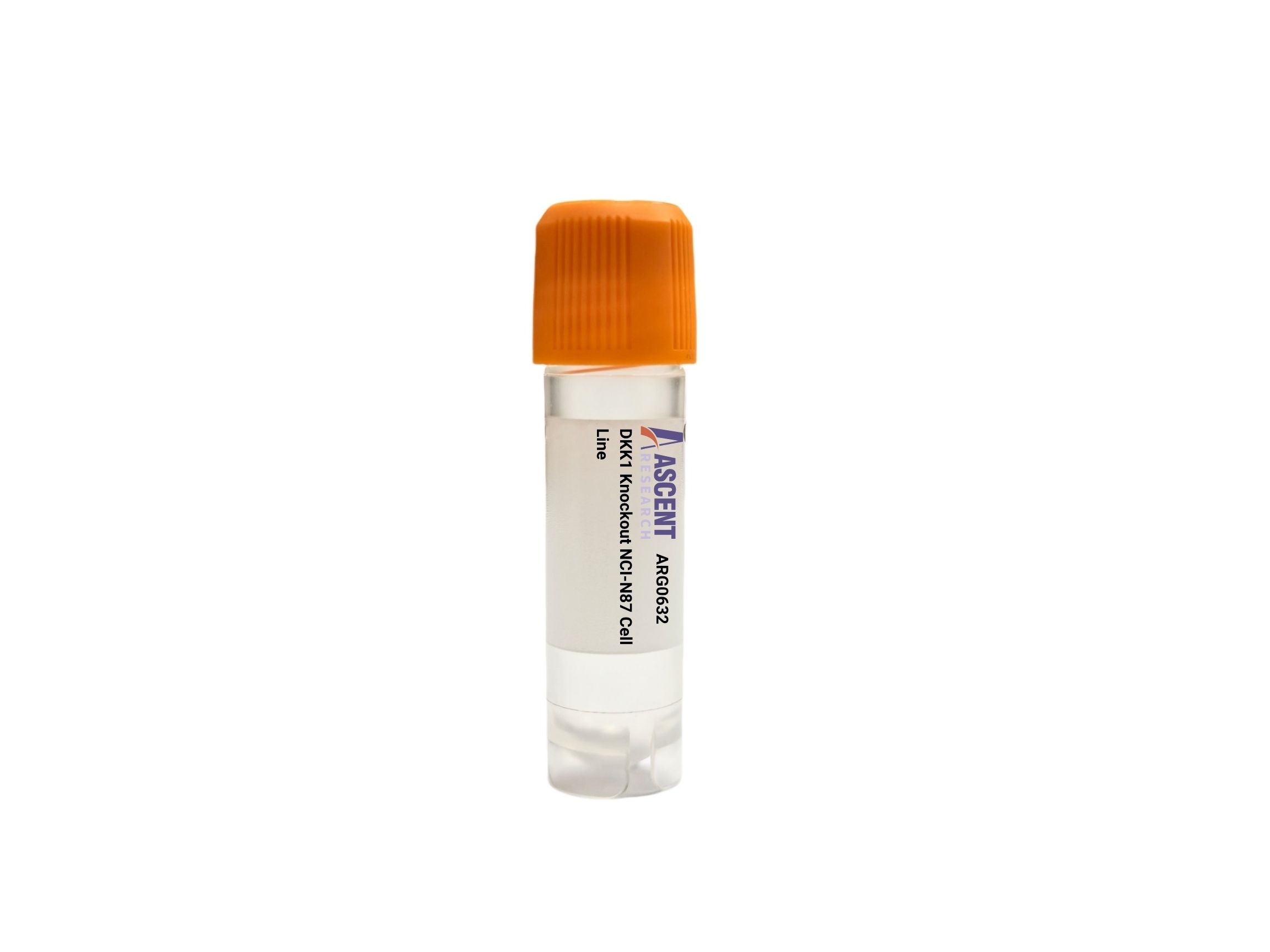
The DKK1 Knockout NCI-N87 Cell Line is a CRISPR/Cas9-edited human gastric carcinoma cell line with disruption of the DKK1 gene. Derived from the HER2-overexpressing NCI-N87 cell line, this model eliminates the Wnt antagonist DKK1, which normally binds LRP5/6 coreceptors to suppress ??-catenin signaling. Loss of DKK1 leads to constitutive Wnt pathway activation and increased expression of targets such as c-Myc and Cyclin D1. Ideal for studying Wnt/??-catenin signaling in gastric adenocarcinoma, this cell line supports assays for ??-catenin stabilization, TCF/LEF transcriptional activity, proliferation, apoptosis, and drug sensitivity to Wnt inhibitors, facilitating research into tumor biology and targeted therapy development.
 CYR61 Knockout SK-Hep-1 Polyclonal Cells
Cat. No. ARG15624
CYR61 Knockout SK-Hep-1 Polyclonal Cells
Cat. No. ARG15624
 C5AR1 Knockout THP-1 Cell Line
Cat. No. ARG43768
PCMT1 Knockout A549 Polyclonal Cells
Cat. No. ARG10737
ITGB6 Knockout A549 Polyclonal Cells
Cat. No. ARG34236
CAMKK1 Knockout jurkat Polyclonal Cells
Cat. No. ARG42045
MORF4L1 Knockout HEK293T Polyclonal Cells
Cat. No. ARG3425
C5AR1 Knockout THP-1 Cell Line
Cat. No. ARG43768
PCMT1 Knockout A549 Polyclonal Cells
Cat. No. ARG10737
ITGB6 Knockout A549 Polyclonal Cells
Cat. No. ARG34236
CAMKK1 Knockout jurkat Polyclonal Cells
Cat. No. ARG42045
MORF4L1 Knockout HEK293T Polyclonal Cells
Cat. No. ARG3425
The DKK1 Knockout NCI-N87 Cell Line is a CRISPR/Cas9-edited knockout cell line with disruption of the DKK1 gene in the human NCI-N87 gastric carcinoma cell line. This model abrogates Dickkopf-related protein 1 (DKK1) expression via CRISPR/Cas9-mediated gene disruption, providing a stable loss-of-function system for investigating Wnt/??-catenin signaling in a gastric adenocarcinoma background.
The parental NCI-N87 cell line originates from a liver metastasis of a well-differentiated human gastric adenocarcinoma. As a HER2-overexpressing gastric carcinoma epithelial cell line, NCI-N87 is widely used for studying gastric cancer biology and therapeutic responses, particularly to HER2-targeted agents. Its adherent epithelial growth and robust proliferative capacity support diverse experimental paradigms.
DKK1 is a secreted Wnt antagonist that binds LRP5/6 coreceptors and Kremen1/2, blocking Wnt ligand?Cinduced Frizzled?CLRP5/6 complex formation and inhibiting ??-catenin stabilization. DKK1 transcription is regulated by ??-catenin/TCF, p53, TGF-??, and the vitamin D receptor. Upon knockout, loss of DKK1-mediated LRP5/6 inhibition results in constitutive Wnt pathway activation: ??-catenin accumulates, translocates to the nucleus, and partners with TCF7/LEF1 to transactivate target genes including c-Myc, Cyclin D1, Axin2, and survivin (BIRC5). This disrupts feedback and crosstalk with PI3K/Akt and MAPK/ERK cascades.
In the NCI-N87 context, DKK1 knockout releases its tumor-suppressive constraints, enhancing ??-catenin-driven proliferation, survival, and metastatic potential. Coupled with the cell line??s HER2 overexpression, this model permits dissection of collaborative signaling between Wnt/??-catenin and growth factor pathways, reflecting the molecular landscape of gastric adenocarcinoma. It is thus ideally suited for mechanistic studies and preclinical evaluation of Wnt-directed therapies.
Applications include western blotting and immunofluorescence for ??-catenin localization, RT-qPCR analysis of Wnt target genes (AXIN2, MYC, CCND1), TOPFlash/FOPFlash reporter assays for TCF/LEF activity, and phenotypic assays for proliferation, apoptosis, migration, invasion, and colony formation. The line also enables drug sensitivity profiling with Wnt inhibitors and transcriptomic analysis via RNA-seq. For more information, please contact Ascent Research.