In Stock Cell Lines
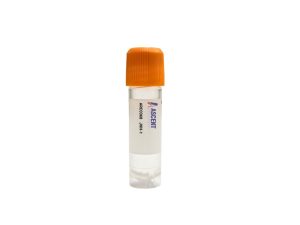
The Dmp1 Knockout AML12 Cell Line is a CRISPR/Cas9-edited mouse hepatocyte cell line with targeted disruption of the tumor suppressor Dmp1. Derived from the AML12 liver parenchymal cell line that retains hepatocyte functions, this knockout model abolishes Dmp1-mediated activation of the ARF-p53 pathway, removing a critical checkpoint against oncogenic proliferation. Dmp1 normally transactivates p19ARF in response to Ras or E2F1 signals, stabilizing p53 to induce cell cycle arrest and apoptosis. Knockout cells enable hepatocarcinogenesis studies, tumor suppressor mechanism elucidation, and drug screening for liver cancer, with applications including western blotting, proliferation assays, and reporter gene analysis.
 Human CD133+ Cells (Fetal Liver)
Cat. No. ARP1148
Human CD133+ Cells (Fetal Liver)
Cat. No. ARP1148
 ENAH Knockout HT29 Polyclonal Cells
Cat. No. ARG14272
Dclk1 Knockout HEK293T Polyclonal Cells
Cat. No. ARG40224
FOXJ3 Knockout MES-OV Polyclonal Cells
Cat. No. ARG5822
LZTFL1 Knockout AGS Polyclonal Cells
Cat. No. ARG2397
FLNA Knockout AGS Polyclonal Cells
Cat. No. ARG2146
ENAH Knockout HT29 Polyclonal Cells
Cat. No. ARG14272
Dclk1 Knockout HEK293T Polyclonal Cells
Cat. No. ARG40224
FOXJ3 Knockout MES-OV Polyclonal Cells
Cat. No. ARG5822
LZTFL1 Knockout AGS Polyclonal Cells
Cat. No. ARG2397
FLNA Knockout AGS Polyclonal Cells
Cat. No. ARG2146
The Dmp1 Knockout AML12 Cell Line is a CRISPR/Cas9-edited knockout cell line derived from the AML12 mouse hepatocyte cell line, featuring targeted disruption of the Dmp1 (cyclin D binding myb-like transcription factor 1) gene. This loss-of-function model eliminates Dmp1 tumor suppressor activity, enabling investigation of its roles in cell cycle control, apoptosis, and oncogenic stress responses. The cell line is supplied as a ready-to-use in vitro hepatocyte model with stable gene knockout, suitable for functional studies in cancer biology and liver pathophysiology.
The parental AML12 cell line originates from hepatocytes of transgenic mice overexpressing human transforming growth factor-alpha (TGF-??), established to maintain differentiated hepatocyte characteristics. These cells perform key liver parenchymal functions such as metabolism, detoxification, and protein synthesis, while retaining a non-transformed phenotype under standard culture conditions. The AML12 background provides a physiologically relevant hepatic environment for studying molecular mechanisms of hepatocellular transformation and tumor suppression.
Dmp1 is a tumor suppressor transcription factor that directly transactivates p19ARF (Cdkn2a) in response to oncogenic Ras and E2F1 signals. p19ARF binds and inhibits MDM2, stabilizing p53 and inducing transcription of p21 and other effectors to enforce cell cycle arrest or apoptosis. Dmp1 interacts with D-type cyclins (e.g., cyclin D2) and E2F1, linking Rb/E2F and Ras pathways to the ARF-p53 axis. Knockout of Dmp1 abrogates ARF induction and p53-dependent responses.
In the AML12 hepatocyte context, Dmp1 loss presents a powerful model for hepatocarcinogenesis research. Normal hepatocytes rely on Dmp1-dependent checkpoints to prevent aberrant proliferation induced by activated oncogenes or DNA damage. Knockout of Dmp1 abolishes this protective mechanism, rendering the cells resistant to oncogene-induced senescence and apoptosis, and promoting unchecked cell growth. This mirrors early steps in hepatocellular carcinoma (HCC) development, where DMP1 inactivation is observed and may collaborate with other genetic alterations such as Ras mutations or p53 deficiency. Consequently, the Dmp1 Knockout AML12 Cell Line serves as a platform to dissect liver tumor initiation and progression, and to evaluate therapeutic interventions targeting downstream pathways.
Research applications include mechanistic elucidation of tumor suppressor networks, drug screening for liver cancer, and functional studies of oncogene-induced senescence. Researchers can employ western blotting for p53, p21, and p19ARF; quantitative RT-PCR for Dmp1 target genes; cell proliferation assays (BrdU, MTT); apoptosis detection via caspase-3 or Annexin V; colony formation; ARF promoter luciferase reporter assays; immunofluorescence for p53 localization; and flow cytometry cell cycle analysis. These approaches enable detailed characterization of signaling dynamics and compound responses. For additional information, contact Ascent Research.