In Stock Cell Lines
Homo sapiens (Human)
Blood (peripheral blood)
Suspension
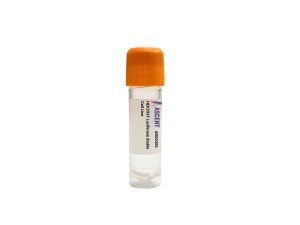
The DNM1L Knockout THP-1 Cell Line is a CRISPR/Cas9-edited knockout cell line derived from the human monocytic leukemia THP-1 line, widely used to model monocyte and macrophage functions. It enables loss-of-function studies of DNM1L, which encodes the mitochondrial fission GTPase DRP1, a key regulator of mitochondrial dynamics and apoptosis. Knockout of DNM1L impairs DRP1-mediated fission, leading to elongated mitochondrial networks and altered apoptotic sensitivity. This model is ideal for investigating mitochondrial dynamics, macrophage polarization, and pathways involving interacting factors such as Fis1 and Mff, with applications in neurodegeneration, cancer, and drug target validation.
 LAMB2 Knockout NCI-H1299 Polyclonal Cells
Cat. No. ARG17612
PDK2 Knockout HT29 Polyclonal Cells
Cat. No. ARG15074
ATP6V1C2 Knockout huh-7 Polyclonal Cells
Cat. No. ARG28039
GPR108 Knockout huh-7 Polyclonal Cells
Cat. No. ARG28226
MGAT4B Knockout MES-OV Polyclonal Cells
Cat. No. ARG6116
CPNE3 Knockout 786-O Polyclonal Cells
Cat. No. ARG5632
LAMB2 Knockout NCI-H1299 Polyclonal Cells
Cat. No. ARG17612
PDK2 Knockout HT29 Polyclonal Cells
Cat. No. ARG15074
ATP6V1C2 Knockout huh-7 Polyclonal Cells
Cat. No. ARG28039
GPR108 Knockout huh-7 Polyclonal Cells
Cat. No. ARG28226
MGAT4B Knockout MES-OV Polyclonal Cells
Cat. No. ARG6116
CPNE3 Knockout 786-O Polyclonal Cells
Cat. No. ARG5632
The DNM1L Knockout THP-1 Cell Line is a CRISPR/Cas9-edited knockout cell line designed to disrupt the DNM1L gene in the human monocytic leukemia cell line THP-1. This cell line serves as a robust loss-of-function model for investigating the roles of dynamin-related protein 1 (DRP1) in mitochondrial dynamics, apoptosis, and macrophage-related functions. The knockout product format is a stable cell line, providing a consistent genetic background for reproducible experimental outcomes without requiring transient manipulations.
THP-1 cells were originally derived from the peripheral blood of a 1-year-old male patient with acute monocytic leukemia and are widely adopted as a model system for monocyte and macrophage biology. These cells can be differentiated into macrophage-like cells, enabling studies on phagocytosis, cytokine production, and cellular differentiation. Their genetic tractability and relevance to human myeloid lineage make them a valuable host for gene editing, particularly for dissecting pathways involved in innate immunity and metabolic regulation.
DNM1L encodes the large GTPase DRP1, which oligomerizes around mitochondria to constrict and sever membranes, thereby promoting mitochondrial and peroxisomal fission. DRP1 activity is tightly regulated by upstream kinases and phosphatases such as CDK1, PKA, CaMKII, calcineurin, and AMPK, and it is modulated by ubiquitination via MARCH5. Upon activation, DRP1 translocates to the mitochondrial surface and interacts with adaptor proteins Fis1, Mff, MiD49, and MiD51 to execute fission. Downstream, DRP1-mediated fragmentation influences cytochrome c release, caspase activation, and reactive oxygen species production, linking mitochondrial morphology to apoptotic signaling. Disruption of DNM1L leads to elongated mitochondrial networks and altered apoptosis sensitivity, making this knockout line a critical tool for dissecting the molecular interplay between mitochondrial dynamics and cell fate decisions.
In the THP-1 macrophage context, DNM1L knockout provides a physiologically relevant platform to explore how mitochondrial fission impacts immune cell functions. Macrophage polarization, phagocytic capacity, and inflammatory responses are energetically demanding processes that rely on mitochondrial remodeling. The loss of DRP1 may impair mitochondrial quality control and mitophagy, potentially altering macrophage differentiation and function. This model is thus instrumental for studying the role of mitochondrial dynamics in disorders linked to dysregulated macrophage activity, including neurodegenerative diseases (Alzheimer??s and Parkinson??s), cardiomyopathies, and cancer, where DRP1-mediated fission is often perturbed.
Researchers can employ the DNM1L Knockout THP-1 Cell Line in a diverse array of experimental applications. It is well-suited for investigating mitochondrial fission mechanisms, apoptotic regulation, and macrophage polarization under normal and pathological conditions. Typical assays include western blotting for DRP1 and its interacting partners, immunofluorescence and MitoTracker staining to visualize mitochondrial morphology, flow cytometry to assess mitochondrial mass, apoptosis assays (caspase activity and Annexin V staining), co-immunoprecipitation to study protein interactions, and Seahorse metabolic flux analysis to evaluate bioenergetic changes. This cell line also supports drug target validation and cancer cell metabolism studies, especially those involving DRP1 inhibitors or modulators of mitochondrial dynamics. For additional information or technical support, please contact Ascent Research.