Genome-edited Cells
Breast (mammary gland)
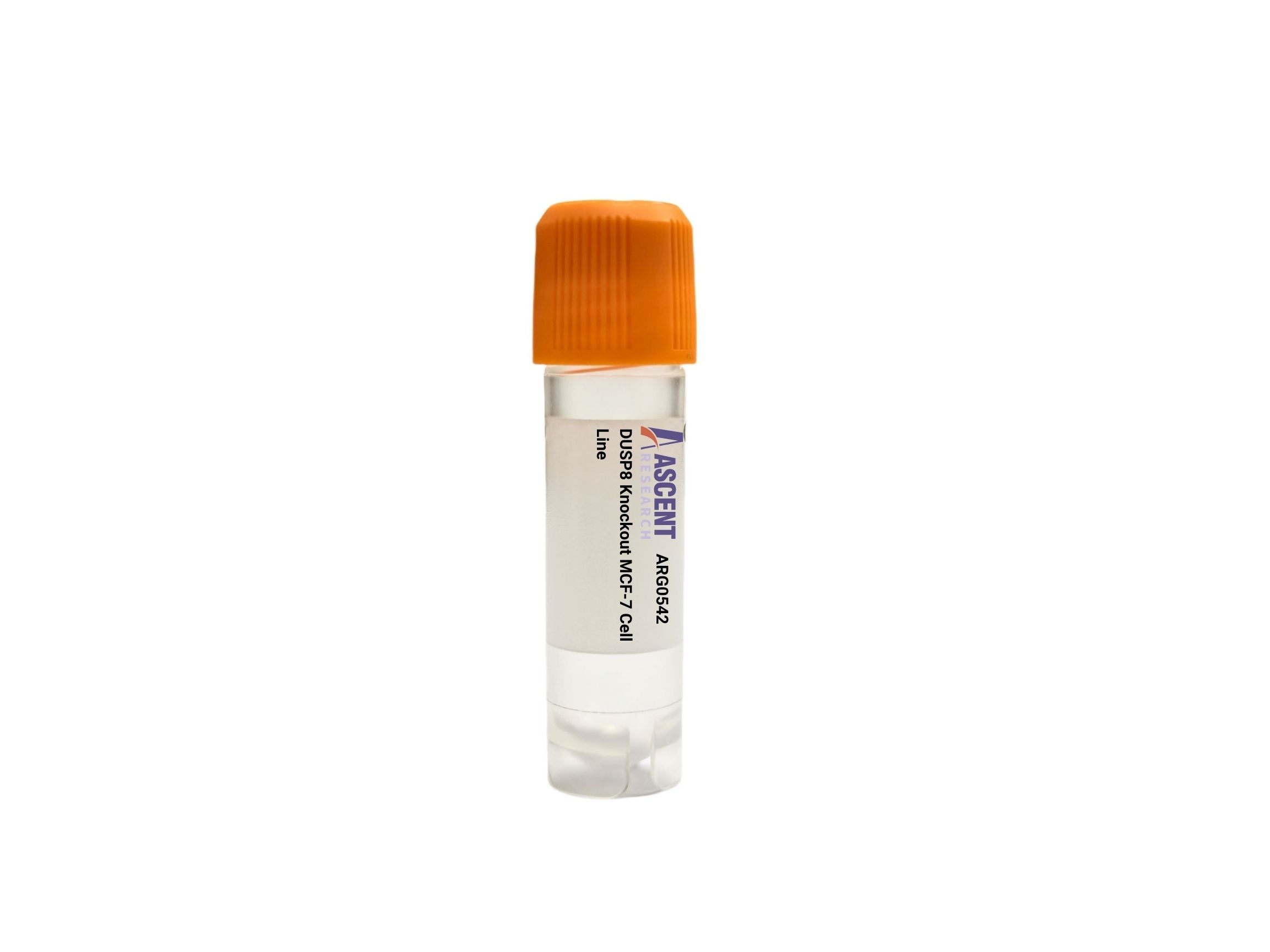
DUSP8 Knockout MCF-7 Cell Line is a CRISPR/Cas9-edited human breast adenocarcinoma line with targeted disruption of the dual-specificity phosphatase DUSP8. By eliminating DUSP8-mediated negative regulation, this model enhances JNK and p38 MAP kinase signaling in an ER-positive background. Suitable for studying stress signaling, tumor suppression, and drug resistance, applications include Western blotting for phospho-MAPKs, cell proliferation and apoptosis assays, and migration studies. This knockout line supports detailed investigation of DUSP8's role in breast cancer progression.
 CAAP1 Knockout NCI-H1975 Polyclonal Cells
Cat. No. ARG31425
CAAP1 Knockout NCI-H1975 Polyclonal Cells
Cat. No. ARG31425
 CRBN Knockout PC-3 Cell Line
Cat. No. ARG43797
CRTC3 Knockout HT29 Polyclonal Cells
Cat. No. ARG14411
ANK1 Knockout HGC-27 Polyclonal Cells
Cat. No. ARG29511
ASB6 Knockout HT29 Polyclonal Cells
Cat. No. ARG33056
LENG9 Knockout 786-O Polyclonal Cells
Cat. No. ARG4652
CRBN Knockout PC-3 Cell Line
Cat. No. ARG43797
CRTC3 Knockout HT29 Polyclonal Cells
Cat. No. ARG14411
ANK1 Knockout HGC-27 Polyclonal Cells
Cat. No. ARG29511
ASB6 Knockout HT29 Polyclonal Cells
Cat. No. ARG33056
LENG9 Knockout 786-O Polyclonal Cells
Cat. No. ARG4652
The DUSP8 Knockout MCF-7 Cell Line is a CRISPR/Cas9-edited human breast adenocarcinoma cell line in which the DUSP8 gene has been disrupted, creating a stable loss-of-function model for studying DUSP8-dependent signaling. This knockout cell line, derived from the well-characterized MCF-7 host, is supplied as an authenticated, mycoplasma-free culture ready for downstream applications.
MCF-7 is an estrogen receptor-positive (ER+), progesterone receptor-positive (PR+), HER2-negative breast adenocarcinoma epithelial cell line originally isolated from a metastatic pleural effusion. It retains key characteristics of hormone-responsive luminal A breast cancer, including estrogen-dependent proliferation and expression of luminal epithelial markers. As a widely adopted in vitro model, MCF-7 cells offer a robust platform for investigating hormonal signaling, drug response, and mechanisms of breast carcinogenesis in a well-defined genetic background.
DUSP8 (VH5) is a dual-specificity MAPK phosphatase that selectively dephosphorylates and inactivates the stress-activated kinases JNK1/2 and p38 alpha/beta. It functions as a critical negative feedback regulator of MAPK cascades, acting downstream of upstream activators including MEKK1, ASK1, MKK4, and MKK7. Cellular stress stimuli such as oxidative stress, TNF-alpha, and anisomycin upregulate DUSP8, which then directly interacts with phospho-JNK and phospho-p38 to reverse their activation. This dephosphorylation attenuates the activity of transcription factors c-Jun and ATF2, thereby suppressing AP-1-mediated transcription and dampening pro-inflammatory and proliferative gene expression. Consequently, DUSP8 serves as a potential tumor suppressor by restraining stress-induced MAPK hyperactivation.
In the MCF-7 breast cancer model, loss of DUSP8 removes a key inhibitory constraint on JNK and p38 signaling, potentially leading to enhanced stress responses, altered proliferation, apoptosis, and migratory behavior. Because MAPK pathway dysregulation is implicated in endocrine therapy resistance and tumor progression, this knockout line provides an ideal tool for dissecting DUSP8’s tumor-suppressive functions within an ER+ context. Researchers can explore how constitutive activation of stress kinases downstream of DUSP8 deficiency reshapes transcriptional landscapes and cellular phenotypes critical for breast cancer malignancy.
Key applications include Western blot-based analysis of phospho-JNK and phospho-p38 levels, RT-qPCR quantification of AP-1 target genes, and functional assays such as MTT proliferation, Annexin V apoptosis, and transwell migration/invasion. The line is also suitable for drug resistance studies and screening of compounds targeting MAPK phosphatase activity. For additional technical details or lot-specific information, please contact Ascent Research.