Genome-edited Cells
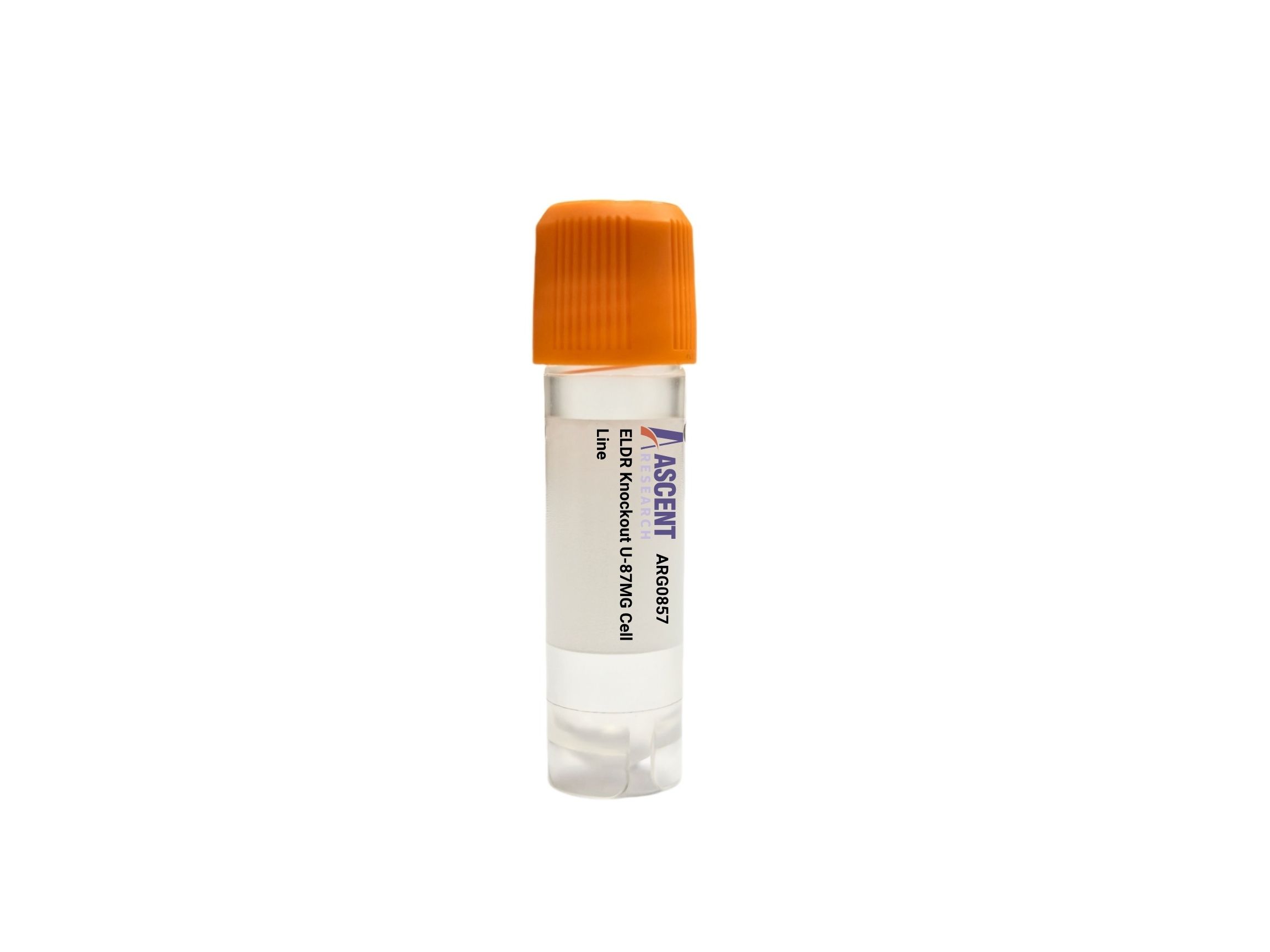
The ELDR Knockout U-87MG Cell Line provides a CRISPR/Cas9-mediated loss-of-function model for the tumor-suppressive lncRNA ELDR in the widely used U-87MG glioblastoma cell line. ELDR binds PTBP1 to reduce EGFR mRNA stability, downregulating EGFR and attenuating PI3K-AKT and MAPK/ERK pathway activity, thereby limiting glioma cell growth and motility. Researchers can employ this knockout cell line for mechanistic studies of ELDR?CEGFR signaling, high-throughput drug screening, and in vivo tumorigenicity assays. It is an essential resource for glioblastoma research, functional genomics, and the development of targeted therapies against EGFR-driven malignancies.
 ATXN3 Knockout K562 Polyclonal Cells
Cat. No. ARG20273
NOLC1 Knockout Hela Polyclonal Cells
Cat. No. ARG8023
AVEN Knockout Hela Polyclonal Cells
Cat. No. ARG21067
KAT2B Knockout HAP1 Polyclonal Cells
Cat. No. ARG22900
DTNBP1 Knockout huh-7 Polyclonal Cells
Cat. No. ARG39918
ATXN3 Knockout K562 Polyclonal Cells
Cat. No. ARG20273
NOLC1 Knockout Hela Polyclonal Cells
Cat. No. ARG8023
AVEN Knockout Hela Polyclonal Cells
Cat. No. ARG21067
KAT2B Knockout HAP1 Polyclonal Cells
Cat. No. ARG22900
DTNBP1 Knockout huh-7 Polyclonal Cells
Cat. No. ARG39918
 SW620 eGFP-Luc Stable Cell Line
Cat. No. ARG0778
SW620 eGFP-Luc Stable Cell Line
Cat. No. ARG0778
The ELDR Knockout U-87MG Cell Line is a CRISPR/Cas9-edited knockout cell product in which the ELDR gene has been disrupted in the established human glioblastoma cell line U-87MG. This loss-of-function model enables investigation of ELDR’s tumor-suppressive roles and downstream signaling networks. The knockout cell line is supplied as a ready-to-use adherent culture, providing a consistent genetic background for functional genomics studies.
U-87MG is an adherent epithelial-like cell line originally established from a 44-year-old male patient diagnosed with glioblastoma multiforme. It is one of the most commonly used models for malignant glioma research, widely applied in studies of invasion, proliferation, and therapeutic response. U-87MG cells harbor dysregulated signaling pathways characteristic of high-grade gliomas, making them particularly suitable for examining the molecular mechanisms driving glioblastoma aggressiveness.
ELDR encodes a long non-coding RNA that functions as a tumor suppressor in glioblastoma. Mechanistically, ELDR physically interacts with the RNA-binding protein PTBP1 to reduce the stability of EGFR mRNA, thereby lowering EGFR protein levels. This downregulation attenuates signaling through two major oncogenic cascades: the PI3K-AKT-mTOR pathway and the RAS-RAF-MEK-ERK module. Consequently, ELDR suppresses the expression of downstream effectors such as cyclin D1 (CCND1) and the anti-apoptotic factor BCL2, while promoting pro-apoptotic programs. Upstream, ELDR expression is regulated by p53 family transcription factors and is subject to silencing via promoter methylation, linking its tumor-suppressive activity to key genomic and epigenomic events in gliomagenesis.
Disruption of ELDR in U-87MG cells, a line characterized by aberrant EGFR signaling, creates a powerful system for dissecting the molecular underpinnings of glioblastoma aggressiveness. This knockout model allows researchers to examine the consequences of ELDR loss on cell proliferation, migration, and invasion in a glioblastoma-relevant background. Given the high frequency of EGFR amplification and PI3K-AKT pathway activation in glioblastoma multiforme, the ELDR knockout line provides a tractable platform for evaluating how the absence of this negative regulator reshapes oncogenic signaling networks, apoptosis resistance, and tumorigenic potential both in vitro and in vivo.
Typical applications include functional studies of ELDR using RT-qPCR and western blotting to validate knockout efficiency and assess downstream protein changes, proliferation assays (MTT/CCK-8), and Transwell migration/invasion assays to quantify phenotypic consequences. RNA immunoprecipitation (RIP) and RNA stability assays enable investigation of ELDR?CPTBP1 interactions and EGFR mRNA dynamics, while flow cytometry for annexin V/PI staining facilitates apoptosis analysis. The knockout line is also well-suited for in vivo xenograft tumor models to evaluate tumorigenicity and drug response. Researchers studying the interplay between long non-coding RNAs and EGFR-driven malignancy will find this cell line a robust tool for mechanistic and translational research. For additional information, technical support, or customized product inquiries, please contact Ascent Research.