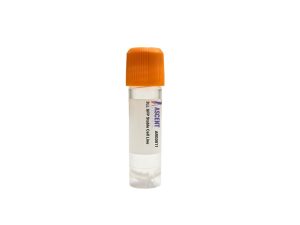
In Stock Cell Lines
Mus musculus (Mouse)
Ascites
Adherent
The Ets2 Knockout RAW 264.7 Cell Line is a CRISPR/Cas9-edited murine macrophage knockout model with targeted disruption of the Ets2 transcription factor. Derived from the BALB/c mouse macrophage line RAW 264.7, this stable cell line allows investigation of Ets2 function downstream of MAPK/ERK signaling, where ERK-mediated activation regulates genes such as MMP9, cyclin D1, and IL-1beta. This knockout tool is widely used in macrophage biology, inflammation research, and cancer microenvironment studies, with applications including western blot, RT-qPCR, ChIP-qPCR, flow cytometry, and cytokine ELISA. It provides a robust system for dissecting Ets2-dependent regulation of immune and oncogenic pathways.
 Immortalized Human Colon Cell
Cat. No. ARI0295
Immortalized Human Colon Cell
Cat. No. ARI0295
 FOXO1 Knockout KYSE150 Polyclonal Cells
Cat. No. ARG12264
ADRA1A Knockout HEK293 Polyclonal Cells
Cat. No. ARG23207
ACOD1 Knockout KYSE30 Polyclonal Cells
Cat. No. ARG36270
DSC1 Knockout HEK293T Polyclonal Cells
Cat. No. ARG39791
MEF2A Knockout MCF7 Polyclonal Cells
Cat. No. ARG11468
FOXO1 Knockout KYSE150 Polyclonal Cells
Cat. No. ARG12264
ADRA1A Knockout HEK293 Polyclonal Cells
Cat. No. ARG23207
ACOD1 Knockout KYSE30 Polyclonal Cells
Cat. No. ARG36270
DSC1 Knockout HEK293T Polyclonal Cells
Cat. No. ARG39791
MEF2A Knockout MCF7 Polyclonal Cells
Cat. No. ARG11468
The Ets2 Knockout RAW 264.7 Cell Line is a CRISPR/Cas9-edited knockout cell line engineered from the murine macrophage cell line RAW 264.7, featuring targeted gene disruption of the Ets2 locus. This stable knockout model provides a loss-of-function system to dissect the transcriptional and cellular functions of Ets2 in a well-characterized macrophage background. The cell line retains the inherent properties of RAW 264.7 cells while eliminating Ets2 expression, enabling precise analysis of Ets2-dependent pathways without confounding variable expression levels.
RAW 264.7 is an Abelson murine leukemia virus-induced tumor cell line derived from a BALB/c mouse, widely employed as a model macrophage cell line. It exhibits characteristic macrophage functions, including phagocytosis, cytokine secretion, and responsiveness to inflammatory stimuli, making it a standard tool for studying innate immunity and inflammation. The Abelson virus transformation enables continuous proliferation while preserving key macrophage features. This genetic background provides a faithful in vitro surrogate for primary macrophages in high-throughput and mechanistic studies.
Ets2 encodes a transcription factor of the ETS family that is activated downstream of RAS-RAF-MEK-ERK signaling. Upon phosphorylation by ERK, Ets2 associates with coactivators such as CBP/p300 and interacts with AP-1 and PU.1 to regulate gene expression. Its downstream targets include MMP9, cyclin D1, Bcl-xL, and IL-1beta, thereby controlling cell cycle progression, apoptosis, and inflammatory cytokine production. Growth factors like EGF and FGF, along with cytokines including IL-1 and TNF-alpha, stimulate the upstream kinase cascade, leading to Ets2-mediated transcriptional responses. This positions Ets2 as an integration point for mitogenic and inflammatory signals in macrophages.
In the RAW 264.7 macrophage model, Ets2 drives key aspects of the inflammatory phenotype, including the production of IL-1beta and matrix metalloproteinases such as MMP9, which facilitate tissue remodeling and tumor invasion. Knockout of Ets2 disrupts these effector functions, enabling systematic dissection of its role in macrophage activation, polarization, and contribution to the tumor microenvironment. This model is particularly valuable for studying how MAPK/ERK signals transduced through Ets2 modulate macrophage-mediated immune responses and promote cancer-related inflammation, advancing our understanding of Ets2??s oncogenic and immune-modulatory roles.
Researchers can employ the Ets2 Knockout RAW 264.7 Cell Line in diverse experimental assays, including western blotting and RT-qPCR for validating target gene expression changes, ChIP-qPCR for probing Ets2 genomic occupancy, flow cytometry for analyzing macrophage surface markers and cytokine production, migration assays to assess motility, and cytokine ELISA for quantifying secretory responses. This knockout line is suited for studies in macrophage biology, inflammation, cancer-microenvironment interactions, and transcription factor functional analysis. For further technical details or to discuss customized applications, please contact Ascent Research.