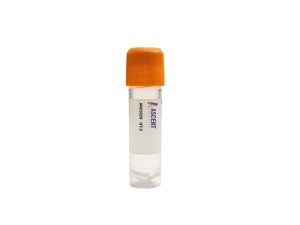
In Stock Cell Lines
Homo sapiens (Human)
Large intestine (colon)
Adherent
The FBXW7 Knockout SW480 Cell Line is a CRISPR/Cas9-edited human colorectal adenocarcinoma model lacking the SCF ubiquitin ligase substrate receptor FBXW7. FBXW7 mediates degradation of oncoproteins such as MYC and NOTCH1, and its disruption stabilizes these targets, driving proliferative signaling. Derived from Dukes type B primary colon carcinoma, this SW480-based knockout is ideal for studying ubiquitin-proteasome pathways, tumor suppression, and drug resistance in colorectal cancer. Key applications include Western blotting, cell cycle analysis, and xenograft assays.
 CAMK2B Knockout 769-P Polyclonal Cells
Cat. No. ARG35109
ALDH18A1 Knockout 786-O Polyclonal Cells
Cat. No. ARG24879
ARFGAP1 Knockout huh-7 Polyclonal Cells
Cat. No. ARG27951
BCL2L2 Knockout NCI-H1299 Polyclonal Cells
Cat. No. ARG30519
APPL2 Knockout HT29 Polyclonal Cells
Cat. No. ARG32999
EDIL3 Knockout K562 Polyclonal Cells
Cat. No. ARG40482
CAMK2B Knockout 769-P Polyclonal Cells
Cat. No. ARG35109
ALDH18A1 Knockout 786-O Polyclonal Cells
Cat. No. ARG24879
ARFGAP1 Knockout huh-7 Polyclonal Cells
Cat. No. ARG27951
BCL2L2 Knockout NCI-H1299 Polyclonal Cells
Cat. No. ARG30519
APPL2 Knockout HT29 Polyclonal Cells
Cat. No. ARG32999
EDIL3 Knockout K562 Polyclonal Cells
Cat. No. ARG40482
The FBXW7 Knockout SW480 Cell Line is a CRISPR/Cas9-edited human cell line engineered to disrupt the FBXW7 gene, encoding the substrate recognition subunit of the SCF (SKP1-CUL1-F-box protein) ubiquitin ligase complex. This gene-edited colorectal adenocarcinoma model eliminates FBXW7 expression, establishing a loss-of-function system for investigating its tumor-suppressive roles. The knockout cell line is derived from SW480 cells and provides a defined genetic background for studying how FBXW7 deficiency impacts oncoprotein turnover and downstream signaling networks. As a ready-to-use in vitro tool, it facilitates reproducible analysis of ubiquitin-mediated proteolysis without the need for transient silencing, enabling robust interrogation of FBXW7-dependent pathways in colorectal cancer biology.
The host SW480 cell line originates from a primary colorectal adenocarcinoma of a 50-year-old male patient with Dukes type B disease. These epithelial cells are widely used to model colon cancer due to their retention of key oncogenic mutations and responsiveness to therapeutic agents. SW480 cells exhibit adherent growth and maintain characteristics of colorectal tumor epithelium, making them suitable for investigating cancer cell proliferation, apoptosis, and signal transduction. Their established use in xenograft models and drug sensitivity assays further extends the utility of this knockout derivative for translational studies. The stable FBXW7 disruption in this background creates a matched isogenic pair that isolates the gene??s specific contributions to colorectal malignancy.
FBXW7 functions as the F-box protein within the SCF complex, where it recognizes and targets phosphorylated substrates for ubiquitination and proteasomal degradation. It is transcriptionally activated by p53 and C/EBP??, while being negatively regulated by miR-27a. FBXW7 directly interacts with core ligase components SKP1, CUL1, and RBX1, and recruits key oncoproteins??including cyclin E (CCNE1), c-MYC, NOTCH1, and JUN??for polyubiquitination. Through these interactions, FBXW7 modulates multiple pathways: it suppresses Notch and Wnt cascades by degrading NOTCH1 and ??-catenin-associated factors, attenuates mTOR signaling via SREBP1 turnover, and restricts cell cycle progression by limiting cyclin E abundance. Knockout of FBXW7 therefore stabilizes these downstream targets, amplifying proliferative and survival signals.
In the SW480 colorectal adenocarcinoma context, FBXW7 loss perturbs the ubiquitin-proteasome system, leading to accumulation of its oncogenic substrates and disruption of normal growth control. The SW480 line harbors intact FBXW7, so this knockout model directly abrogates its tumor-suppressive function, converting the cellular environment to one with elevated MYC, cyclin E, and NOTCH1 activity. This shift drives cell cycle acceleration, genomic instability, and heightened resistance to apoptotic cues, recapitulating features of aggressive colon carcinomas. The engineered cell line thus serves as a relevant platform to dissect FBXW7-dependent mechanisms of tumor suppression and to evaluate therapeutic strategies targeting downstream effectors or restoring proteasomal function.
This knockout cell line supports an array of advanced applications in cancer biology and drug discovery. Researchers can employ Western blotting and RT-qPCR to validate substrate stabilization, co-immunoprecipitation to probe protein interactions, and ubiquitination assays to examine ligase activity. Functional assays such as cell cycle analysis and proliferation tests quantify phenotypic consequences of FBXW7 loss, while xenograft tumor studies assess in vivo tumorigenicity and response to agents like proteasome inhibitors. The model is particularly suited for investigating colon cancer driver pathways, Notch and Wnt signal integration, and mechanisms of drug resistance. For further details or customization, please contact Ascent Research.