Genome-edited Cells
Liver
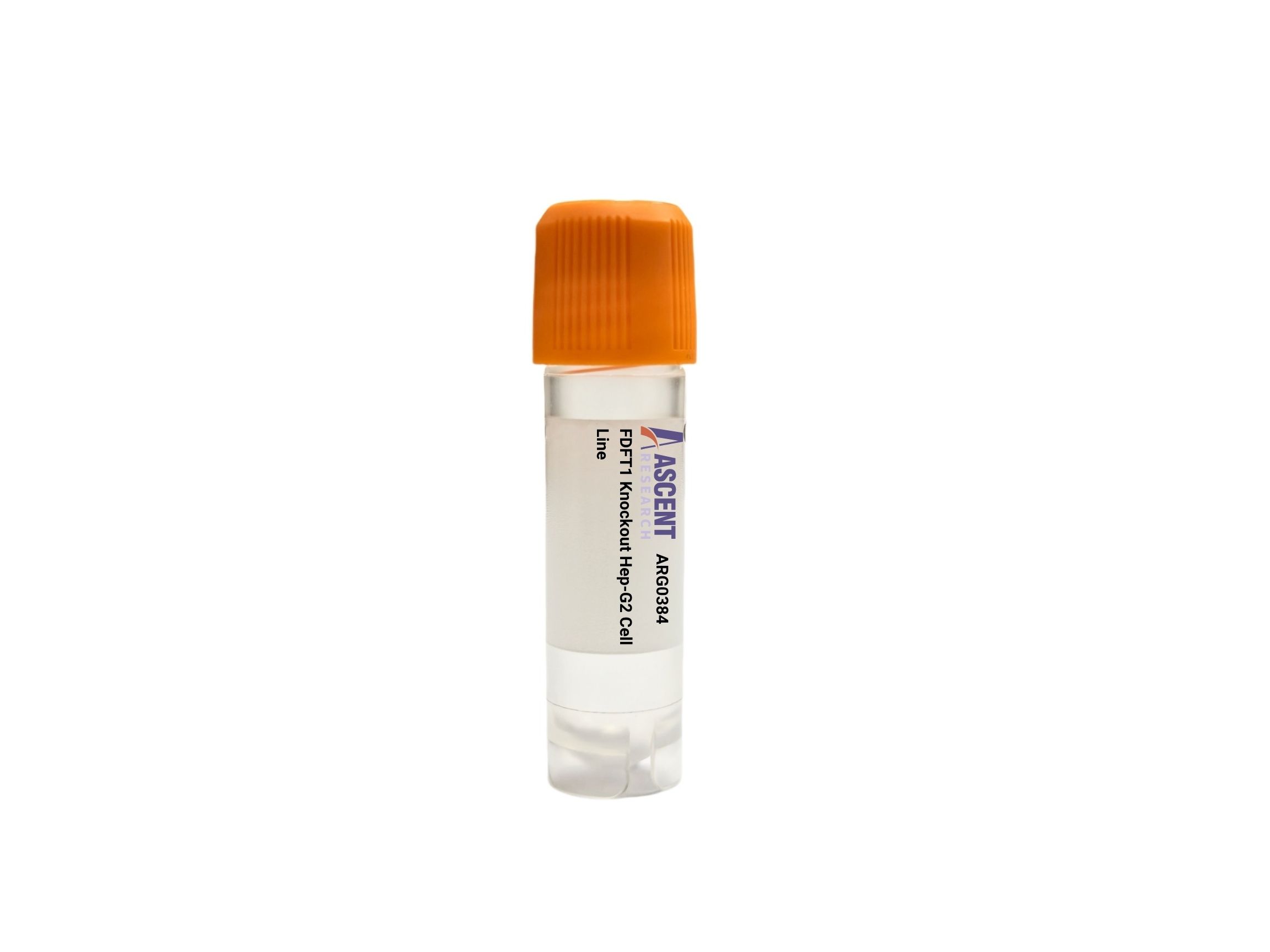
The FDFT1 Knockout Hep-G2 Cell Line is a CRISPR/Cas9-edited knockout cell line targeting squalene synthase (FDFT1) in human hepatocellular carcinoma cells. This model disrupts the first committed step of cholesterol biosynthesis, reducing intracellular cholesterol and activating SREBP-2-mediated compensatory mechanisms. Designed for studies in cholesterol metabolism, drug target validation, and cancer metabolism, it enables investigation of statin alternatives, lipid droplet biology, and hepatocyte function. The cell line supports assays such as Western blotting, cholesterol quantification, and metabolic flux analysis, providing a reliable tool for metabolic disease research.
 PCOLCE2 Knockout NCI-H1299 Polyclonal Cells
Cat. No. ARG17734
MLKL Knockout NCI-H1299 Polyclonal Cells
Cat. No. ARG17658
NDUFS6 Knockout jurkat Polyclonal Cells
Cat. No. ARG13205
GPR108 Knockout HGC-27 Polyclonal Cells
Cat. No. ARG29854
CD320 Knockout HAP1 Polyclonal Cells
Cat. No. ARG43508
MTDH Knockout HEK293T Polyclonal Cells
Cat. No. ARG3953
PCOLCE2 Knockout NCI-H1299 Polyclonal Cells
Cat. No. ARG17734
MLKL Knockout NCI-H1299 Polyclonal Cells
Cat. No. ARG17658
NDUFS6 Knockout jurkat Polyclonal Cells
Cat. No. ARG13205
GPR108 Knockout HGC-27 Polyclonal Cells
Cat. No. ARG29854
CD320 Knockout HAP1 Polyclonal Cells
Cat. No. ARG43508
MTDH Knockout HEK293T Polyclonal Cells
Cat. No. ARG3953
The FDFT1 Knockout Hep-G2 Cell Line is a CRISPR/Cas9-edited knockout cell line derived from the human Hep-G2 hepatocellular carcinoma line. This model disrupts the FDFT1 gene, which encodes squalene synthase, a critical enzyme for cholesterol biosynthesis. As a loss-of-function model, it enables investigation of squalene synthase-dependent metabolic pathways without pharmacological inhibitors. The cell line provides a stable resource for studying cholesterol metabolism and its intersection with liver-specific functions, offering a defined genetic background for reproducible experiments.
The Hep-G2 host cell line is a widely utilized hepatocellular carcinoma model that retains hepatocyte-specific characteristics, including liver-specific markers and metabolic enzymes. Isolated from a liver biopsy, these cells are instrumental in metabolism and toxicity studies, particularly for assessing drug effects on hepatic functions. Hep-G2 cells exhibit differentiated liver functions including plasma protein synthesis, cholesterol metabolism, and lipogenic responses, making them ideal for studying metabolic disorders like dyslipidemia and non-alcoholic fatty liver disease.
FDFT1 encodes squalene synthase, catalyzing the condensation of farnesyl pyrophosphate to squalene, the first committed step in sterol biosynthesis. This enzyme functions in the mevalonate pathway downstream of HMG-CoA reductase and upstream of lanosterol and cholesterol. Knockout of FDFT1 abolishes squalene production, reducing intracellular cholesterol. This triggers SREBP-2 cleavage and nuclear translocation, upregulating LDL receptor and mevalonate pathway genes to compensate for cholesterol loss. FDFT1 is regulated by insulin and LXR??, and its product squalene influences membrane lipid raft formation and steroidogenesis. The enzyme interacts with farnesyl pyrophosphate, NADPH, and farnesyl diphosphate synthase.
In the Hep-G2 hepatocellular carcinoma context, FDFT1 knockout profoundly impacts tumor metabolism and liver function. Hepatocellular carcinomas often show altered lipid metabolism, and squalene synthase may be critical for cancer cell proliferation. Loss of squalene synthase disrupts cholesterol-dependent processes like membrane biogenesis and steroidogenesis, while altering lipid droplet dynamics. This model allows dissection of de novo cholesterol synthesis in liver cancer, metabolic syndrome, and atherosclerosis, and can evaluate how altered cholesterol flux affects hepatocyte functions such as VLDL assembly.
The cell line supports diverse research applications: cholesterol metabolism studies, drug target validation for hypercholesterolemia, and statin alternative screening. It enables cancer metabolism research on mevalonate pathway dependencies in hepatocellular carcinoma and functional assays like LDL uptake. Researchers can use Western blotting, RT-qPCR, squalene LC-MS, Oil Red O staining, Seahorse metabolic flux analysis, and RNA-seq to characterize metabolic changes. This model is also useful for antifungal drug development and SREBP-2 regulation studies. For more information, contact Ascent Research.