Genome-edited Cells
Heart
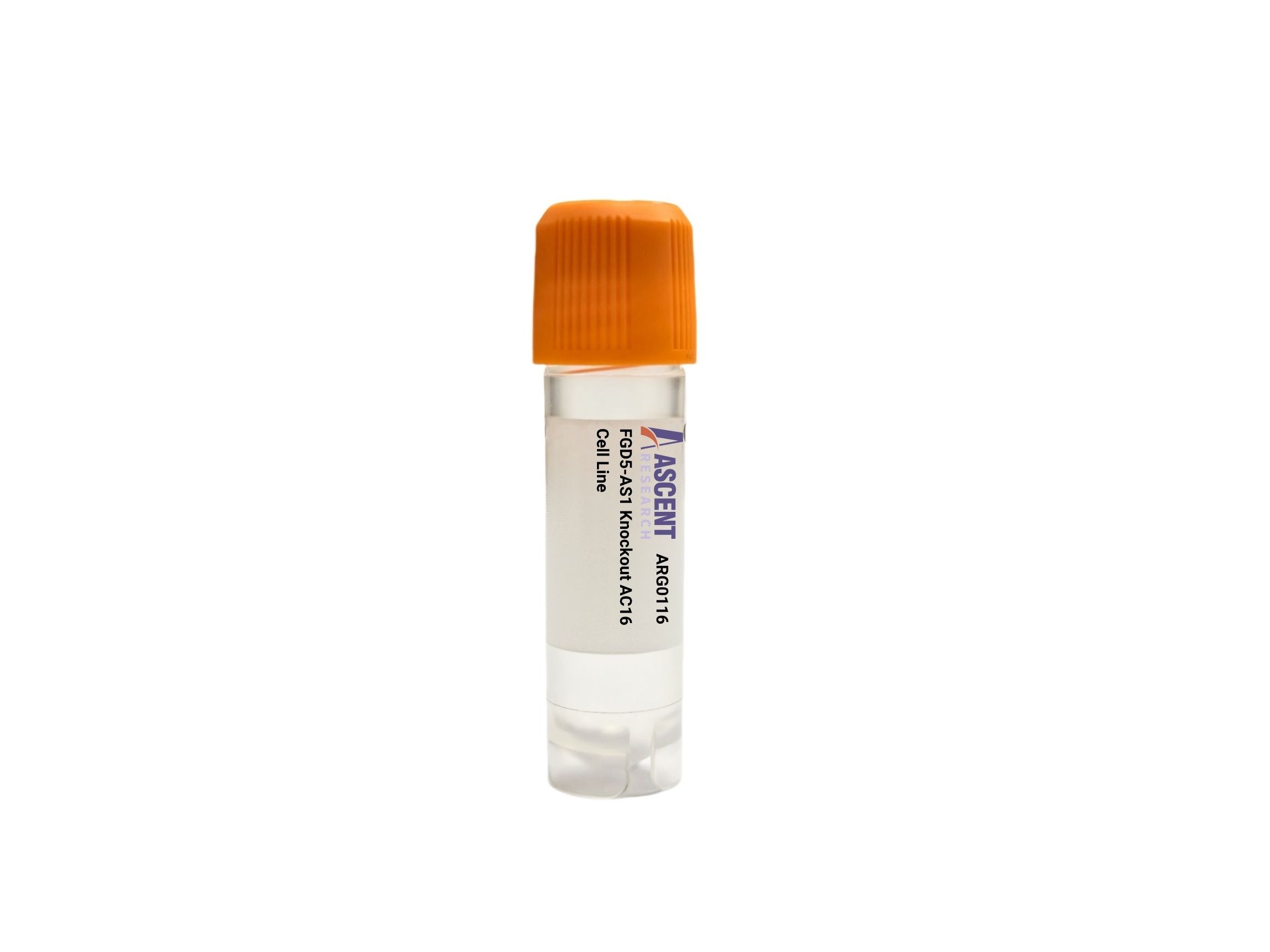
FGD5-AS1 Knockout AC16 is a human CRISPR/Cas9-edited cardiomyocyte-like cell line with disruption of the lncRNA FGD5-AS1 in the AC16 ventricular cell background. AC16 cells are widely used to study cardiac stress signaling, apoptosis, hypertrophy, mitochondrial dysfunction, and injury-associated remodeling. FGD5-AS1 regulates ceRNA/miRNA networks and influences pathways involving PI3K-AKT, MAPK, TGF-beta, and Wnt/beta-catenin, with downstream effects on AKT1 phosphorylation, BCL2, BAX, and CASP3-associated responses. This model is useful for cardiac injury studies, oxidative stress research, fibrosis-associated signaling analysis, RNA interaction studies, and RT-qPCR, RNA-seq, phospho-signaling, apoptosis, and ROS-based assays.
 ABHD16A Knockout Hela Polyclonal Cells
Cat. No. ARG20242
MORC3 Knockout NCI-H1975 Polyclonal Cells
Cat. No. ARG16657
CMTM7 Knockout SK-HEP-1 Polyclonal Cells
Cat. No. ARG15523
LRP1 Knockout TE1 Polyclonal Cells
Cat. No. ARG12200
HBA1 Knockout HEK293T Polyclonal Cells
Cat. No. ARG38241
FAM114A1 Knockout AGS Polyclonal Cells
Cat. No. ARG2137
ABHD16A Knockout Hela Polyclonal Cells
Cat. No. ARG20242
MORC3 Knockout NCI-H1975 Polyclonal Cells
Cat. No. ARG16657
CMTM7 Knockout SK-HEP-1 Polyclonal Cells
Cat. No. ARG15523
LRP1 Knockout TE1 Polyclonal Cells
Cat. No. ARG12200
HBA1 Knockout HEK293T Polyclonal Cells
Cat. No. ARG38241
FAM114A1 Knockout AGS Polyclonal Cells
Cat. No. ARG2137
The FGD5-AS1 Knockout AC16 Cell Line is a human CRISPR/Cas9-engineered cell model in which the FGD5-AS1 locus has been disrupted to abolish functional expression of this long noncoding RNA. The resulting stable knockout line is generated in AC16 cells, an immortalized human cardiomyocyte-like background that supports mechanistic studies of cardiac gene regulation under basal and stress-induced conditions. This product provides an in vitro system for investigating how loss of FGD5-AS1 alters RNA-mediated regulatory networks and downstream signaling outputs relevant to cardiomyocyte injury, remodeling, and survival.
AC16 cells model ventricular cardiac muscle biology and are broadly used in studies of myocardial stress signaling, hypertrophy, apoptosis, mitochondrial dysfunction, and electrophysiology-associated responses. The line was derived from fusion of adult human ventricular cardiomyocytes with SV40-transformed fibroblasts, yielding a robust experimental platform that retains important features of cardiac cellular physiology while offering the practicality of an immortalized system. Because AC16 cells respond to oxidative stress, hypoxia, inflammatory stimulation, and injury-associated perturbations, they are widely applied in cardiovascular research addressing ischemia-reperfusion injury, heart failure, remodeling, and cardioprotective mechanisms.
FGD5-AS1 functions as a regulatory lncRNA within post-transcriptional gene control networks, predominantly through ceRNA-like interactions that alter microRNA availability. In this context, FGD5-AS1 is regulated by oxidative stress, hypoxia, inflammatory cytokines, TGF-beta, and broader cellular injury signals, and it interacts with microRNAs, AGO2-containing RISC complexes, RNA-binding proteins, and epigenetic regulatory complexes. Through these interactions, FGD5-AS1 can act upstream of signaling nodes including PI3K, AKT1, mTOR, MAPK1/3, TGFBR1, SMAD2/3, and CTNNB1, with downstream consequences for BCL2, BAX, CASP3, apoptosis-related genes, fibrosis-associated genes, proliferation programs, migration-associated gene expression, and oxidative stress response markers. These regulatory relationships make the lncRNA relevant to cardiovascular disease, myocardial fibrosis, vascular dysfunction, and broader stress-response biology.
Loss of FGD5-AS1 in AC16 cells is therefore a meaningful model for examining how lncRNA-dependent RNA interaction networks influence cardiomyocyte-like phenotypes. In this host-cell context, knockout may be used to interrogate injury-associated transcriptional reprogramming, pathway dependence of AKT phosphorylation, balance between pro-survival and pro-apoptotic signaling, and TGF-beta- or Wnt/beta-catenin-linked remodeling responses. The model is particularly suitable for defining how lncRNA depletion modifies stress sensitivity, apoptotic threshold, and fibrosis- or hypertrophy-associated molecular signatures in a human cardiac background.
This knockout cell line is well suited for RT-qPCR and RNA-seq analyses of lncRNA-regulated transcriptomic changes, as well as lncRNA expression profiling and ceRNA network studies focused on specific microRNA axes. Protein-level consequences can be assessed by western blotting or phospho-signaling analysis of AKT1, MAPK1/3, mTOR, SMAD2/3, CTNNB1, BCL2, BAX, and CASP3. Functional phenotyping can include apoptosis assays, caspase activity assays, flow cytometry, cell viability measurements, ROS quantification, mitochondrial membrane potential assays, and immunofluorescence following oxidative or hypoxic challenge. The model also supports migration assays, luciferase reporter assays for miRNA-responsive elements, and RNA immunoprecipitation to examine interactions with AGO2 or other RNA-binding factors. Researchers may contact Ascent Research for additional technical information, product details, or related gene-edited cell models.