Genome-edited Cells
Large intestine (colon)
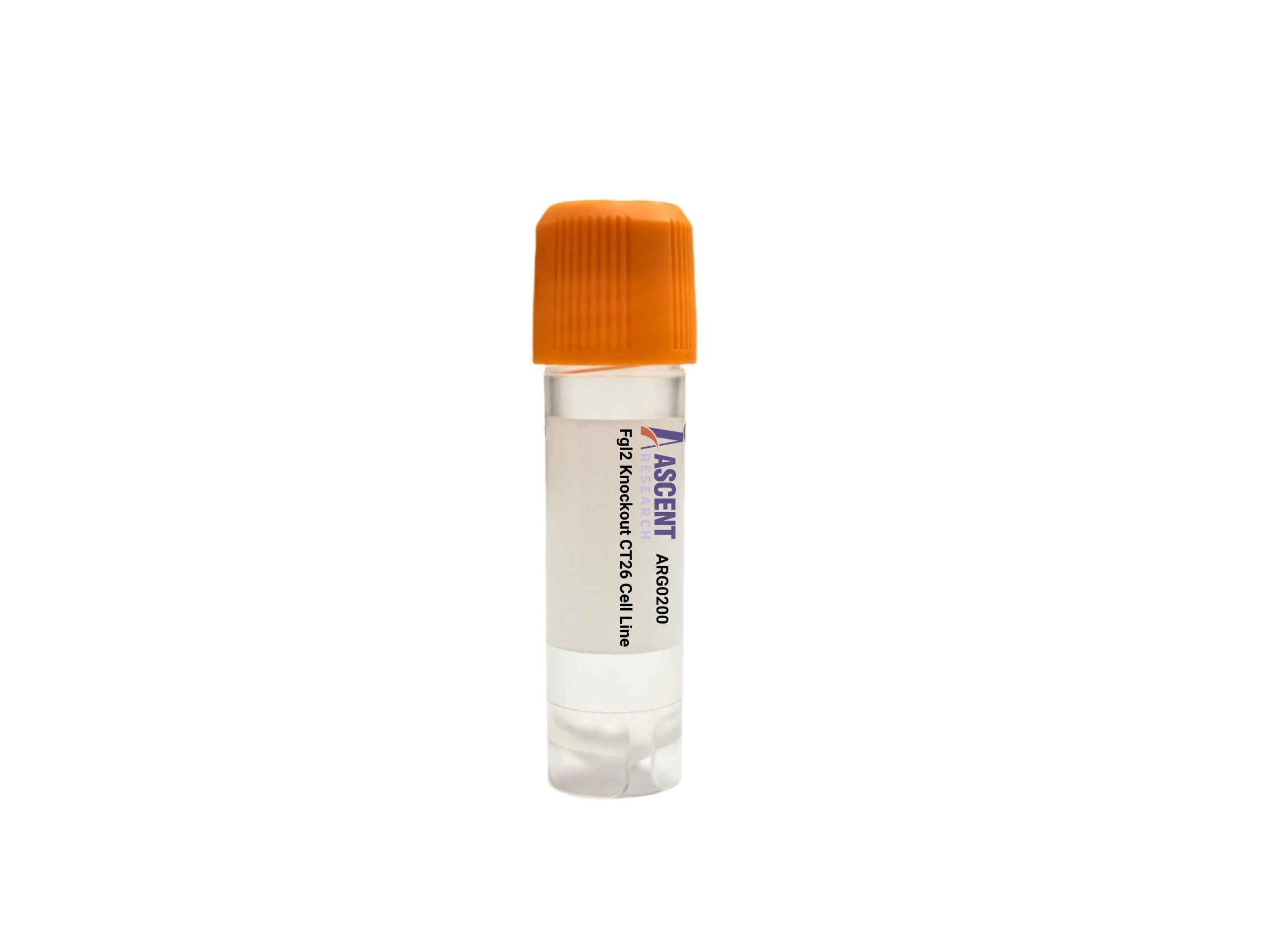
Fgl2 Knockout CT26 is a CRISPR/Cas9-edited mouse colon carcinoma cell line with disruption of Fgl2 in the widely used BALB/c-derived CT26 syngeneic colorectal cancer model. FGL2 functions downstream of inflammatory regulators including TNF-alpha, IFN-gamma, NF-kB p65, and STAT1, and acts upstream of prothrombin cleavage, thrombin generation, fibrin deposition, and suppression of dendritic cell and T-cell activity. This model supports studies of tumor immune evasion, inflammation-coagulation crosstalk, cytokine response, checkpoint immunotherapy combinations, and tumor-host interactions using assays such as RT-qPCR, ELISA, flow cytometry, thrombin generation, and syngeneic mouse tumor studies.
 HOOK3 Knockout jurkat Polyclonal Cells
Cat. No. ARG34274
ICAM1 Knockout HAP1 Polyclonal Cells
Cat. No. ARG37033
INSR Knockout HEK293T Polyclonal Cells
Cat. No. ARG37931
FER Knockout 786-O Polyclonal Cells
Cat. No. ARG5064
HOOK3 Knockout jurkat Polyclonal Cells
Cat. No. ARG34274
ICAM1 Knockout HAP1 Polyclonal Cells
Cat. No. ARG37033
INSR Knockout HEK293T Polyclonal Cells
Cat. No. ARG37931
FER Knockout 786-O Polyclonal Cells
Cat. No. ARG5064
 Rabbit Gastric Smooth Muscle Cell Medium
Cat. No. ARM0708
Rabbit Gastric Smooth Muscle Cell Medium
Cat. No. ARM0708
 Li-7
Cat. No. ARC0442
Li-7
Cat. No. ARC0442
The Fgl2 Knockout CT26 Cell Line is a CRISPR/Cas9-engineered mouse colon carcinoma model in which the Fgl2 gene has been disrupted to abolish functional FGL2 expression. This gene-edited derivative of CT26 provides a stable in vitro system for investigating FGL2-dependent mechanisms in tumor epithelial cells, particularly at the interface of inflammatory signaling, immune regulation, and coagulation-associated biology. The model is suitable for studies requiring a syngeneic murine colorectal cancer background with defined loss of an immunoregulatory and procoagulant effector.
CT26 is a murine colon carcinoma cell line derived from a BALB/c mouse colon tumor and is widely used as an immunocompetent syngeneic transplant model. Because CT26 cells retain strong relevance to colorectal tumor biology and can be evaluated both in vitro and in syngeneic mouse studies, they are commonly used to examine tumor growth, tumor-host interactions, cytokine responses, and immune microenvironmental regulation. As a tumor epithelial model, CT26 is particularly useful for connecting cancer-cell intrinsic signaling with extrinsic immune and stromal processes that shape solid tumor progression and therapeutic response.
FGL2 encodes fibrinogen-like protein 2, an immune-coagulative mediator that exists in membrane-associated and soluble functional states. FGL2 is regulated by inflammatory inputs including TNF-alpha, IFN-gamma, IL-1beta, and LPS, acting through pathways involving TNFR1, IFNGR1, TLR4, NF-kB p65, and STAT1. At the molecular level, FGL2 interacts with prothrombin to promote thrombin generation and fibrin deposition, linking inflammatory activation to coagulation and thrombosis-associated inflammation. In parallel, soluble FGL2 has immunosuppressive activity associated with Fc gamma RIIB-dependent effects on dendritic cells and downstream suppression of T-cell proliferation, IL-2 production, and IFN-gamma production. Through these mechanisms, FGL2 functions within NF-kB and MAPK-associated inflammatory networks and contributes to regulation of the tumor immune microenvironment, adaptive immune suppression, and disease contexts including colorectal cancer, viral hepatitis, autoimmune inflammation, and transplant rejection.
In the CT26 background, loss of Fgl2 provides a focused system for defining how tumor-cell-derived FGL2 contributes to immune evasion and inflammation-coagulation crosstalk. This model can help distinguish the contribution of FGL2 to cytokine-induced signaling responses, prothrombinase-associated phenotypes, fibrin-related extracellular effects, and the establishment of an immunosuppressive tumor milieu. It is also relevant for examining how Fgl2 deficiency modifies communication between tumor cells and dendritic cells, macrophages, or T cells in syngeneic colorectal cancer settings.
This knockout cell line can be applied in western blotting and RT-qPCR workflows to assess FGL2 loss and downstream transcriptional effects after TNF-alpha, IFN-gamma, IL-1beta, or LPS stimulation. ELISA, cytokine profiling, and RNA-seq can be used to examine inflammatory and immunoregulatory programs, while flow cytometry and immunofluorescence support analysis of immune-interaction phenotypes and pathway-dependent cellular states. Functional studies may include co-immunoprecipitation for interacting factors, thrombin generation assays and fibrin deposition assays to evaluate coagulation-linked outputs, and dendritic cell activation or T-cell suppression assays to interrogate antigen-presenting cell and adaptive immune consequences. In vivo, the model is well suited for tumor growth studies in syngeneic mice and for combination studies with checkpoint immunotherapy or other agents targeting inflammatory or immune regulatory pathways. Researchers may contact Ascent Research for additional technical information, product details, or related gene-edited cell models.